Thursday, May 14, 2026
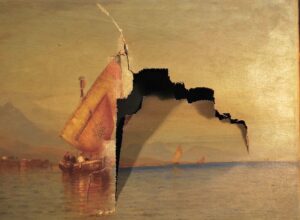
There is a particular kind of heartbreak that happens when someone opens a damaged box marked “FRAGILE” that they were not expecting. Opening it carefully they find the important oil painting inside has shifted, in its frame causing scratches or rips, its cracked, or worse. The heirloom was supposed to be handled or even hand carried with the utmost care… as it traveled across the country after a parent passed away. Maybe it was pulled from a storage unit that flooded. Maybe it came back from a framer with a dent that was not there before. The husband promised it would be safe! (I can’t tell you how many marriages I’ve saved, lol)
At Fine Art Conservation Laboratories, damage from shipping and storage is a very common reason even recently new oil and acrylic paintings, but even fragile Old Masters, arrive at our lab for professional art conservation treatments. Most of it was preventable. All of it is distressing. And much of it — far more than people realize — can be significantly improved or fully resolved through careful, professional treatment. Have you thought about if your homeowner’s insurance would cover the repairs?
If you have a painting that was damaged in transit or during storage, or if you are wondering whether a framed painting in your care is at risk, you have questions. Let’s talk through what the “spin off’ problems are that may arise, what the damage looks like, and what can be done.
Questions about a damaged painting that has been in storage or recently shipped? Call and ask for Scott or Virginia — we are glad to talk through what you are seeing before you do anything else. (805) 564-3438
Why Oil Painting Damage From Shipping and Storage Is So Common
Oil paintings, especially if they are old, are more fragile than they appear… and the damage you see may get worse with time. The image you see — the color, the brushwork, the faces and landscapes — exists as a thin, aged layer of paint sitting on top of a fabric canvas that has been reacting and responding to its environment for decades, sometimes centuries. Add to that various sudden changes in storage and shipping — cold air, impact, pressure, or moisture — assume more than just the visible damage that just happened is in play.
Temperature and Humidity – Wild Fluctuations Cause Change
The entire oil painting’ s structure of canvas and layers of paint expands and contracts with changes in humidity but at different rates. When a painting moves from a climate-controlled home into an unheated moving truck in January, or sits in a storage unit through a hot summer, the canvas and paint layers don’t like that. Over time, even a short time, sometimes, this causes the paint to develop a network of cracks. As the condition ages, paint layers begin to lift from the surface — a flaking condition art conservators call cleavage — a problem that requires more than just spraying on a sealer or varnish.
We often see and receive unstable old paintings that were packed and moved without proper protection from the 150 deg. Arizona heat in the back of the moving truck like they were a poster or a replaceable non-important “decoration” resulting in paint losses, rips etc much to the horror of the family historian of the family. The husband, kids, church group who helped had no idea the painting was at risk when it was packed.
What Physical Impact and Pressure Do To Paintings
Paintings that are stacked, leaned against one another, or packed without proper cushioning frequently arrive with dents, punctures, or distortions in the canvas. A dent in an oil painting is not like a dent in a piece of furniture. The paint in a dented area may be cracked, lifted, or detached. Trying to push a dent back out without proper treatment can — and often does — cause active paint loss.
An example of a heartbreaking cases that we corrected involved the picture at the bottom of this article: a 150-year-old oil painting valued at $75,000 that arrived with catastrophic damage across most of the picture surface — entirely the result of careless packing. All of it was avoidable. The owner had no interest in investing in quality art conservation treatments… and threw it away!! It was bought as salvage for pennies on the dollar by an art dealer who knew its quality… and yes, it was a major bill to “fix it.”
Moisture, Mold, and Art Storage Conditions
Storage units are not climate controlled by default. Even those that advertise climate control often have humidity levels that fluctuate significantly with the seasons. Paintings stored in basements, garages, attics, or outdoor storage units are particularly vulnerable.
Moisture that infiltrates a canvas on artwork can cause the stretcher bars to warp, which deforms the entire canvas. It can also cause mold to develop on the canvas or the paint surface itself. Mold on a painting is not simply a surface contaminant — it can penetrate paint layers, discolor the image, and weaken the structural integrity of the work if not treated properly. And while the organism can be killed, sometimes the stain left behind cannot be removed.
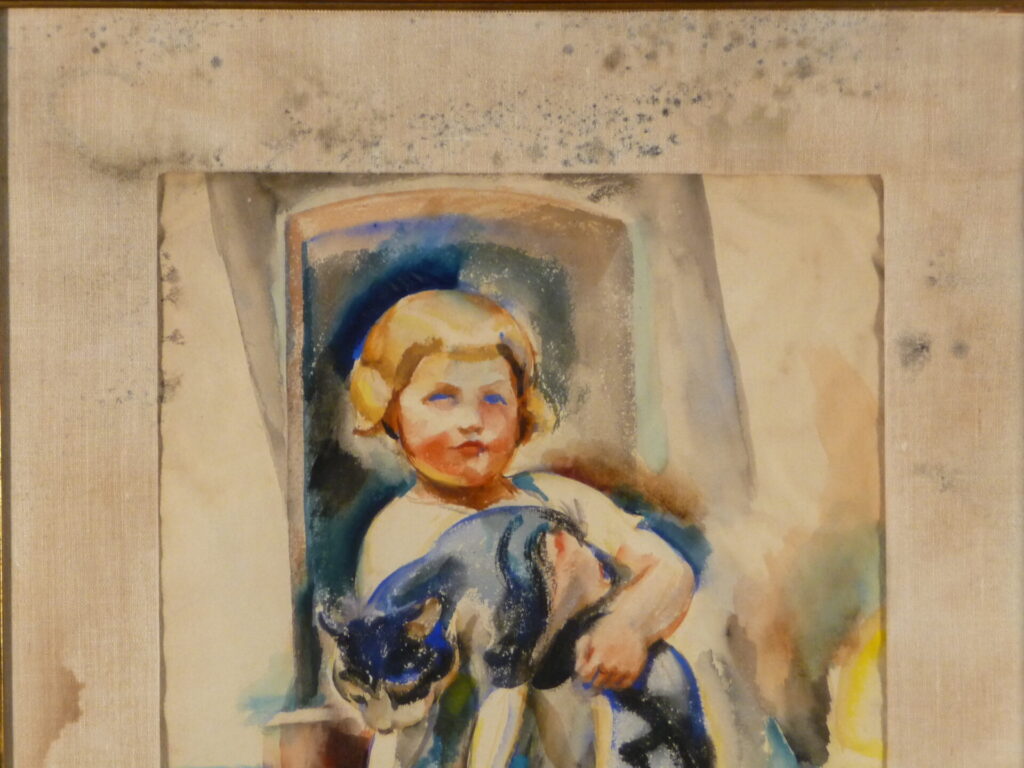
The lady that gave us this cherished artwork to preserve was 94 years old and was the child in the artwork!
We have seen this play out firsthand. A painting left in a storage area that took on water arrived with extensive flaking and discoloration. It was not just a damaged painting — the memories and family history attached to it had been sitting in that wet room too. The treatments vary considerably depending on severity and paint media, but the approach is always the same: assess the full extent of damage before touching anything, then treat methodically from the most structurally fragile areas first.
One more thing worth knowing: homeowner’s insurance often covers family heirlooms and personal artwork — not items considered decorations — that are damaged during a move. If you are filing a claim, we can help you work with your adjuster. FACL charges flat fees for insurance claim work, not a percentage of the settlement.
What Improper Storage Actually Looks Like
Not long ago, we were called in to consult on a collection belonging to a man who considered himself an experienced, high-end collector. The storage conditions we walked into were genuinely painfully the worst I’ve even seen. Paintings were stacked against one another without protection, leaning in conditions with no humidity control, in a room that gave no thought to the value of what it held. We documented the situation on video. In one case, plastic tape had adhered directly to the front of a painting and had to be carefully removed on-site.
The situation is much more dire if your painting was painted between 1850ish and 1910ish. Additives to the canvas making machinery cause this age of canvas to be more brittle as it ages than a piece of fabric 200 years older! These oil paintings are frightfully brittle and VERY easy to rip.
See this short video. Click on the picture
The lesson is not that this person was careless in a dramatic or obvious way. The lesson is that he genuinely believed he was doing fine. Most people who store art poorly do not know they are doing it wrong… or maybe their impatience justifies in their m ind that they are doing to carelessly. That is the nature of this kind of damage — it accumulates quietly, and the consequences show up later.
An Example Of A Painting In Our Lab
A woman in her 30s contacted us about her grandmother’s portrait – her most prized possession beside the children— a nice sized oil painting that had been in her family for three generations. As her family was moving to a new house, she protested to her brother about the painting being packed loosely in a cardboard box. He guaranteed her he would hand carry it to the new house. When it arrived, there was a 2 ft vertical rip down the center of the painting, and small areas of paint that had flaked away entirely. I’ll let you imagine the war that ensued. She was devastated. This was not just a painting to her. It was the face she had grown up looking at. It was all the memories of a cherished person in the painting. Insurance couldn’t buy her a new one…
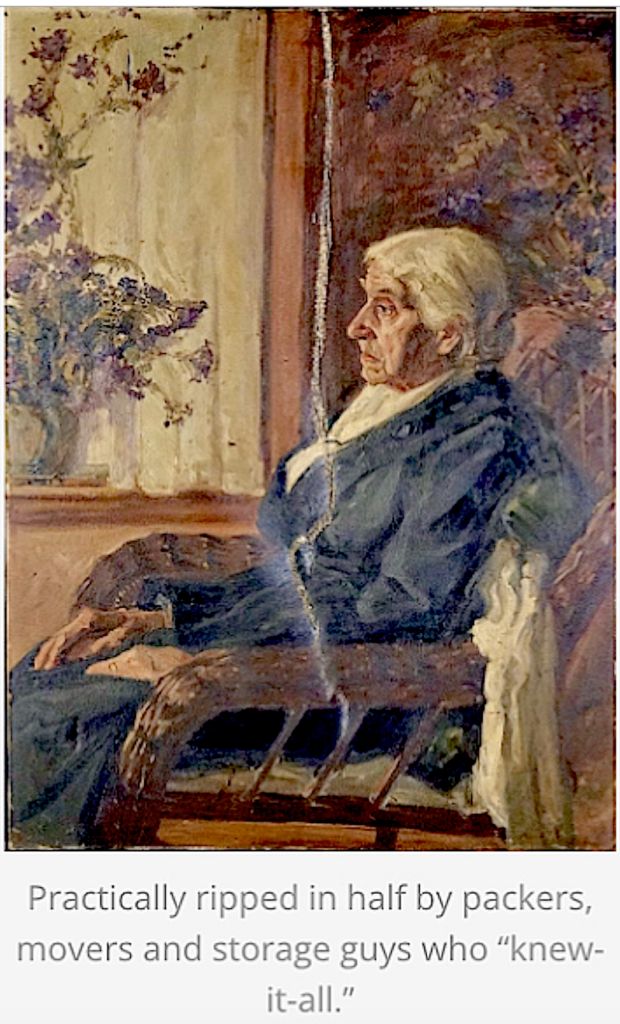
What she needed first was not a blind per sq, inch estimate that would probably change. She needed to find the right person/lab … someone to look at the painting carefully, explain what had happened and why, and tell her honestly what was possible and what her options were.
If a painting in your care has been through shipping or long-term storage and something looks wrong — or even if you are not sure — call or text us and ask for Scott or Virginia. A quick phone call can tell you whether the painting needs urgent attention. (805) 564-3438
How to Assess Damage When a Painting Arrives
Before calling a conservator — or while you are waiting — here is how to look at a damaged painting without making things worse.
Check the surface first. Look for scratches, abrasions, or punctures. On oil paintings, look specifically for areas where paint is visibly lifting or flaking. Do not touch those areas, don’t rub them, or try to press them flat. Loose paint fragments may be out into a zip lock bag, they may be able to be put back!
Check the structure next. Look at the canvas itself for tears, punctures, or warping. Check whether the stretcher bars are still square and intact. Avoid moving the painting more than necessary, and keep it flat if the damage is cause by water and flaking is active.
Especially if its wet, do not expose the painting to direct sunlight or heaters and do not attempt any cleaning.
Document everything with photographs before moving the painting further. This protects you in any insurance situation and gives a conservator a clearer picture of the condition at the time of discovery. This step-by-step guide to assessing art shipping damage walks through the process in more detail.
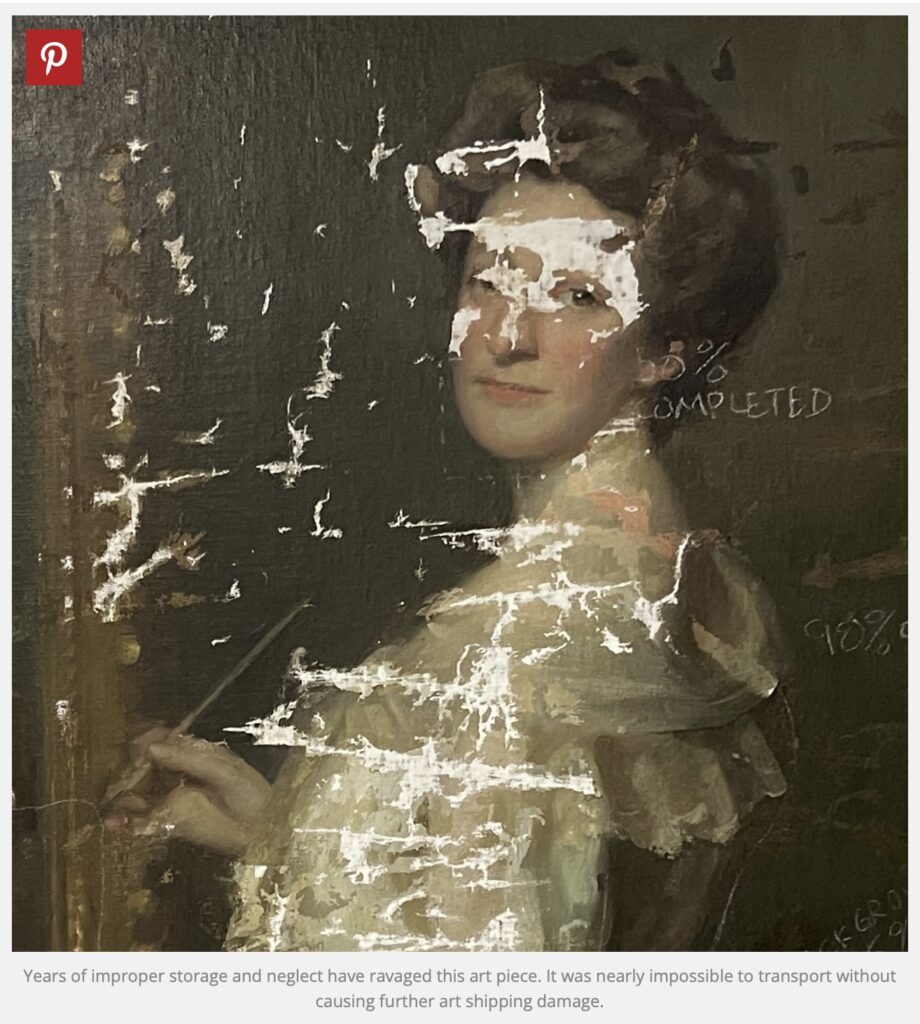
Don’t roll up paintings!
The Most Common Treatments for Shipping and Storage Damage
Professional art conservation for shipping and storage damage typically involves some combination of the following, depending on the nature and severity of the damage:
Consolidation of cleavage and flaking paint. When paint layers have lifted or are actively separating from the canvas, consolidation is the first and most urgent step. This involves introducing a conservation-grade adhesive beneath the lifted paint and applying gentle pressure — sometimes with heat — to re-bond the layers. This must happen before any other treatment, because moving a painting with active flaking will cause additional loss.
Canvas repair and structural work. Tears, punctures, and dents in the canvas require structural repair before surface treatments can be completed. Depending on the extent of the damage, this may involve local patch repairs, full lining of the canvas to a new support fabric, or working a distortion out from the reverse side using moisture and controlled pressure. A damaged or warped stretcher may need to be repaired or replaced entirely.
Cleaning. Storage conditions often mean a painting arrives with accumulated grime, mold residue, or discolored varnish. Cleaning is done selectively and with considerable care, using solvents and methods appropriate to the age and condition of the specific paint layers. There is no universal formula — every painting requires its own evaluation.
Filling and inpainting. Areas of paint loss are filled with a stable, reversible fill material shaped to the profile of the surrounding original paint. They are then carefully inpainted with conservation-grade materials that match the color, texture, and reflectance of the original. The goal is not to make the painting look as if nothing happened, but to make the damage visually recede so that the full composition reads as it was intended.
Varnishing. A final protective varnish can stabilize the surface, even out the sheen, and provide a layer of protection for future handling and display.
What You Can Do Right Now to Protect a Painting
If a painting is currently in storage, or if you are anticipating shipping one, the most important things to understand are these:
Glassine paper sticks to many types of varnishes and many new acrylic paints (I know you are surprised and you are not sure I’m right… but you’ve been told.)
Never wrap a painting face-down against another surface, never wrap it in material that traps moisture, or rest it on the floor without a barrier.
Never roll an oil or acrylic painting, especially an old one. Professional can coach you on your options… but rolling a painted canvas that has not been prepared for that process will do more than just crack the paint.
For shipping, a painting should NOT be wrapped in glassine against the paint layers or frame surface — and especially do not wrap artwork with bubble wrap directly against the painted surface —
If a painting arrives damaged, do not try to push the canvas back from the front, remove any loose paint, or clean the surface yourself. Call a professional first. Handling a painting with active damage incorrectly can turn a treatable problem into a much more serious one… and wipe out any financial value it might still have.
Preserving Family History And All The Stories – Memory Triggers
What professional art conservation protects is not just paint and canvas. It is the grandmother who sat for her portrait in 1900, the ancestor whose face is the only surviving record of what they looked like. The painting that hung in the same spot in the family home for fifty years, traveled through four moves, survived a flood, two world wars and arrived cracked and tired on someone’s doorstep.
Those stories do not end when a painting is damaged. They continue — sometimes for generations more — when the painting is treated with care, honesty, and real expertise.
If you have a painting that was damaged in shipping or storage — or if you want to protect one before it travels — we would like to hear from you.
Call (805) 564-3438
and ask for Scott Haskins or Virginia Panizzon.
We answer questions, give honest assessments, and treat every heirloom as if it were our own.
Gena.FACLBusinessManager@gmail.com
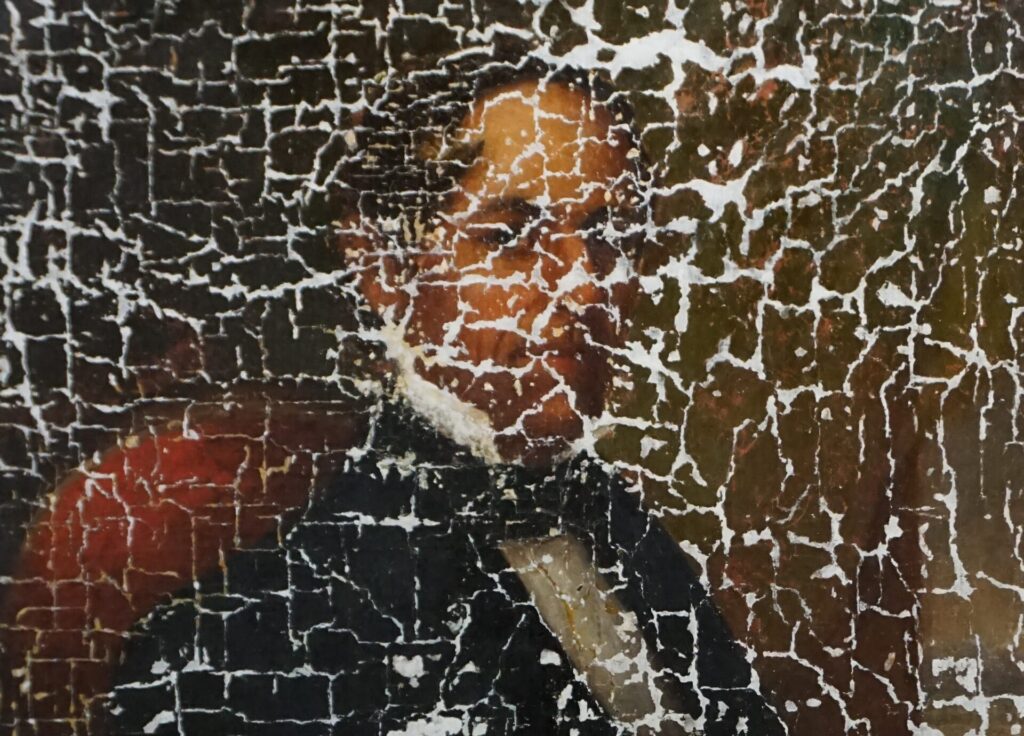
Water damaged ancestor when in storage (canvas shrunk causing the paint to flake off)
Keywords
Fine Art Conservation Laboratories, FACL, Scott M. Haskins, Virginia Panizzon, professional art conservation, oil painting restoration, art restoration, oil painting conservation, easel painting conservation, easel painting restoration, preservation and restoration of art, painting damage from shipping, oil painting damage shipping and storage, canvas painting damage, painting storage damage, cracked oil painting, flaking paint conservation, canvas repair, painting damage after moving, mold damage oil painting, water damage painting conservation, painting consolidation treatment, inpainting oil painting, damaged heirloom painting restoration, insurance claim for damaged artwork, homeowner’s insurance artwork damage, American Institute for Conservation