Wednesday, May 6, 2026
What happens when a waiver is needed to manage Fit Volatility?
If you have been reading the WSJ recently, or know someone who needed a wedding dress, then you know exactly what I am talking about.
If you don’t, I can bring you up to speed.
GLP-1s are upending the entire bridal and wedding ecosystem. In a survey of almost 12,000 couples, one in ten are using a GLP-1, another one in ten are thinking about it, and for about half of current users, the wedding itself was the catalyst for the prescription.
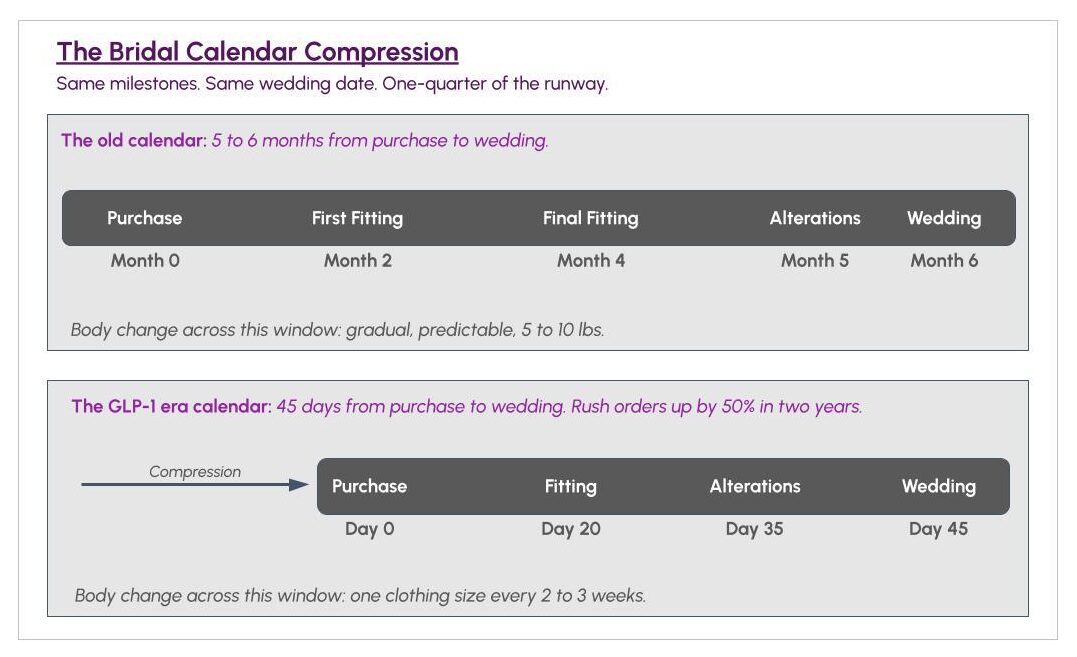
Brides are now shopping closer to the wedding date than ever. Four weeks in advance, versus five or six months.
Why?
Body composition and weight loss are wildly fast and dramatic.
So much so that some bridal gown retailers are asking soon-to-be brides to sign a waiver stating that the dress they are purchasing now does not fit, with the intention that the garment will fit on the wedding day, meeting the bride at the pinnacle of her weight loss journey.
 But it is not just the bridal gown that is being impacted. The clothing for the bridesmaids and the groom and groomsmen will also be affected. Also, a hot off the presses study from the Lancet shows that Wegovy, a GLP-1 drug, can curb alcohol consumption.
Jewelers are feeling the pressure too. Think about ring sizing for custom signet rings and wedding bands. If customers are dropping sizes within weeks, how does an industry with months-long lead times hold up?
If it is anything like apparel, then not too well.
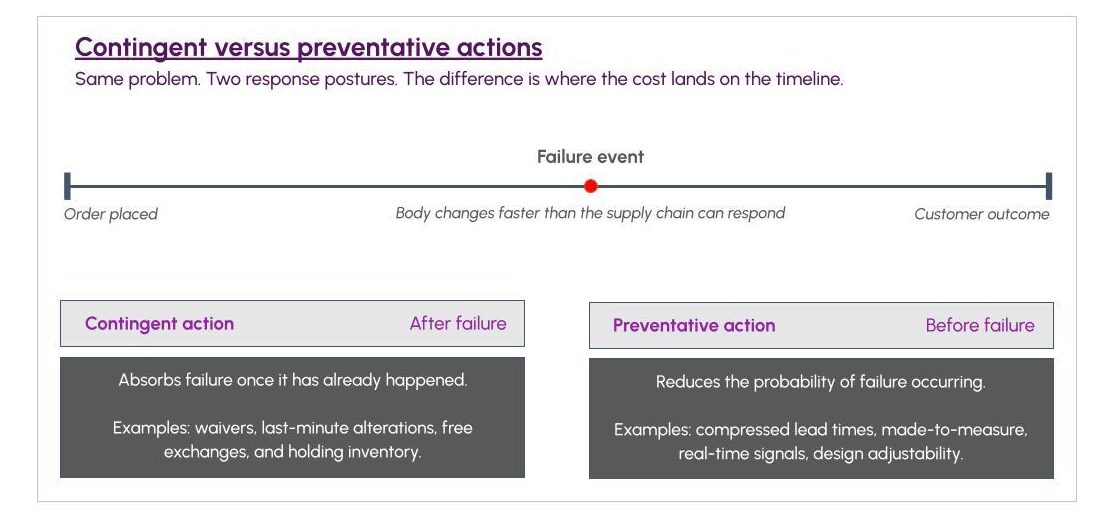
The deal here is that contingent actions like waivers, last-minute alterations, free exchanges, and holding more inventory are needed for the short term, but do not give us the necessary resilience over the long term.
The core issue is that fit was always volatile and dynamic. GLP-1s have simply exacerbated and accelerated what was already there. The fashion supply chain, already elongated and fragile, is held up by contingencies.
Preventative actions need to be explored in greater depth to improve resistance to these shocks. Three are worth naming.
1. Designed-in adjustability. Build size flexibility into the product itself to reduce the alterations needed to retrofit the garment.
2. Close the feedback loop. Relevant insights must be distributed throughout the organization, not just marketing, with near-zero lead time.
3. Deepen vendor relationships. Both brand and vendor serve the same end customer. The fit anxiety of that customer is a problem for both. Transactional relationships must be abandoned for true partnerships.
The bridal and wedding ecosystem is a prominent and emotionally charged example, but if you are in the apparel business as a brand, retailer, or vendor, you are going to be impacted by Fit Volatility.
About Retail Strategy Group
Founded in 2020, Retail Strategy Group works with market-leading brands to help them improve profitability and increase organizational effectiveness. The firm produces a weekly newsletter, The Merchant Life, where retail executives find the best retail insights and new, provocative ideas. For more information, visit www.retailstrategygroup.com.