Most real estate agents I talk to are either completely ignoring email marketing or doing it so poorly they might as well be. They’ll spend thousands on fancy postcards and billboard ads, then wonder why their phones aren’t ringing. Meanwhile, their competitors who understand email marketing are quietly building relationships, staying top-of-mind, and generating consistent referrals.
I’ve been helping professionals build their digital marketing strategies for over 15 years, and email marketing consistently delivers some of the best returns I’ve seen. For real estate agents specifically, it’s not just about sending pretty newsletters (though those matter too). It’s about creating systematic touchpoints that turn cold leads into warm prospects and past clients into your biggest referral sources.
In this guide, you’ll discover how to segment your contacts for maximum relevance, create email campaigns that actually get opened and acted upon, and build automated systems that work while you’re showing properties. You’ll also learn which types of content keep you top-of-mind without coming across as pushy or salesy. The key is treating email marketing as relationship building, not just lead generation.
Why Email Marketing Actually Works for Real Estate
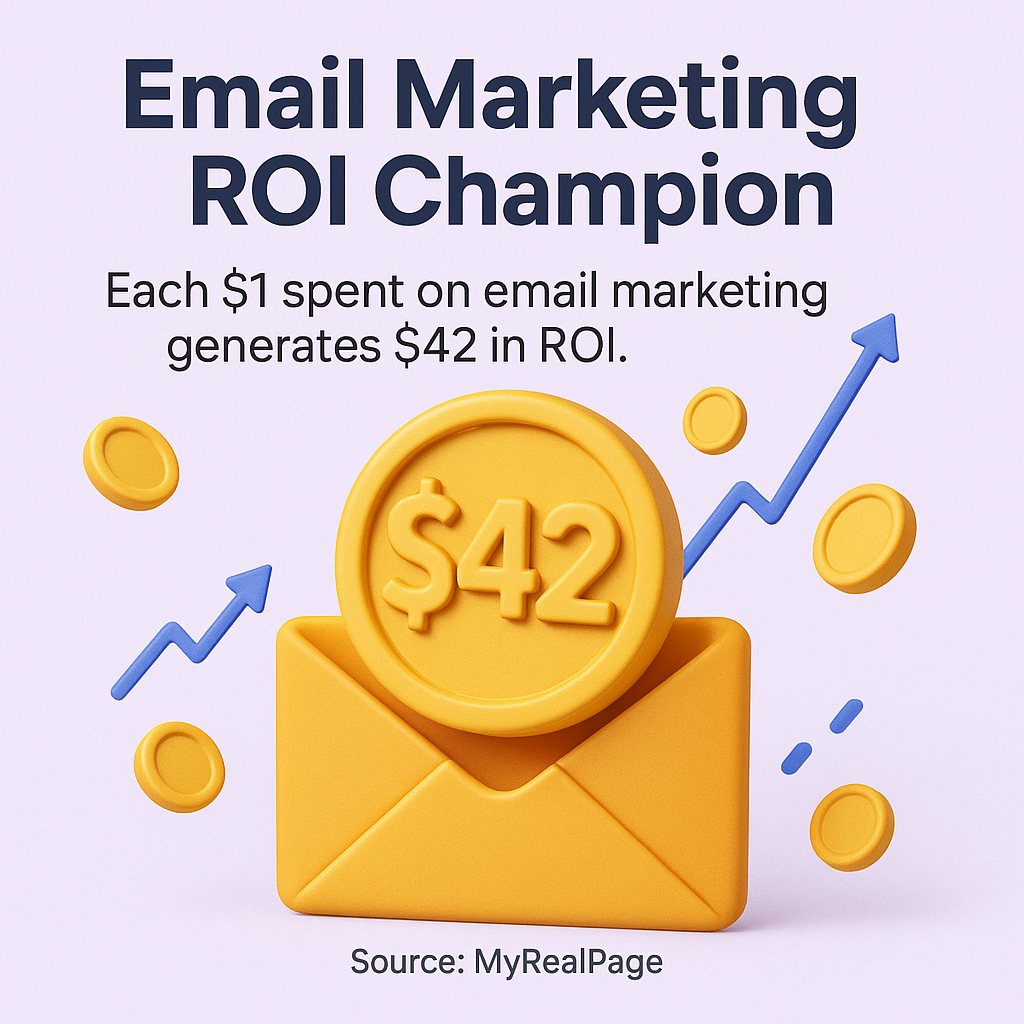
Email marketing isn’t just another digital marketing tactic you should try. The numbers tell a compelling story that too many agents ignore. Email marketing delivers a 4200% ROI across industries, which means you get $42 back for every dollar you invest.
But here’s what makes it particularly powerful for real estate professionals.
Real estate is fundamentally a relationship business. People buy and sell homes maybe once every 7-10 years, but when they do, they want to work with someone they know and trust. Email gives you permission to stay in touch consistently between transactions. It’s not intrusive like cold calling, and it’s more personal than social media posts that may or may not be seen.
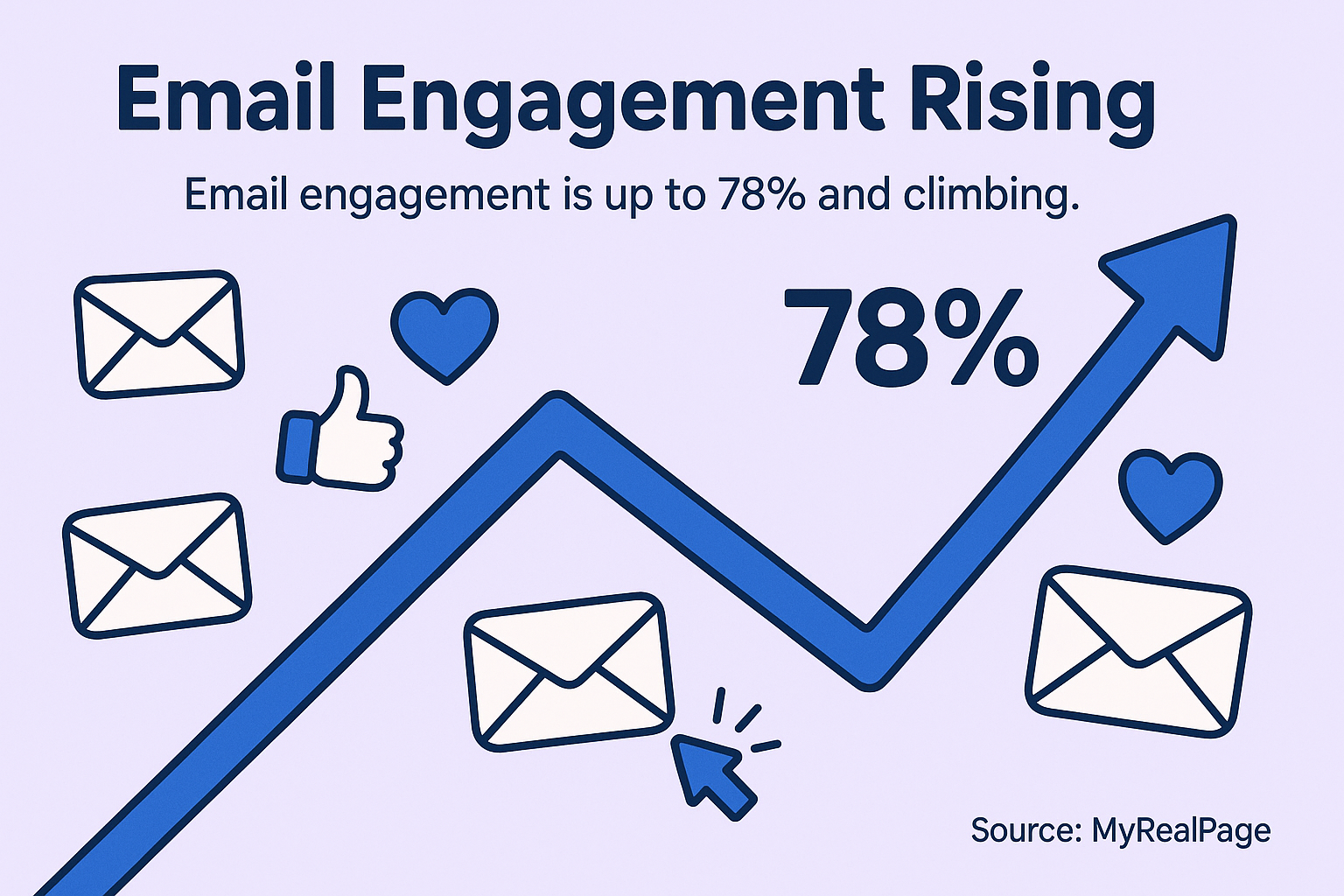
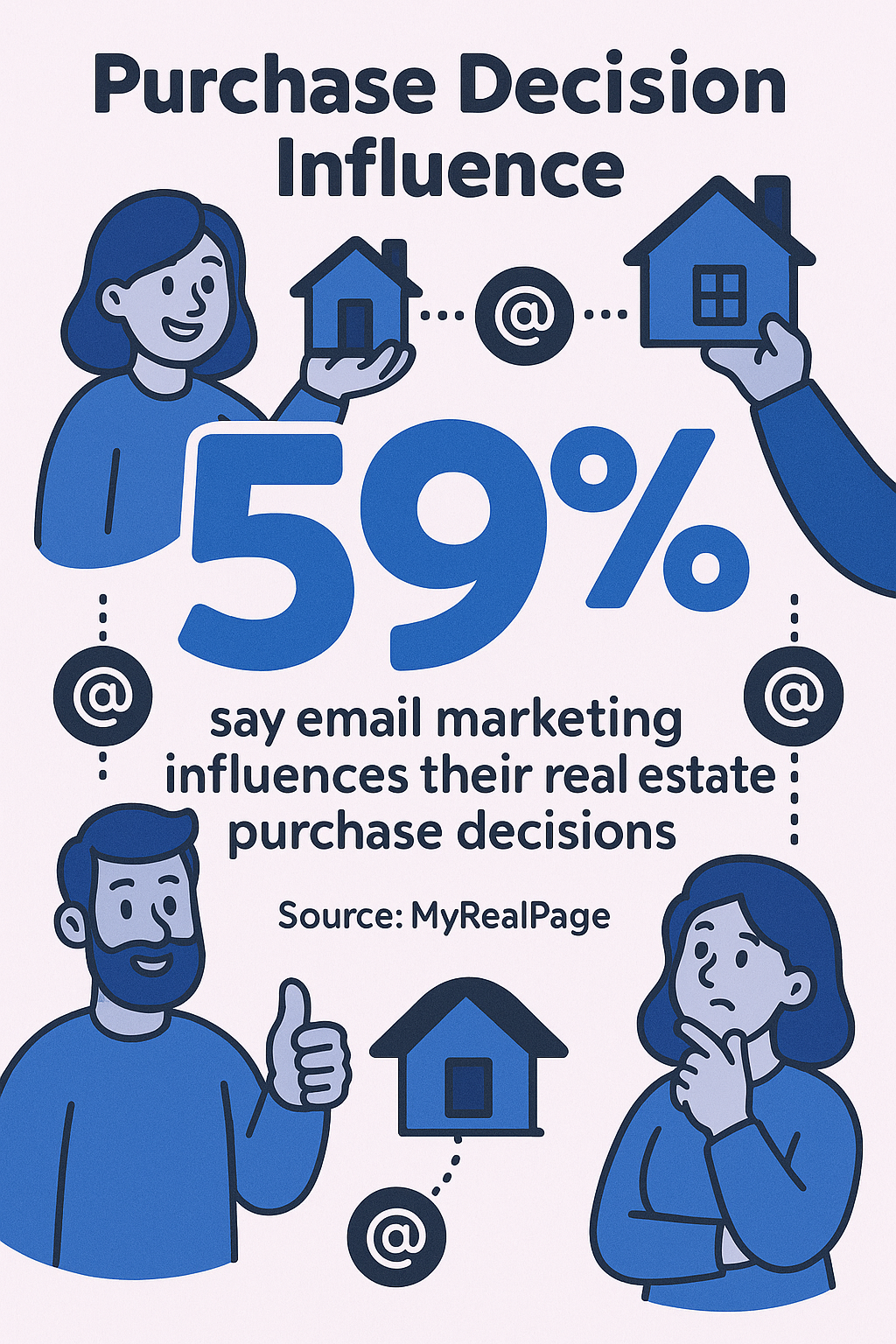
The stats back this up: 78% of marketers have seen email engagement increase in the last year, and 89% use email marketing as their primary channel for getting leads. More importantly for agents, 59% of people say that marketing emails influence their purchase decisions.
Here’s how your real estate business can begin to take advantage of this: Set up your Mailchimp or ConvertKit account this week. Import your existing contacts (with permission), and send your first newsletter within 30 days. Track open rates, click-through rates, and most importantly, track which emails generate actual conversations or appointments.
| Email Marketing Benefit | Impact on Real Estate Business | Timeframe to See Results |
| High ROI (4200%) | Cost-effective lead generation | 3-6 months |
| Permission-based communication | Build trust with warm prospects | 1-3 months |
| Automated nurturing | Stay top-of-mind between transactions | Ongoing |
| Measurable results | Track which content drives appointments | Immediate |
Smart Segmentation That Actually Makes Sense
Most agents throw everyone into one big email list and blast the same content to buyers, sellers, past clients, and random leads they met at open houses. This is lazy marketing, and it shows. The solution isn’t complicated, but it requires some upfront thinking about how different people want to hear from you.
Start with these four basic segments: active buyers, potential sellers, past clients, and referral partners. Each group has different needs and different timelines. Active buyers want to see new listings and market updates. Potential sellers want to know about market trends and home values. Past clients want to stay connected and feel valued. Referral partners want to know you’re actively helping their referrals.
Here’s how to implement this today: Open your email platform and create these four segments. Go through your contact list and assign each person to the appropriate category. Yes, this takes time initially, but it’s the foundation of everything else you’ll do. If you have a CRM system like Chime or Realvolve, use their segmentation features to automate this process.
The magic happens when you start creating content specifically for each segment. Your buyer newsletter might feature new listings and neighborhood spotlights. Your seller newsletter might focus on market statistics and home improvement tips. Your past client newsletter might include personal updates, community events, and gentle reminders about your services.
- Active Buyers: New listings, price reductions, open house invites, buyer tips
- Potential Sellers: Market reports, home values, staging tips, success stories
- Past Clients: Personal updates, community events, home maintenance tips, referral requests
- Referral Partners: Business updates, client success stories, co-marketing opportunities
Email Types That Generate Real Results
The question I get most often is “What should I actually send?” The answer depends on your goals, but there are three types of emails that consistently work for real estate professionals: drip campaigns for lead nurturing, regular newsletters for relationship maintenance, and event-based emails for immediate action.
Drip campaigns are automated email sequences that guide new leads through your process. Start with a welcome email that sets expectations, follow with educational content about buying or selling, then gradually introduce your services and success stories (Source: MyRealPage). The beauty of drip campaigns is they work while you sleep.
Set up your first drip campaign using ActiveCampaign or ConvertKit. Create a 7-email sequence for new buyer leads: welcome email, local area guide, financing basics, what to expect during the process, success story, your unique value proposition, and a clear call to schedule a consultation. Space these emails 3-4 days apart.
| Email Type | Purpose | Frequency | Key Content Elements |
| Drip Campaign | Nurture new leads | Automated sequence | Welcome, education, value prop, CTA |
| Newsletter | Relationship maintenance | Weekly/bi-weekly | Market updates, new listings, tips |
| Event-Based | Immediate action | As needed | Open houses, new listings, urgent updates |
For newsletters, consistency beats perfection. Pick a schedule you can maintain (weekly, bi-weekly, or monthly) and stick to it. Include market updates with your commentary, new listings, educational content, and personal touches that remind people you’re a real person, not just a sales machine.
Content That Keeps You Top-of-Mind
Here’s what separates effective real estate email marketing from spam: valuable content that people actually want to receive. I see too many agents sending emails that are nothing but property listings and sales pitches. That gets old fast, and it gets you unsubscribed even faster.
The content that works best positions you as a trusted advisor who happens to sell real estate, not just someone trying to make a commission. Market reports with your analysis work well because they demonstrate expertise. Local community spotlights show you know the area. Home maintenance tips provide ongoing value to past clients. Success stories build credibility without being overly salesy.
Start creating a content calendar for the next three months. Plan one piece of educational content for each email: first-time buyer checklists, seasonal home maintenance tips, local market trends, neighborhood guides, or financing updates. Mix in personal elements like your favorite local restaurants, community events you’re attending, or behind-the-scenes glimpses of your work.
Create templates for your most common email types using tools like Adobe Express or your email platform’s built-in editor. Having templates saves time and ensures consistency. Include your headshot, consistent branding, and clear contact information. Make sure every email has one clear call-to-action, whether that’s scheduling a consultation, visiting a listing, or simply replying to start a conversation.
Is Your LinkedIn Working?
Just released: my new book to help professionals, entrepreneurs, and business owners maximize LinkedIn for real growth.
With years of LinkedIn expertise, Maximizing LinkedIn for Business Growth offers actionable steps to build your brand, expand your network, and drive results.
Start leveraging LinkedIn like never before—grab your copy now! Click the cover or button below to buy on Amazon.
- Market Intelligence: Monthly market reports with your local insights and predictions
- Educational Resources: Buying guides, selling checklists, financing tips, home improvement advice
- Community Connection: Local events, restaurant recommendations, neighborhood spotlights
- Personal Touch: Behind-the-scenes content, client success stories, your involvement in community
- Timely Opportunities: New listings, open houses, market shifts that create urgency
Automation That Works Without Being Robotic
The agents who get the best results from email marketing aren’t necessarily the ones spending the most time on it. They’re the ones who set up smart systems that deliver the right message to the right person at the right time. This is where automation becomes your secret weapon, but only if you do it thoughtfully.
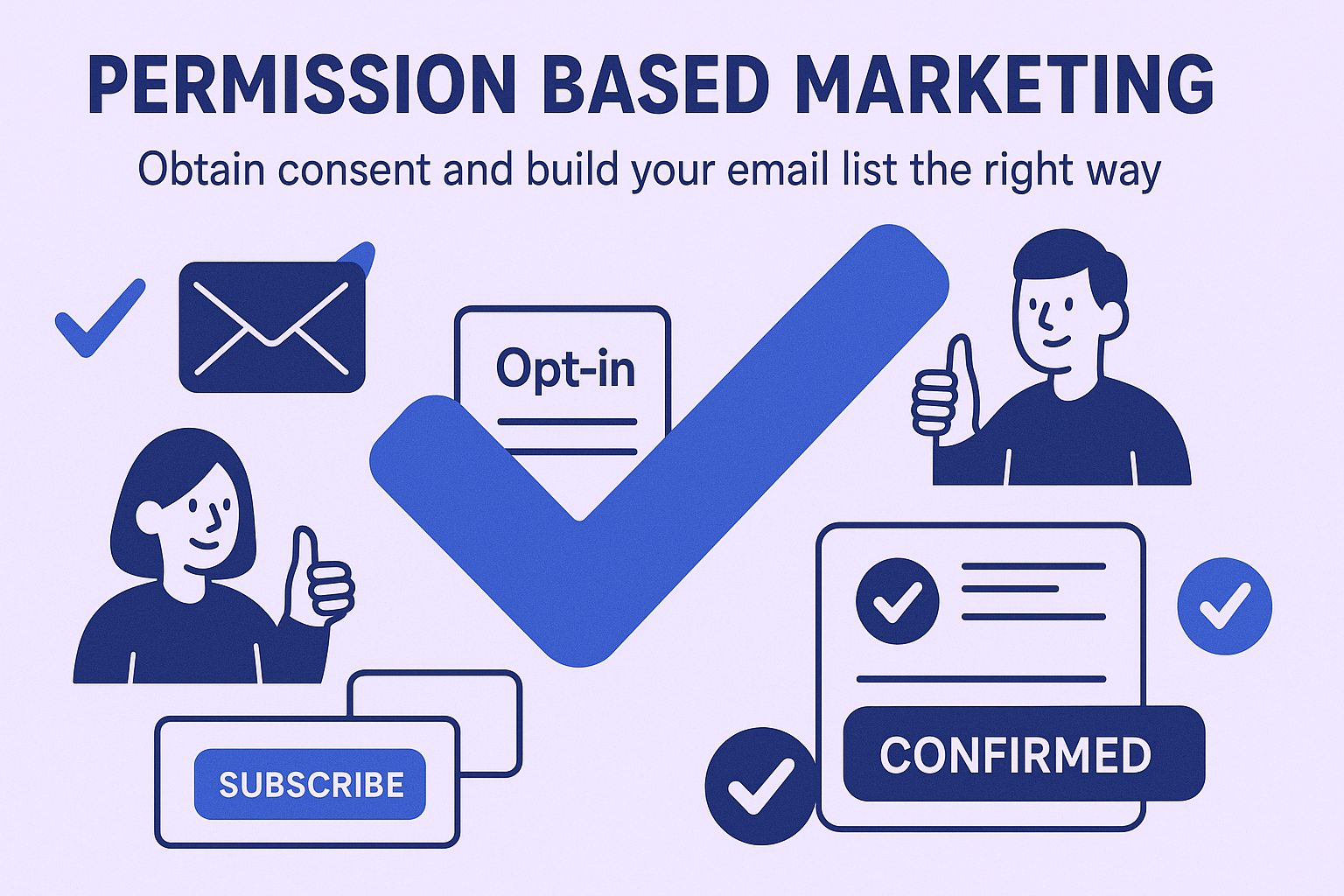
Permission-based marketing is non-negotiable here. Never add someone to your email list without explicit consent. Use sign-up forms on your website, landing pages for specific offers, and always confirm subscriptions. This extra step might reduce your numbers initially, but it dramatically improves engagement and keeps you compliant with email regulations.
Set up these three automated sequences immediately: new subscriber welcome series, post-closing follow-up for past clients, and re-engagement campaign for inactive subscribers. Use your CRM or email platform to trigger these based on specific actions or timeframes. The goal is maintaining consistent communication without manual effort for every single touchpoint.
Your welcome series should deliver immediate value while setting expectations for future emails. Post-closing follow-up keeps you connected with past clients during their most vulnerable period (right after they’ve completed a major transaction). Re-engagement campaigns help you clean your list by identifying truly uninterested subscribers while giving lukewarm contacts a reason to stay engaged.
Measuring What Matters
Most agents look at open rates and think they understand their email performance. Open rates are useful, but they don’t tell the whole story. What matters more is whether your emails are generating conversations, appointments, and ultimately, transactions. Track the metrics that connect to actual business results.
Start with these key performance indicators: open rates (aim for 20-25% in real estate), click-through rates (target 2-3%), and most importantly, conversion rates from email to consultation or showing. Set up goal tracking in Google Analytics to see how email traffic behaves on your website compared to other sources.
Review your email performance monthly, not daily. Look for patterns: which subject lines get opened most, which content generates the most engagement, and which emails lead to actual business conversations. Use this data to refine your approach, but don’t get obsessed with tiny fluctuations that don’t affect your bottom line.
Create a simple tracking spreadsheet that connects email campaigns to actual business results. Note which emails generated phone calls, which led to listing appointments, and which produced referrals. This real-world feedback is more valuable than any engagement metric your email platform provides.

Your 30-Day Email Marketing Quick Start
The biggest mistake I see agents make is trying to perfect their email marketing strategy before they start. Perfect is the enemy of good, especially when you’re missing out on staying connected with your existing contacts every day you delay. Here’s your realistic implementation plan that balances speed with effectiveness.
- Week 1: Choose your email platform and set up your account. Import your existing contacts and create your basic segments. Don’t overthink this part, just start with buyers, sellers, past clients, and everyone else.
- Week 2: Create your first newsletter template and write your welcome email sequence.
- Week 3: Send your first newsletter and launch your welcome series.
- Week 4: Review your first month’s performance and plan improvements.
Your first newsletter doesn’t need to be perfect. Include a brief personal introduction, one piece of market information, and one valuable tip. Ask recipients to reply with what type of content they’d like to see more of. This engagement not only improves your deliverability but gives you content ideas for future emails.
The most important step is sending that first email. Once you break the ice, everything else becomes easier. Your second newsletter will be better than your first, and your third will be better than your second. Progress beats perfection every time in email marketing.
| Week | Primary Task | Time Investment | Success Metric |
| Week 1 | Platform setup and contact import | 3-4 hours | Account active, contacts segmented |
| Week 2 | Template creation and welcome series | 4-5 hours | Templates ready, welcome series written |
| Week 3 | First newsletter and automation launch | 2-3 hours | Newsletter sent, automation active |
| Week 4 | Performance review and planning | 1-2 hours | Metrics tracked, next month planned |
Email marketing for real estate isn’t about sending more emails, it’s about sending better emails to the right people at the right time. The agents who master this simple concept build sustainable businesses that don’t depend on constant prospecting or expensive advertising. They create systems that nurture relationships and generate referrals long after the initial transaction.
Start with one segment, one email type, and one clear goal. Get that working consistently before you add complexity. Your first newsletter might feel awkward, your welcome series might need tweaking, and your automation might require adjustments. That’s normal and expected.
The key is starting now with what you have rather than waiting until you have the perfect strategy. Your existing contacts are already moving forward with their real estate needs. The question is whether they’ll think of you when they’re ready to act. Consistent, valuable email communication ensures you’re part of that conversation.
Pick your email platform today, import your contacts this week, and send your first newsletter within 30 days. Your future self will thank you for building these relationships systematically rather than hoping referrals magically appear.
Actionable advice for your digital / content / influencer / social media marketing.
Join 13,000+ smart professionals who subscribe to my regular updates.