When I wrote my award-winning modern digital marketing playbook Digital Threads, I included a dedicated chapter on backlinking. The reason is simple: No matter how much authority you or your company might think you have, without others on the Internet linking to your website, search engines simply will never consider you as being worthy to rank higher than your competition.
Backlinks are one of the most talked-about concepts in SEO, yet they’re also one of the most misunderstood. If you’ve ever wondered why your competitors seem to rank higher on Google despite having similar content, the answer often lies in their backlink profile.
Simply put, backlinks are links from other websites to yours, and they serve as powerful signals of credibility, trust, and authority. In this article, I’ll explain what backlinks in SEO are, why they matter, the types of backlinks you need to know, and how you can start building them strategically—even if you’re running marketing on your own as a small business owner or entrepreneur.
What Are Backlinks in SEO?
 Source
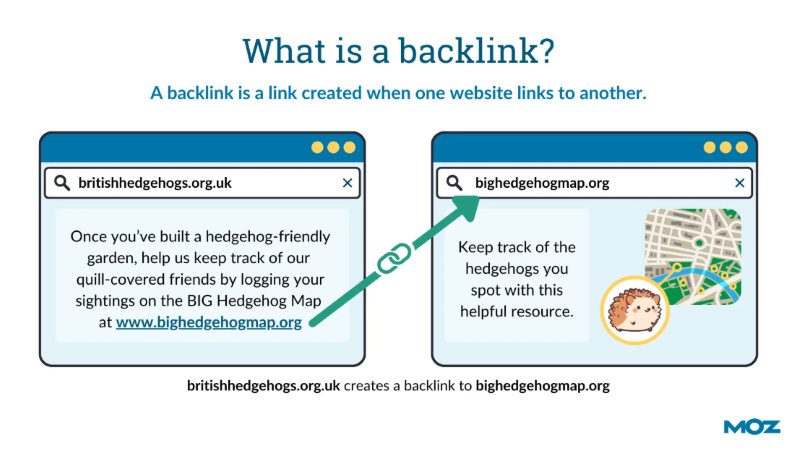
At its simplest, a backlink is just a link from one website to another—but in SEO, it carries far more weight. Think of backlinks as online votes of confidence that tell search engines your content is credible and worth ranking.
A backlink is any link from a website directing audiences back to yours. You may also provide backlinks to other sites within your own content.
Although backlink is the preferred term, inbound links, incoming links, and external links can all be used to describe a link that directs an audience back to your site. The term “backlink” is preferred to erase ambiguity and illustrate the need to direct back to your site.
Backlinks function as a vote of confidence for your content, because they suggest to search engines that your content is worthy of linking to. The vote of confidence comes from another company or site thinking highly enough of your work to encourage their audience to read it.
Why Are Backlinks Important for SEO?
Backlinks are one of Google’s most important ranking factors. The right links can improve your visibility, authority, and even brand awareness in ways that content alone can’t achieve.
Search engines rely heavily on backlinks to determine worth. Backlinks function as a top 3 Google ranking factor, nestled just after content and RankBrain. Search engines rely on backlinks because of that vote of confidence; essentially, a backlink suggests to search engines that high-quality content can be found at the link in question.
Backlinks signal authority and suggest the presence of expertise. When trying to encourage search engines to rank your content, remember E-E-A-T, or
- Experience. Whether you are linking to social media or a site, you should demonstrate experience within your niche.
- Expertise. Along with experience comes expertise, or the ability to demonstrate your knowledge and understanding of a given topic.
- Authoritativeness. Showing your authority can also help search engines direct audiences to your content.
- Trustworthiness. Search engines are more likely to recommend content they consider trustworthy.
The benefits of backlinks extend far beyond rankings. Backlinks encourage referral traffic from other sites and expose you to new audiences. They also allow for faster indexing and crawling. Finally, they encourage increased brand visibility while promoting stronger domain authority.
Further Reading: What are SEO Backlinks? Why are They Important? And Where Can We Get Them?
The Different Types of Backlinks You Should Know
 Source
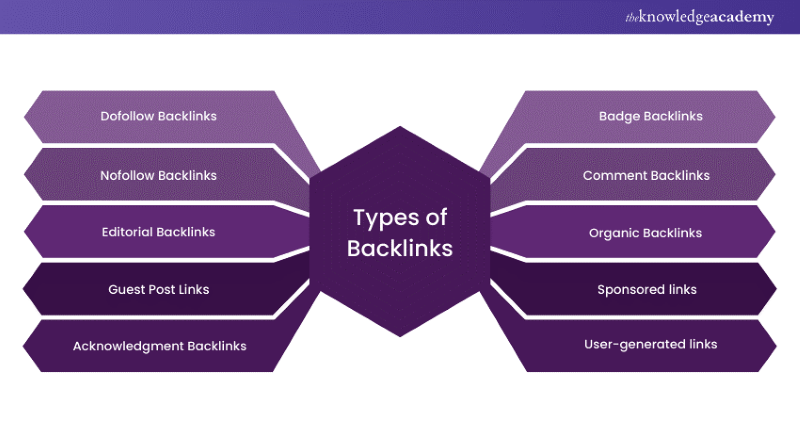
Not all backlinks carry the same weight. Understanding the different types—from dofollow and editorial links to directories and sponsored posts—will help you focus on the ones that move the needle. I have compiled the names and descriptions for each below:
- Dofollow vs. Nofollow:Although dofollow links are the standard, they are not always ideal. A dofollow link suggests domain authority and trust. A nofollow link makes for backlinks, without suggesting the linker is trustworthy or something to be directly associated with your brand.
- Editorial Backlinks: Editorial backlinks are earned naturally by providing valuable content, and seeing your content linked to. These inbound links are not bought, but can essentially be earned via developing high-quality content.
- Guest Post Backlinks: Guest post backlinks, when used strategically, can also help promote E-E-A-T principles.
- Directory/Business Profile Backlinks: These links are best for local SEO, as they typically come from businesses or brands in a similar niche at the very least, or a similar niche and location.
- UGC and Sponsored Links: User-generated content links are a great example of a “nofollow” link, as they are useful in promoting interest, without tying directly to a creator. Sponsored links are similar, in that they are paid, but still do encourage traffic without suggesting direct ties.
- Broken Backlinks: Arguably the least desirable, broken backlinks are those that once linked to your site, but no longer link properly. There are two effective ways to fix broken backlinks: contact the owner of the site to have the incorrect link replaced, or forward from the broken link to the correct page on your own site.
- Specialty Backlinks: Specialty backlinks are typically those that offer something to a customer, audience member, or prospective customer. These links often include free tools, free webinars, badges, or simple acknowledgments.
What Makes a Backlink High Quality?
 Source
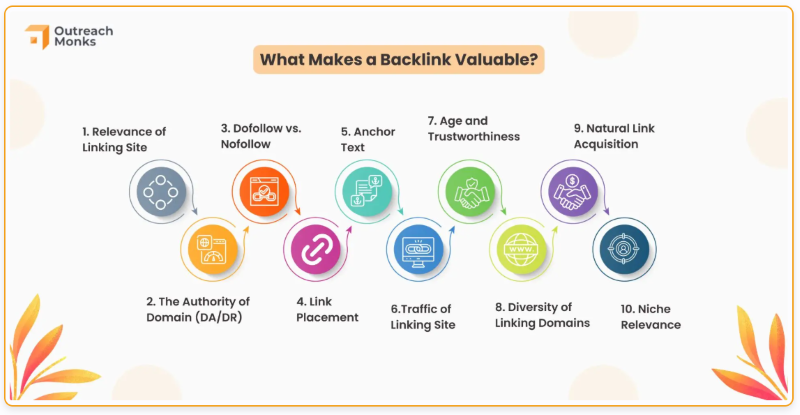
The value of a backlink depends on more than just having it. Authority, relevance, placement, and anchor text all play a role in determining whether a link strengthens—or weakens—your SEO.
The authority of the referring domain will play a role in search engine results pages. From local content or more specialized content, if the referring domain is not one that is high-quality or considered an authority, the backlink will not do a great deal to help.
Relevance to your industry or niche is also important; link spam is far too common, and irrelevant links are among the most frequent offenders.
Link position is also important! Placing a link within the main content will result in a far different performance than a link embedded in a footer or sidebar. One suggests an integral part of the piece, while the other suggests a reference or after thought.
Anchor text is also important. Anchor text that is more natural in its approach–think descriptive and organic, rather than over-optimized–can also positively contribute to backlink performance and authority.
Finally, quality backlinks are those that come from a diverse background. Links from a single, specific type of site or even a specific site itself will not perform as well as those that come from a multitude of different places.
Further Reading: 7 Best Link Building Practices in 2025
Is Your LinkedIn Not Delivering Results?
Just released: my new book to help professionals, entrepreneurs, and business owners maximize LinkedIn for real growth.
With years of LinkedIn expertise, Maximizing LinkedIn for Business Growth offers actionable steps to build your brand, expand your network, and drive results.
Start leveraging LinkedIn like never before—grab your copy now! Click the cover or button below to buy on Amazon.
Backlinks to Avoid: Protecting Your Site from Harm
 Source
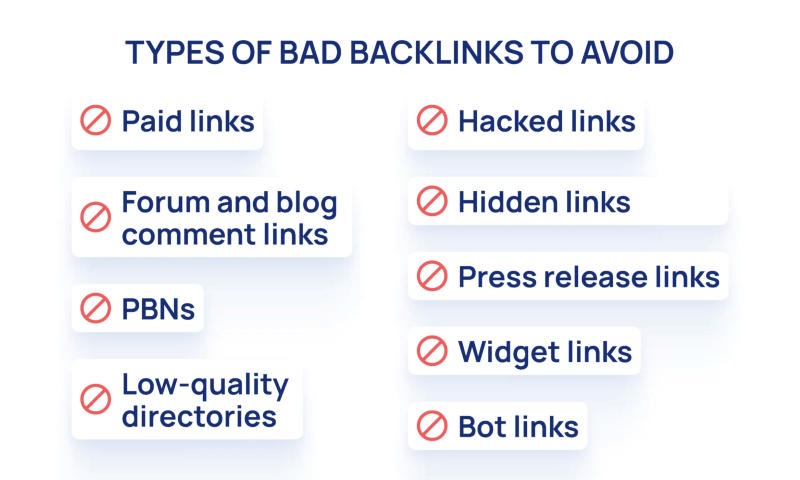
Just as good backlinks can boost your rankings, bad ones can drag your site down. That’s why it’s essential to recognize toxic links that can harm your SEO and know how to avoid them. Avoid…
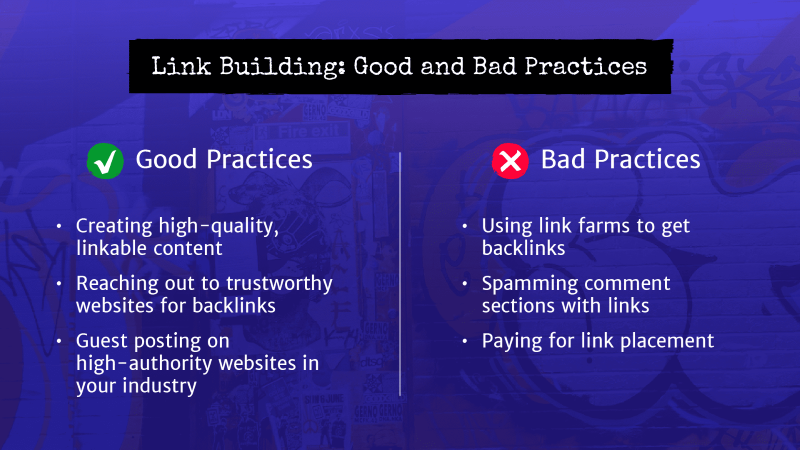
- Paid link schemes or bulk purchases. Paid links and bulk purchases can seem great in the moment, but they are often from low-quality sources or untrustworthy sites.
- Low-quality directories and link farms. Link farms are not ideal for building trust or establishing authority. Avoid them to maintain your status in SERPs.
- Spammy blog comments or forum links. Just about everyone who has perused a blog or website has stumbled upon these. They are easily identified as spam and do not promote trust or suggest authority.
- Irrelevant site backlinks that don’t fit your niche. Your niche is a huge part of how search engines identify your site and suggest you to others. If you have a handful of irrelevant links, it would actually work against you.
- Toxic backlinks. Toxic backlinks are essentially any backlinks coming from spammy or low-authority sites. Using Google Search Console and other tools, you can effectively comb through links leading back to your site and remove any that come from disreputable sources.
Protecting your site from harmful backlinks can be time-consuming, but the time is well spent. When Google and other search engines regularly find poor backlinks or questionable practices, your pages are likely to be demoted to lower positions or removed from SERPs altogether.
How to Build High-Quality Backlinks (Without Spam)
 Source
The best backlinks are earned, not bought. By focusing on valuable content, strategic outreach, and authentic relationships, you can build a strong backlink profile without resorting to shady tactics. The actions I recommend the most include:
Content-Driven Strategies
Content-driven strategies include original research, case studies, and thought leadership. By creating and releasing original research and case studies through guides, tutorials, and other evergreen resources, you can drive more visits to your site via backlinks.
Do not be afraid to produce infographics and visual content, as well. While you may not initially think of images when you think of backlinks, visual search is huge and can help bring new audiences to you via high-quality visual content used on other sites.
Relationship-Driven Strategies
Relationship-driven strategies are those that rely on facilitating relationships with other brands and influencers or content creators. Guest blogging on authoritative is one of the most popular and frequently-used ways to generate backlinks through developing relationships.
PR outreach–think HARO, journalist requests, and expert quotes–can also be useful. PR outreach can help spark interest and deliver organic, highly relevant backlinks.
Finally, consider partnerships, collaborations, and community contributions. By developing relationships with others in your niche, and engaging in partnerships and collaborations, you are creating a plethora of opportunities to link back to your site.
Technical/SEO-Driven Strategies
From an SEO perspective, one of the most effective tools at your disposal is simple fixing. When you discover broken links, repair them! Broken link building can go a long way in improving your SEO scores and driving traffic.
Link reclamation is another option available to you. In link reclamation, you turn unlinked mentions into links directing back to your site. By using tools like Ahrefs and the aforementioned Google Search Console, you can identify any broken or missing links and reach out to the site owner in question with a corrected link.
Further Reading: 11 Actionable Link Building Strategies For 2025 and Beyond
You don’t have to guess whether your backlink strategy is working. Free and paid tools like Google Search Console, Moz, and Ahrefs make it easy to track your links and spot opportunities or problems. The tools I recommend include:
- Google Search Console: A free, beginner-friendly option, Google Search Console is often the go-to for backlinks.
- Moz Link Explorer: Moz is a wide-reaching tool, but even if you are not making use of all available Moz tools, the site allows for 10 free backlink inquiries each month.
- Ahrefs, Semrush, Ubersuggest: All falling within the same basic function, these platforms are full-service management tools that include backlink monitoring as part of their overall suite of tools.
When reviewing your backlink profile, remember to focus on the authority of the site in question, the spam score of the site, and the anchor text being used. All of these can inform your next steps to monitor backlinks and improve your SEO scores.
Further Reading: The 21 Best SEO Tools to Power Your Search Engine Marketing
When Should Small Businesses Focus on Backlinks?
If you’re running a small business, backlinks shouldn’t be your first SEO priority. They become most effective once your website has a solid content foundation and clear value worth linking to. If you are a smaller business, or a newer brand, focus on building up your site and content library first.
Once you have a solid catalog of content, you can move on to backlinks–but remember that content quality should always come before trying to produce backlinks. If you produce consistently high-quality content, the backlinks are more likely to come organically.
The best small business strategy I suggest is this: start by building your healthy foundation. Get your website structure and on-page SEO sorted and settled, then move on to content creation and building backlink-friendly pages.
Remember that backlink-building is only possible when you have content others consider worth a link. Even if your catalog is small, quality content is going to work better for you than a massive catalog of subpar material. Once you have content worth linking back to, you can begin the link-building process.
Finally, think of backlinks as part of your branding building efforts and a form of relationship marketing. Backlinks are not just an SEO hack; they are a way to procure organic introductions to new audiences, and show the value of your brand.
Further Reading: How to Find Competitors’ Backlinks: 5 Proven Methods That Actually Work
How Backlinks Fit Into Your Larger Marketing Strategy
The value of backlinks goes beyond just SEO. Backlinks are about trust, credibility, and building relationships with your audience and peers. A thoughtful backlink strategy should work hand-in-hand with your content marketing, social media, and PR efforts.
When you create content that is genuinely valuable, share it across the right channels, and build authentic industry relationships, backlinks will naturally follow. This long-term approach is what separates quick SEO wins from sustainable online authority.
Actionable advice for your digital / content / influencer / social media marketing.
Join 13,000+ smart professionals who subscribe to my regular updates.