Monday, May 18, 2026
Massage tools get more credit than they deserve and less credit than they’ve earned. That contradiction is exactly why so many active people misuse them. You’ve probably heard someone swear that a foam roller “fixed” their IT band, or seen a teammate going hard with a percussive device right after a brutal training session. The truth is, understanding why use massage tools correctly separates people who recover well from those who plateau or make soreness worse. When used with realistic expectations and proper technique, these tools are genuinely valuable for muscle recovery, pain relief, and mobility.
Table of Contents
Key Takeaways
| Point | Details |
|---|
| Short-term benefits | Massage tools provide temporary pain relief and improved range of motion that aid muscle recovery. |
| Safe use matters | Following dosing guidelines and avoiding sensitive areas reduces injury risk. |
| Consistency beats gadgets | Regular use of a suitable tool is more effective than owning many without habit. |
| Not a cure-all | Massage tools complement but do not replace professional assessment and treatment. |
| Timing is key | Use tools at appropriate times like post-workout or rest days for best results. |
Massage tools are handheld or body-weight-assisted devices designed to apply mechanical pressure to soft tissue. The most common types you will encounter include percussive massage guns, foam rollers, massage balls, vibration therapy devices, and specialized body-weight tools like the Thrival system that use targeted attachments to address specific muscle groups.
Here is how each major type works:
- Percussive devices deliver rapid, repetitive pulses into muscle tissue, increasing local blood flow and temporarily reducing tightness
- Foam rollers use your body weight to compress large muscle groups, applying self-myofascial release (pressure to the connective tissue surrounding muscle)
- Massage balls target smaller, harder-to-reach areas like the glutes, hips, or shoulders with concentrated pressure
- Vibration tools use oscillation to stimulate sensory receptors in the tissue, which can reduce perceived pain and improve range of motion
- Attachment-based systems like Thrival’s non-motorized board allow you to swap between tools targeting different muscle zones with consistent, controlled pressure
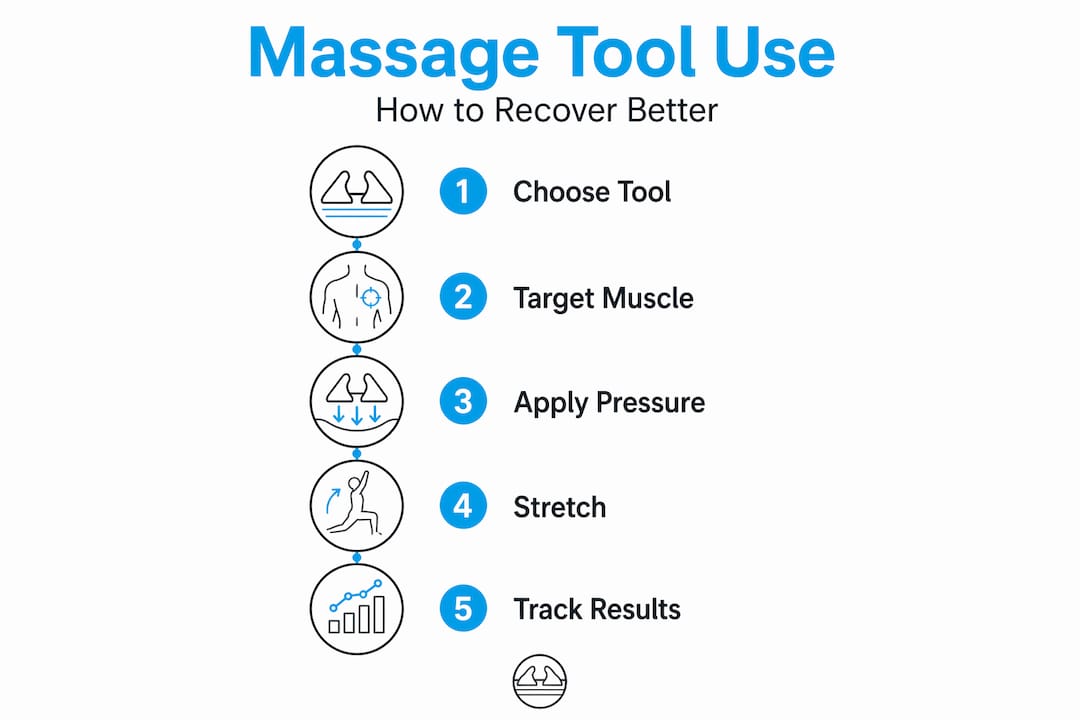
The science behind these tools centers on a few mechanisms: increased circulation, neurological desensitization of tight areas, and temporary improvements in tissue extensibility. Massage guns deliver rapid pulses that improve circulation and muscle stimulation for short-term relief. The key word is short-term. These tools do not restructure muscle fibers or break up scar tissue permanently. What they do is prepare your tissue for movement and help your body clear metabolic waste after training.
Understanding this distinction matters. If you expect permanent structural change, you will be disappointed. If you expect better recovery, reduced soreness, and improved range of motion in the short term, these tools consistently deliver. You can read more about benefits of professional-grade massage to understand what consistent, targeted pressure can do.
With the scientific basis explained, it is important to understand what benefits you can realistically expect.
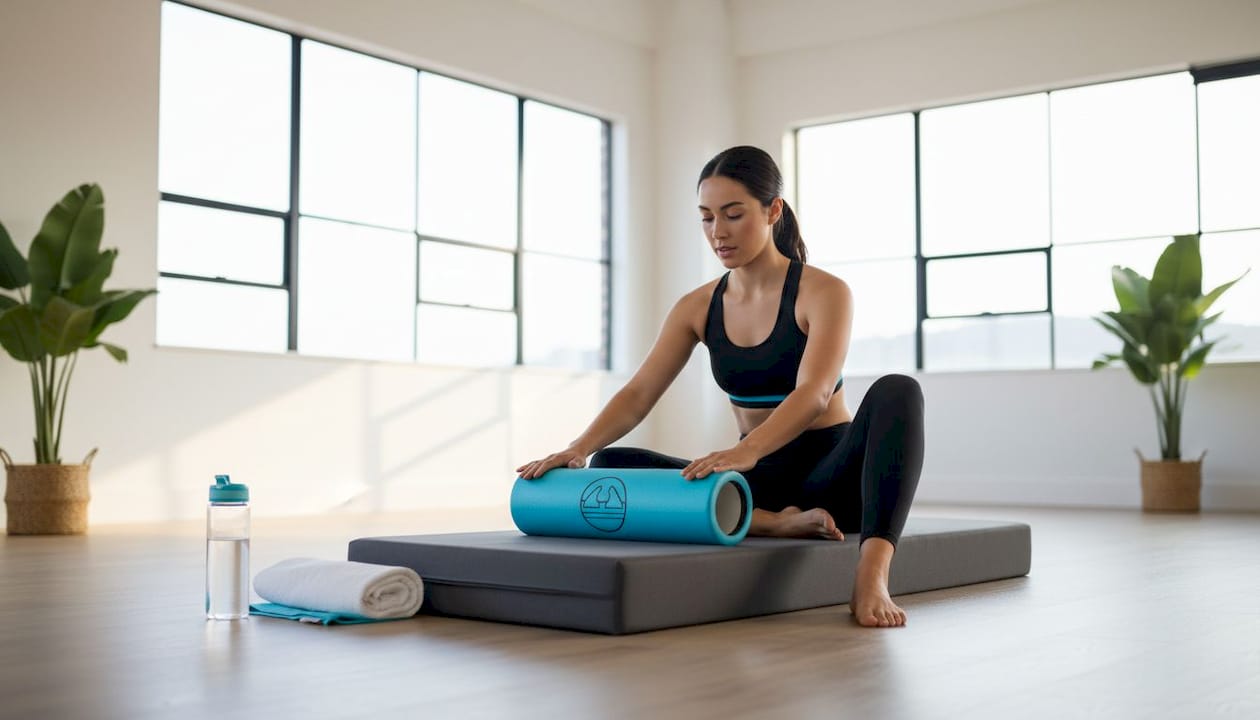
Research confirms several meaningful short-term effects. Vibration therapy significantly reduced pain and improved hip flexion in gym trainees experiencing delayed-onset muscle soreness (DOMS), outperforming some manual techniques in the process. A separate study found that a four-week program of myofascial rolling reduced lumbar pain for 83% of participants while also improving range of motion.
Here is a quick summary of what the evidence supports:
| Benefit | Evidence level | Timeframe |
|---|
| Reduced muscle soreness (DOMS) | Strong | 24 to 72 hours post-use |
| Improved range of motion | Moderate to strong | During and shortly after session |
| Decreased perceived pain | Strong | During and post-session |
| Improved lumbar flexibility | Moderate | Over weeks with consistency |
| Permanent tissue structural change | Not supported | N/A |
“The primary benefits are real but time-limited. Massage tools work best when they are part of a consistent recovery strategy, not a one-time fix.”
That framing is important. These are not placebo devices. Pain reduction and mobility gains are measurable and repeatable. But they require consistent use and should be paired with other recovery strategies to be meaningful. The benefits of soft tissue release compound over time when applied with a structured approach.
Understanding the benefits is crucial, but knowing how to use massage tools safely protects you from setbacks.
Most overuse injuries from massage tools happen for the same reason: too much pressure, applied too long, in the wrong area. The guidelines are straightforward.
Recommended practices:
- Start on the lowest speed or lightest pressure setting, especially with a new tool or muscle group
- Keep sessions 30 to 90 seconds per muscle group, avoid bony prominences and sensitive areas to prevent bruising and nerve irritation
- Total session time should stay between 5 and 15 minutes
- Move slowly over muscle bellies, not joints
- Keep steady, consistent pressure rather than grinding aggressively into one spot
Areas and situations to avoid:
- Avoid the front or sides of the neck or directly over the cervical spine bones, which houses major blood vessels and nerves
- Skip bony areas like the spine, kneecap, and elbow joint
- Do not use over acute injuries, open wounds, or inflamed tissue
- People with blood clot risk, unexplained swelling, or nerve symptoms should consult a healthcare provider first
Red flags to stop immediately:
- Sharp or shooting pain during use
- Numbness or tingling during or after a session
- Bruising that worsens with each session
- Persistent soreness that does not resolve within 48 to 72 hours
Pro Tip: If you feel a sharp sensation rather than pressure, that is your body’s signal to stop. Dull, temporary discomfort during use is normal. Sharpness is not.
Massage tools work best when they complement movement and professional care, not replace them. Pairing tool use with light mobility work and listening to your body during treatment helps you track what is helping and what is creating more stress.
Knowing how to use massage tools safely leads naturally into deciding which ones fit your personal recovery routine.
The best massage tool is not the most expensive one. The best tool is the one you will actually use consistently, and that depends on your body, your target muscle groups, and your lifestyle.
| Tool type | Best for | Pressure control | Portability |
|---|
| Percussive massage gun | Large muscle groups, fast post-workout use | Moderate | High |
| Foam roller | Broad coverage of quads, hamstrings, back | Low | Moderate |
| Massage ball | Glutes, hips, pecs, shoulder blades | High | High |
| Attachment-based system (e.g., Thrival) | Targeted zones, spine, hips, shoulders | High | Moderate |
| Vibration device | Warm-up, DOMS relief | Low to moderate | High |
A few things worth knowing before you buy:
- Owning five tools you use inconsistently beats nothing. Owning one tool you use daily wins.
- Matching attachment type to body area dramatically increases effectiveness. A ball-head attachment works well for glutes and shoulder blades, while an arch or wave design targets the spine and lower back more precisely.
- Portability matters if your recovery happens in a gym bag or hotel room. A non-motorized, modular system travels better than a large percussive device.
Pro Tip: Before investing in multiple tools, identify your one or two biggest problem areas. Start with a tool designed specifically for those zones, build the habit, then expand your toolkit.
Explore choosing muscle recovery tools that match your activity level and target areas to narrow down your options.
With the right tools chosen, here is how to make them a useful and sustainable part of your recovery strategy.
Timing matters more than most people realize. Here is a practical framework:
- Pre-workout (5 minutes max): Light, brief passes over tight spots to improve range of motion before movement. Keep pressure low and duration short to avoid overstimulating the tissue before you need it to perform.
- Immediately post-workout: Use with caution. Some people experience increased soreness when using percussive tools directly after exercise, so keep sessions brief or skip this window entirely.
- 2 to 4 hours post-workout: The most effective window. Tissue is warmed, inflammation is settling, and your body responds well to assisted circulation and pressure.
- Rest days: Excellent for longer, more thorough sessions. This is where you address persistent tight spots and maintain mobility gains.
- Before sleep: Light, slow work on the hips, lower back, and shoulders can reduce tension and support sleep quality.
Frequency depends on your activity level. Three to five sessions per week is a practical and sustainable target for most athletes. More is not always better. Using tools daily on the same overworked area can create irritation rather than relief.
Always layer massage tool use with movement. A few minutes of tool work followed by targeted stretching or mobility exercises extends the window of benefit. This combination is what makes the deep tissue massage techniques most effective for active individuals.
Pro Tip: Track your sessions for two weeks. Note which muscle areas improved and which stayed persistently tight. Persistent tightness that does not respond to consistent tool use is often a signal to see a physical therapist.
Here is where we need to say something most gear-focused content skips: massage tools are symptomatic aids, not fixes. Understanding this distinction will make you a smarter user and protect you from chasing recovery with the wrong tool.
The research is clear that these devices provide subjective pain relief and transient mobility improvements but lack evidence for permanent tissue change. Consistent use matters more than the specific device. That is worth reading twice, because the wellness industry has done a thorough job convincing people otherwise.
We have seen athletes invest in premium percussive devices and use them aggressively on pain that was actually caused by a movement pattern issue or a structural imbalance. The tool temporarily reduced the sensation, which felt like progress, but the underlying cause was never addressed. That cycle delays real recovery.
The most important variable is not which tool you own. It is how reliably you use it, how well you pair it with movement and professional assessment, and whether you recognize when symptoms are beyond what self-care can address. Massage tools work best for predictable recovery situations: post-training soreness, tight hip flexors from sitting, low back stiffness after long activity. They are genuinely useful for targeted muscle therapy in these situations.
But nerve-related pain, radiating symptoms, joint instability, and acute injuries all require clinical evaluation. If you are using your massage tool every day on the same area and the problem keeps coming back, stop. That is information your body is giving you. Act on it.
If you are ready to put this guide into practice, Thrival’s system is built around exactly the principles covered here: targeted pressure, attachment flexibility, and sustainable daily use without motors or batteries.
The Thrival Deep Tissue Pro gives you a non-motorized base board with interchangeable attachments, each designed for a specific muscle zone. The Thrival Arch Attachment targets spinal muscles and the lower back with precision, while the Thrival Bullseye Attachment applies concentrated pressure to the hips, glutes, and shoulder blades. Every product ships free, carries a lifetime warranty, and is FDA registered. It is a system built for athletes and active individuals who want professional-grade muscle therapy at home, without the complexity of multiple gadgets.
Frequently asked questions
Massage tools mainly provide short-term pain relief and improved mobility. For long-term recovery, consistent use combined with professional care delivers the best results, since tools lack evidence for permanent tissue changes on their own.
Can I use a massage gun on my neck safely?
Yes, with limits. It is safe to work the trap muscles around the neck, but avoid the front or sides of the neck and directly over the cervical spine to prevent nerve or vascular injury.
How long should a typical session with a massage gun last?
Keep each muscle group to 30 to 90 seconds, with a total session of 5 to 15 minutes. Limit time per muscle group to reduce the risk of tissue irritation or bruising.
People with acute injuries, unexplained swelling, blood clot risk, or nerve symptoms should get medical clearance first. Individuals on blood thinners or with undiagnosed pain should consult a clinician before use.
Yes, in some cases. Using massage guns right after exercise may temporarily increase soreness for some people. Waiting a few hours post-workout or saving sessions for rest days generally produces better results.
Recommended