Thursday, July 2, 2026
Portable recovery tools are compact devices designed to deliver effective muscle therapy anywhere, making them the most practical option for daily pain relief, mobility improvement, and long-term physical wellness. The question of why choose portable recovery tools comes down to three factors: accessibility, consistency, and cost. Portable physiotherapy tools allow immediate pain management, motivate users, and speed healing by controlling stiffness anytime. Thrival builds its entire product line around this principle, offering a non-motorized, attachment-based recovery system that travels with you and targets the back, hips, neck, and shoulders with professional-grade precision.
The single biggest advantage of portable recovery tools is that they remove the clinic from the equation. Therapy compliance increases by 40% when people no longer need a fixed gym or clinic location. That number reflects a simple truth: the easier recovery is to access, the more often it actually happens.
Cost is the second major factor. Complete portable recovery kits often cost under $100–$200, which is less than two private therapy sessions. For people managing chronic back pain or recurring muscle tightness, that savings compounds quickly over months of regular use.
The benefits of portable recovery tools extend beyond price. They give you control over when and where you address muscle tension, which means you can respond to pain the moment it appears rather than waiting for a scheduled appointment. That immediacy matters. Immediate access to therapy is critical in preventing minor muscle tension from developing into a chronic injury.
Key advantages at a glance:
- Weight and size: Many portable tools weigh under 1.5 lbs and fit in carry-on luggage, making them practical for travelers and commuters.
- Daily use: On-demand access means you can fit a session into a lunch break, a hotel room, or a post-workout cool-down.
- Reduced clinic dependence: Regular home use cuts the frequency of expensive professional visits.
- Routine adherence: Tools that are always within reach are tools that actually get used.
Pro Tip: When evaluating portability, check the total weight with all attachments included, not just the base unit. A tool that feels light in your hand but requires a separate bag for accessories defeats the purpose.
Portable recovery tools work through two primary mechanisms: mechanical pressure and improved circulation. Percussive therapy devices, for example, deliver rapid pulses to muscle tissue, breaking up adhesions and knots that restrict movement. Mini percussive devices reduce post-exercise soreness by 30–50% with regular use. That range reflects differences in frequency of use and muscle group targeted, not a flaw in the method.
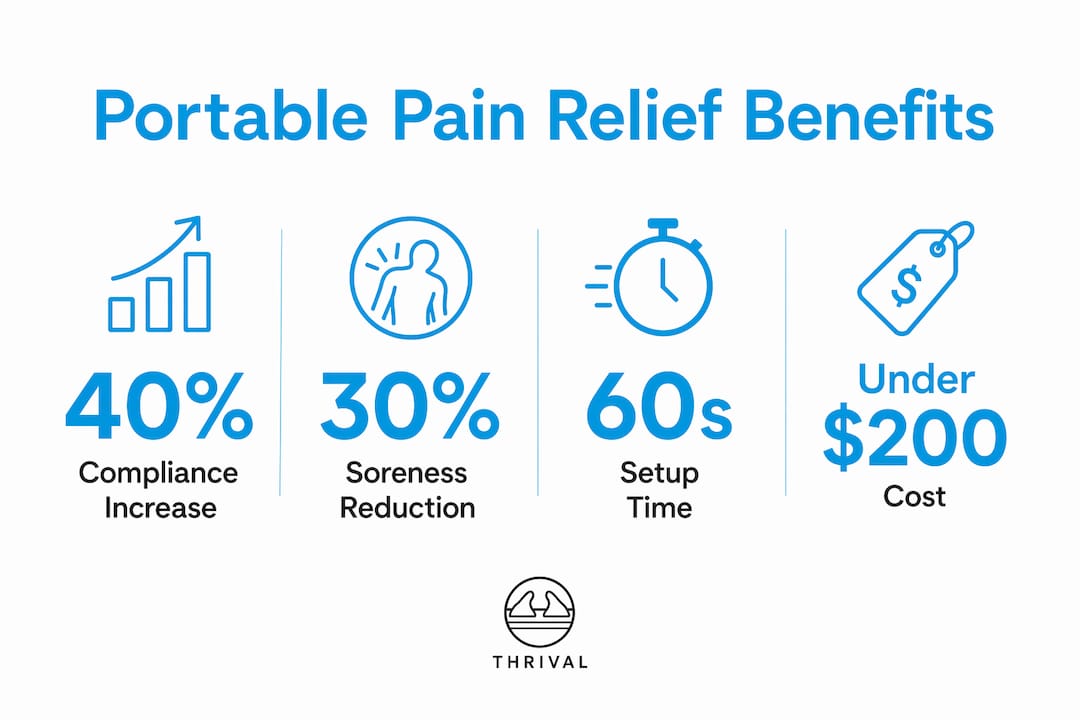
Improved blood flow is the physiological reason these tools work. When mechanical pressure is applied to a tight muscle, circulation increases to that area, delivering oxygen and clearing metabolic waste. The result is faster tissue repair and less stiffness between sessions. Regular use of massage tools can reduce muscle soreness by up to 30%, making consistent application the key variable.
Non-motorized tools like the Thrival system work on the same principle through body-weight pressure. The base board accepts interchangeable attachments, including the Thrival Wave, Bullseye, Arch, and Ballhead, each designed for a specific muscle group. The Bullseye replicates the classic lacrosse ball effect for targeted trigger point release. The Arch addresses spinal decompression along the thoracic and lumbar regions. This level of specificity is typically reserved for clinical settings, but the Thrival system brings it into your living room or hotel room without a power source.
Customizability also matters for pain management. Modern percussive devices offer 3–5 vibration intensity levels to match muscle sensitivity. Non-motorized tools achieve the same result by adjusting body position and the amount of weight you apply. Both approaches let you target muscle therapy at the exact intensity your body needs on any given day.
Pro Tip: Start with the lowest pressure setting or the lightest body-weight application on a new muscle group. Soreness from overworking a tight area can set your recovery back by 24–48 hours.
| Recovery method | Soreness reduction | Setup time | Requires power |
|---|
| Portable percussive device | 30–50% with regular use | Under 60 seconds | Yes (battery) |
| Non-motorized pressure tool | Comparable with consistent use | Under 60 seconds | No |
| Foam roller (standard) | Moderate, surface-level | Immediate | No |
| Professional massage session | High, single session | Appointment required | N/A |
The most important feature in any portable recovery tool is quick accessibility. Recovery experts recommend tools that are ready for use within 60 seconds. If setup takes longer than that, the friction alone reduces how often you will actually use it.
Beyond speed, evaluate these features before purchasing:
- Weight and dimensions: A tool you will carry daily should weigh under 2 lbs and fit in a standard backpack or gym bag.
- Multi-function attachments: A single base unit with swappable attachments covers more muscle groups than multiple single-purpose devices. Multi-function attachments maximize therapy coverage while minimizing weight and travel bulk.
- Battery life (for electronic tools): Look for a minimum of 2–3 hours of continuous use per charge. A device that dies mid-session is a device that gets left at home.
- Durability: Tools built from high-density materials hold up to daily use and travel stress. Thrival’s system is US-manufactured with durability as a stated design priority.
- FDA registration: For any tool making therapeutic claims, FDA registration signals that the device has met baseline safety standards. Thrival carries this registration.
The choice between a motorized percussive device and a non-motorized pressure tool depends on your primary use case. Motorized tools deliver consistent vibration without effort, which suits post-workout recovery. Non-motorized tools like the Thrival system require body engagement, which gives you more control over pressure depth and works well for spinal decompression and deep tissue release.
Consistency is more important than intensity. Daily low-intensity sessions with portable tools improve long-term mobility more effectively than sporadic high-intensity clinic visits. That finding reframes how most people think about recovery: it is not a treatment you receive occasionally, it is a habit you build daily.
Building that habit is easier when the tool fits your actual life. Athletic coaches report that portable systems maintain mobility and structural integrity during travel and competition schedules. The same logic applies to desk workers, parents, and anyone whose schedule does not accommodate regular clinic appointments.
Practical ways to build portable recovery into your routine:
- Morning: Spend 5–10 minutes on the Thrival Arch or Ballhead attachment before getting out of bed to address overnight stiffness in the back and hips.
- Office: Keep a compact tool at your desk for a midday neck and shoulder release. A session under 10 minutes resets posture and reduces tension from prolonged sitting.
- Post-workout: Use a percussive attachment or the Thrival Wave immediately after training to flush metabolic waste from worked muscles.
- Travel: Pack the Thrival base board and two attachments in a carry-on. The non-motorized design means no battery restrictions at airport security.
- Evening: A 10-minute full-back session before sleep reduces overnight stiffness and improves sleep quality by releasing accumulated tension.
The Thrival app supports this kind of structured routine by providing guided sessions tied to specific attachments and muscle groups. That guidance removes the guesswork from sequencing, which is one of the main reasons people abandon recovery tools after the first week.
Mobility and recovery are not optional for active people. They are the foundation that keeps everything else working.
Key Takeaways
Portable recovery tools are the most effective option for consistent muscle care because they combine immediate access, low cost, and professional-grade results in a format that fits any schedule or location.
| Point | Details |
|---|
| Compliance drives results | Therapy compliance increases by 40% when tools eliminate the need for fixed clinic locations. |
| Cost advantage is real | Complete kits cost under $100–$200, less than two private therapy sessions. |
| Consistency beats intensity | Daily low-intensity sessions outperform sporadic high-intensity clinic visits for long-term mobility. |
| Quick setup is non-negotiable | Tools ready within 60 seconds see significantly higher regular use than those requiring longer setup. |
| Multi-function attachments win | Swappable attachments like the Thrival Wave, Bullseye, Arch, and Ballhead cover more muscle groups with less gear. |
The most common mistake I see is treating portable recovery tools as a backup plan. People buy them, use them once after a bad workout, and then store them in a drawer until the next injury. That approach misses the entire point.
The tools that actually change how your body feels over time are the ones you use before you feel pain. Portable tools make that possible because they are always within reach. A non-motorized system like Thrival’s requires no charging, no warm-up, and no space. You can use it on a hotel room floor at 6 a.m. or on your office carpet between calls. That accessibility is the feature most people undervalue when they are shopping.
The misconception I hear most often is that portable tools are a lesser version of clinical equipment. That is not accurate. Professional-grade performance is no longer limited to fixed equipment. The Thrival system, for example, delivers spinal decompression and deep tissue release that physical therapists use in clinical settings, just without the appointment, the commute, or the bill.
My advice for anyone starting out: pick one attachment, one muscle group, and use it every day for two weeks. The back is the best starting point for most people because it accumulates tension from almost every activity. After two weeks, the habit is set and the results are obvious enough to keep you going.
— Cameron
Thrival’s approach to portable muscle recovery
Portable recovery does not require a complicated setup or a large investment. Thrival’s non-motorized recovery system gives you professional-level muscle therapy in a single base board with four interchangeable attachments.
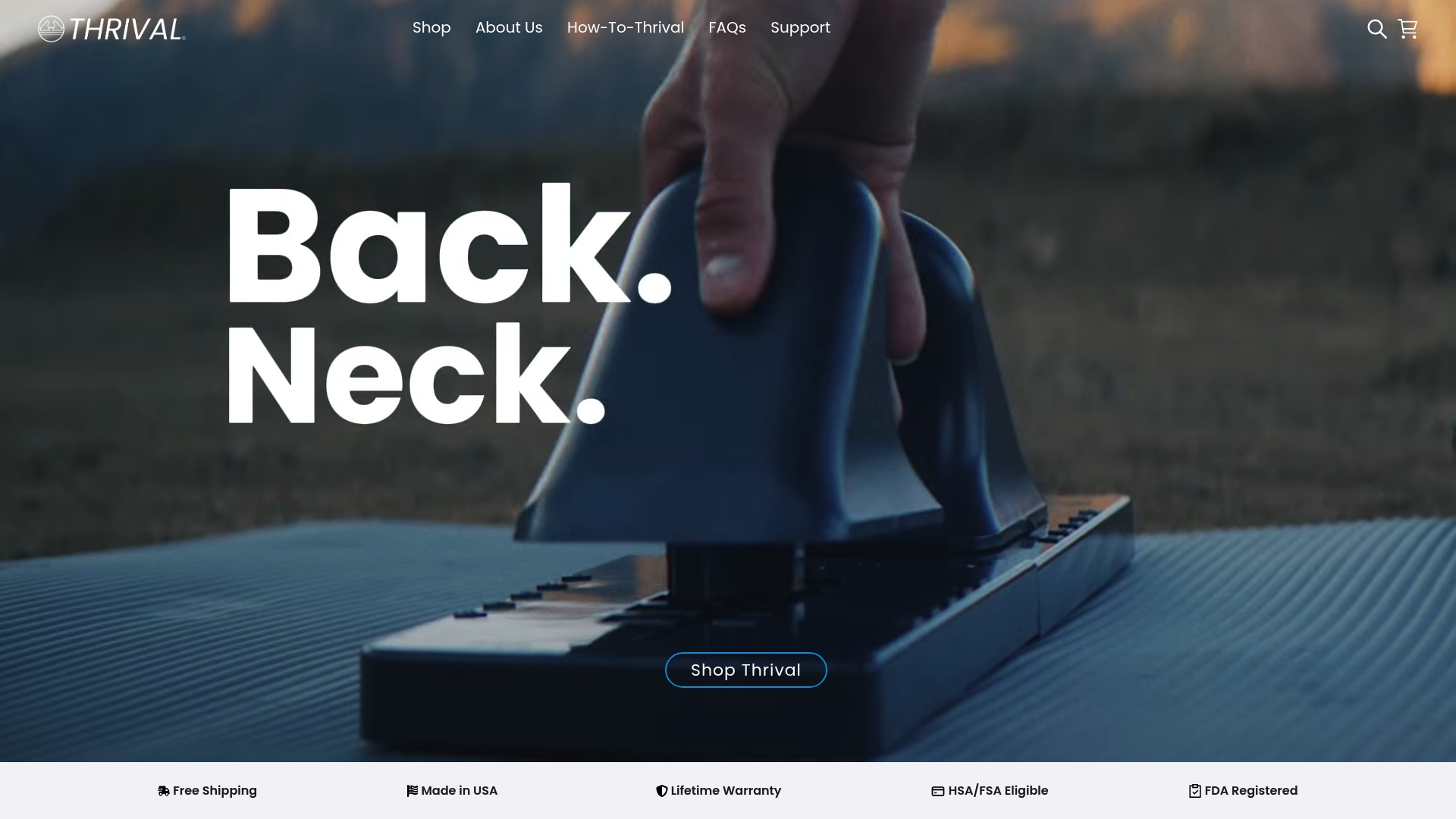
The Thrival Wave, Bullseye, Arch, and Ballhead each address a specific area, from spinal decompression to targeted trigger point release in the hips and shoulders. The system ships free, carries a lifetime warranty, and is FDA registered. A guided app walks you through routines so you get results from day one, not after weeks of trial and error. If you are ready to build a recovery habit that fits your actual life, explore the full Thrival recovery system and find the right attachment for your body.
FAQ
Portable recovery tools are compact devices designed for muscle therapy, pain relief, and mobility improvement outside of clinical settings. They include non-motorized pressure tools, percussive devices, and attachment-based systems like the Thrival board.
Yes. Regular use of massage and pressure tools can reduce muscle soreness by up to 30%, and consistent daily sessions improve long-term mobility more effectively than infrequent clinic visits.
Prioritize tools that are ready to use within 60 seconds, weigh under 2 lbs, and offer multi-function attachments. Non-motorized systems suit deep tissue and spinal work; percussive devices suit post-workout soreness.
Non-motorized tools like the Thrival system have no battery restrictions and fit in carry-on luggage, making them ideal for travel. Athletic coaches rely on portable systems to maintain mobility during competition travel.
Daily low-intensity sessions produce better long-term results than occasional intense sessions. Even 5–10 minutes per day on a targeted muscle group builds measurable mobility improvements over weeks.
Recommended