Saturday, July 11, 2026
Mobility tools are defined as physical devices that improve joint range of motion, tissue quality, and neuromuscular control through targeted pressure, resistance, or movement. Every athlete, from weekend runners to professional competitors, needs these tools because limited mobility creates compensatory movement patterns that raise injury risk and cap performance. Ignoring mobility training leads directly to performance plateaus and increased injury incidence. The good news is that structured use of mobility tools produces measurable results quickly, making them one of the highest-return investments in any training program.
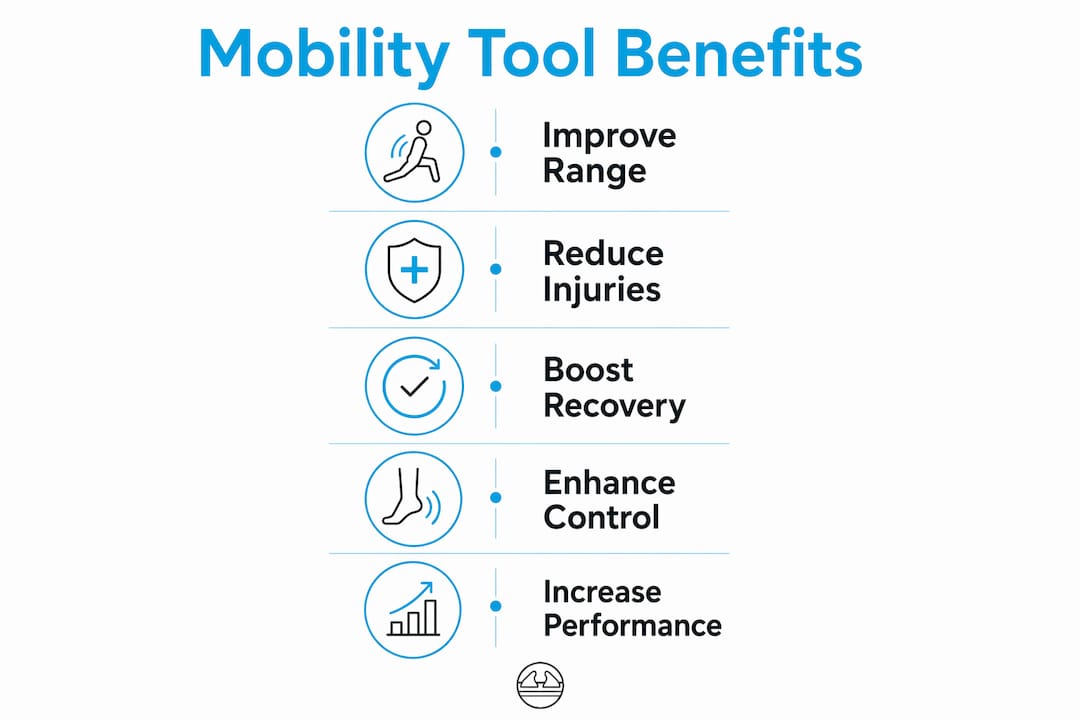
Mobility tools improve athletic performance by increasing joint range of motion and building active neuromuscular control at the limits of that range. This combination matters because power output depends on how fully and confidently a joint can move under load. A hip that cannot fully extend during a sprint forces the lower back to compensate, reducing stride length and placing stress on structures not designed for that load.
The injury data is clear. Good hip mobility correlates with roughly 30% fewer knee injuries in athletes. That number reflects a simple mechanical reality: when the hip moves well, the knee does not absorb forces it was never meant to handle.
Experts at Prime Sports Performance & Therapy note that silent compensations accumulate over time when athletes move poorly. These compensations are invisible until they become injuries. Mobility tools interrupt that cycle by restoring proper tissue quality and joint mechanics before problems develop.
- Joint range of motion increases when tools like deep tissue massage boards break down fascial adhesions and restore tissue slide.
- Neuromuscular control improves when athletes use resistance bands and suspension trainers to load joints through their full range.
- Force production becomes more efficient when movement patterns are clean and compensations are removed.
- Recovery speed accelerates when tools reduce muscle soreness and improve circulation between training sessions.
Pro Tip: Target the thoracic spine and ankles first. These two joints are the most commonly neglected in athletic training and have an outsized effect on power output and injury risk across nearly every sport.
Mobility tools fall into several functional categories, each addressing a different aspect of movement quality. Understanding the differences helps athletes build a targeted toolkit rather than collecting equipment that overlaps in function.
Foam rollers and massage boards work through myofascial release, applying sustained pressure to break down adhesions in muscle and connective tissue. Thrival’s system uses a non-motorized base board with interchangeable attachments, including the Thrival Wave, Bullseye, Arch, and Ballhead, to target specific muscle groups with precision. This approach replicates the effect of a lacrosse ball or a therapist’s thumb but with consistent, repeatable pressure across the back, hips, neck, and shoulders.
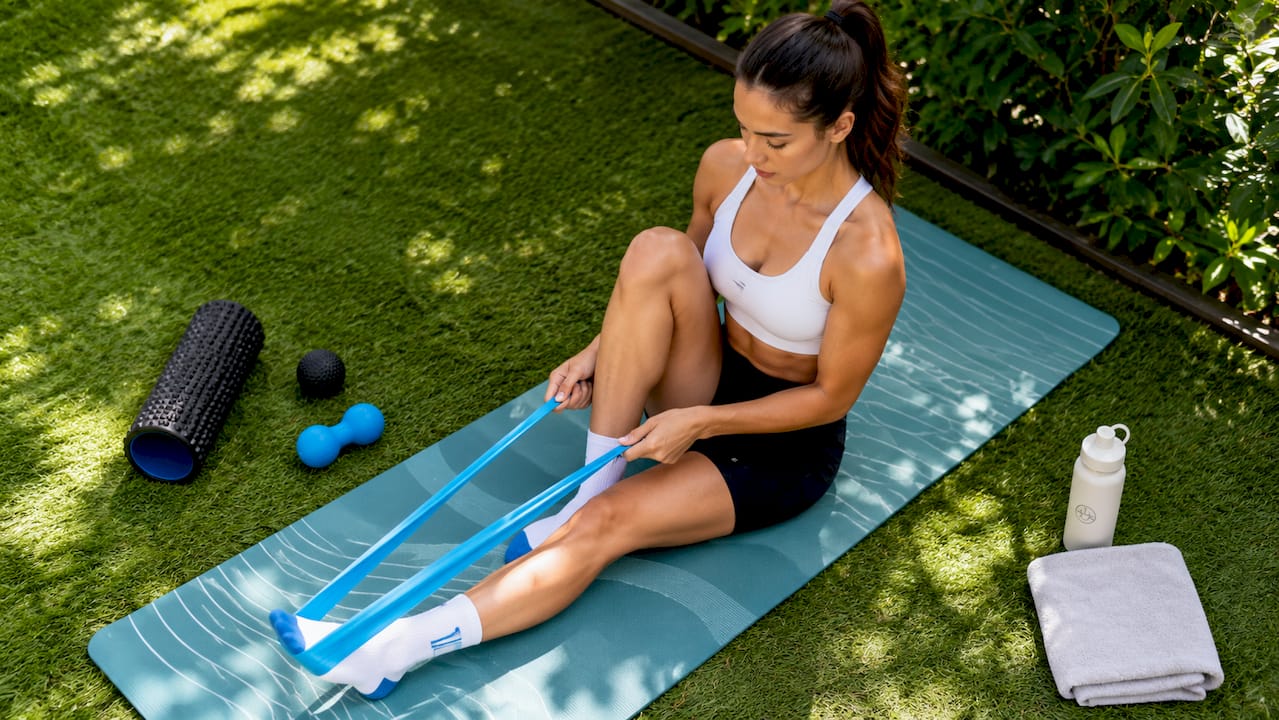
Resistance bands build active mobility by loading joints through their full range of motion. They are especially effective for hip flexor lengthening, shoulder capsule work, and ankle dorsiflexion. Suspension trainers and resistance bands weigh as little as 2 pounds, making them practical for travel and daily use.
Suspension trainers add a bodyweight loading component that challenges stability alongside range of motion. This makes them useful for athletes who need to build strength at end ranges, not just passive flexibility.
The table below outlines how each tool category fits into an athlete’s routine:
| Tool category | Primary function | Best timing | Portability |
|---|
| Deep tissue massage board | Myofascial release, tissue quality | Post-training, recovery days | High |
| Resistance bands | Active range of motion, prehab | Warm-up, prehab sessions | Very high |
| Suspension trainer | Loaded mobility, stability at range | Warm-up, strength sessions | High |
| Foam roller | General tissue flushing | Pre- or post-training | Medium |
Athletes benefit most from combining at least two categories: one tool for tissue quality and one for active range of motion work. This pairing addresses both the structural and neuromuscular sides of mobility.
How do mobility and flexibility differ, and why does it matter?
Flexibility is defined as the passive range of motion a joint can achieve when an external force moves it. Mobility is the active control an athlete has within that range. The distinction is critical for performance.
Experts at Calibration Physical Therapy explain that active mobility builds usable movement control, while passive flexibility can produce loose joints that lack the stability to perform under load. A gymnast with extreme passive flexibility but poor active control is actually at higher injury risk than an athlete with moderate range and strong neuromuscular command of it.
Mobility tools build functional range of motion by combining tissue release with active loading. Here is how a complete mobility sequence works in practice:
- Release the tissue. Use a deep tissue massage tool or foam roller to reduce tension and improve tissue slide in the target area.
- Open the joint passively. Use a band-assisted stretch or gravity-assisted position to access the full passive range.
- Load the end range actively. Perform a controlled movement, such as a deep squat hold or a hip 90/90 rotation, that requires the muscles to work at the limit of their range.
- Integrate into a movement pattern. Finish with a sport-specific movement that uses the newly available range under realistic conditions.
Pro Tip: Passive stretching alone is not enough. Tools that actively break down adhesions and improve tissue quality produce sustainable gains that static stretching cannot match.
The importance of flexibility for athletes is real, but flexibility without active control is incomplete. Mobility tools close that gap by training the nervous system to use the range it has.
Consistent daily use produces far better results than occasional long sessions. A 10–15 minute targeted warm-up built around mobility tools improves movement quality measurably and reduces injury risk before training begins. This is more effective than treating mobility as a separate workout.
Timing matters. Pre-training mobility work should focus on dynamic movements and tissue release for the joints most involved in that day’s session. Post-training work can be slower and more restorative, using sustained pressure tools to reduce soreness and support recovery.
Sport-specific targeting makes the biggest difference. Comprehensive athletic mobility must address the rotational capacity of the ankles, hips, and thoracic spine as a connected system. A basketball player needs thoracic rotation and hip mobility. A cyclist needs hip flexor length and thoracic extension. A runner needs ankle dorsiflexion and hip extension.
- Warm-up (10–15 minutes): Tissue release on target areas, followed by active range of motion drills specific to the day’s training demands.
- Cool-down (5–10 minutes): Sustained pressure on worked muscles using a massage board or roller to reduce soreness and improve circulation.
- Dedicated recovery sessions: On rest days, longer sessions of 20–30 minutes address chronic restrictions and build range progressively.
- Travel and away sessions: Lightweight resistance bands and portable massage tools maintain mobility work without access to a gym.
Structured mobility training is especially important for endurance and hybrid athletes who accumulate high training volumes. These athletes face the greatest risk of mobility breakdown because repetitive movement patterns reinforce restrictions over time.
Pro Tip: Remove barriers to consistency. Keep your mobility tools where you train or where you watch film. The athletes who improve fastest are the ones who do 10 minutes every day, not 60 minutes once a week.
The role of massage in injury prevention is well established, and daily tool use extends that benefit between professional treatment sessions.
Athletes using structured, personalized mobility programs report significant improvements in flexibility, range of motion, and recovery within 1–2 weeks of consistent use. That timeline is faster than most athletes expect, which is why many underestimate how quickly mobility work pays off.
The injury reduction data is the most compelling argument for mobility tools. Hip mobility work alone reduces knee injury rates by roughly 30%, according to sports science research. That single intervention protects one of the most commonly injured joints in sport without adding significant training time.
Coaches at Muscle & Fitness note that mobility is often treated as an afterthought rather than a core training component. Athletes who shift that mindset and treat mobility work as seriously as strength or conditioning see the clearest performance gains.
“Moving well is not optional for athletes who want to stay healthy and perform at their best. Silent compensations accumulate quietly and show up as injuries when training loads increase. Targeted mobility work is the most direct way to interrupt that pattern before it becomes a problem.”
— Prime Sports Performance & Therapy
The benefits of mobility tools extend beyond injury prevention. Athletes report better sleep, reduced chronic muscle soreness, and improved body awareness as consistent side effects of daily mobility practice. These outcomes compound over a full training season.
For athletes dealing with tendon and ligament stress, mobility tools and therapeutic exercises provide a non-surgical path to improved function and reduced pain. Addressing tissue quality early prevents minor restrictions from becoming structural problems.
Key Takeaways
Mobility tools are the most direct way athletes can improve movement quality, reduce injury risk, and accelerate recovery within a standard training schedule.
| Point | Details |
|---|
| Mobility vs. flexibility | Mobility requires active control at range; flexibility alone does not protect joints under athletic load. |
| Injury prevention data | Good hip mobility correlates with roughly 30% fewer knee injuries, making it one of the highest-value targets. |
| Daily use beats occasional sessions | A 10–15 minute daily routine produces faster, more durable results than infrequent long sessions. |
| Target neglected joints | The thoracic spine and ankles are the most overlooked joints and have the greatest impact on power and injury risk. |
| Results come quickly | Athletes on structured mobility programs report measurable improvements in range and recovery within 1–2 weeks. |
The case for treating mobility as a training non-negotiable
I have watched athletes spend years adding weight to their lifts and miles to their runs while their movement quality quietly deteriorated. The pattern is almost always the same. Performance stalls, a nagging pain appears, and only then does mobility work enter the conversation. By that point, the athlete has lost months of potential progress.
The athletes I have seen make the fastest, most durable gains are the ones who treat mobility tools the same way they treat their training shoes: non-negotiable equipment, used every single day. They do not wait for pain to motivate them. They use tissue release and active range of motion work as a daily maintenance practice, the same way a professional musician warms up their hands before playing.
What surprises most people is how quickly the body responds. Within two weeks of consistent work, athletes move differently. Their warm-ups feel easier. Their training sessions feel more controlled. The top reasons mobility matters for active people are not abstract. They show up in every rep, every stride, and every recovery day.
The conventional wisdom that mobility is “extra” work for people with time to spare is wrong. It is the foundation that makes every other training quality more accessible and more durable. Skipping it does not save time. It borrows time from your future self.
— Cameron
Athletes who are ready to make mobility work a daily practice need tools that are durable, targeted, and portable enough to use anywhere.
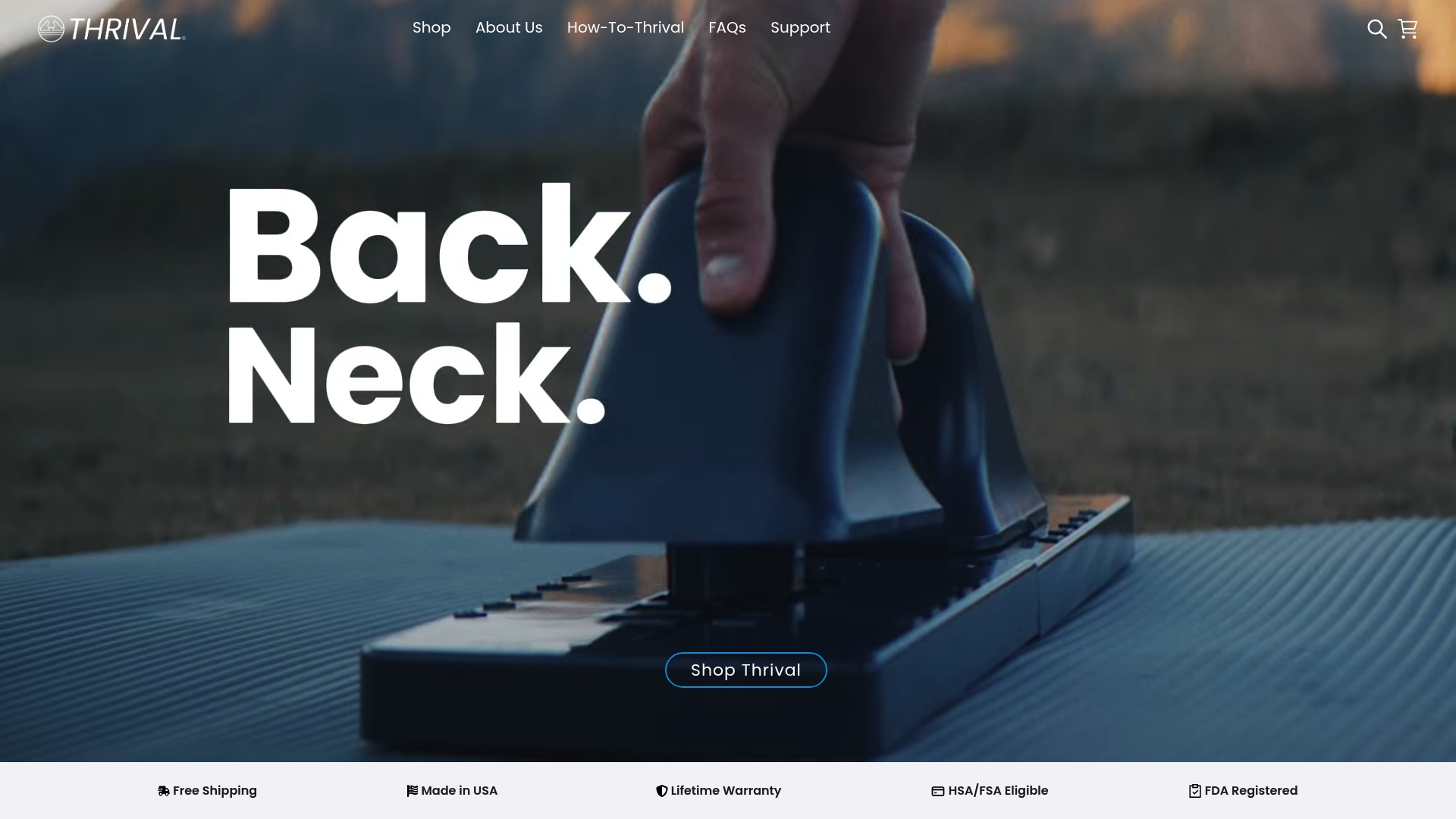
Thrival’s deep tissue recovery system is built around a non-motorized base board with interchangeable attachments, including the Thrival Bullseye for targeted pressure on tight spots and the full Thrival Deep Tissue Pro system for comprehensive muscle release across the back, hips, shoulders, and neck. Every product is manufactured in the US, FDA-registered, and backed by a lifetime warranty. Free shipping is included. The Thrival app provides guided routines so athletes know exactly how to use each attachment for maximum benefit. If you want to build a portable recovery toolkit that travels with your training, Thrival is the place to start.
FAQ
Mobility tools provide active tissue release and joint range training that passive stretching cannot replicate. They address both tissue quality and neuromuscular control, the two factors that determine how well an athlete moves under load.
Athletes on structured mobility programs report improvements in range of motion and recovery within 1–2 weeks of consistent daily use. Consistency matters more than session length.
What is the difference between mobility and flexibility?
Flexibility is passive range of motion achieved with external assistance. Mobility is the active control an athlete has within that range. Mobility is more relevant to athletic performance because it reflects what the body can do under load.
The thoracic spine, hips, and ankles are the most critical and most neglected joints in athletic training. Improving mobility in these three areas has a direct impact on power output and injury prevention across nearly every sport.
Research shows that good hip mobility alone correlates with roughly 30% fewer knee injuries. Targeted sports injury prevention through mobility work is one of the most evidence-supported strategies available to athletes.
Recommended