Friday, June 12, 2026
A tension headache is defined as the most common headache type, producing a dull, pressing pain that feels like a tight band squeezing the forehead, temples, or back of the skull. Clinically called tension-type headache (TTH), it accounts for the majority of headaches adults experience. Unlike migraines, tension headaches rarely stop you from functioning, but when they recur daily or near-daily, they erode your quality of life in ways that are easy to underestimate. Understanding the classification, triggers, and treatment options gives you a clear path to fewer headache days.
What is a tension headache and how is it classified?
A tension headache produces mild to moderate dull pain that builds steadily rather than arriving in sudden waves. The pressure typically wraps around the entire head rather than pulsing on one side, which is one of the clearest ways to distinguish it from a migraine. Most people describe the sensation as wearing a helmet that is two sizes too small.

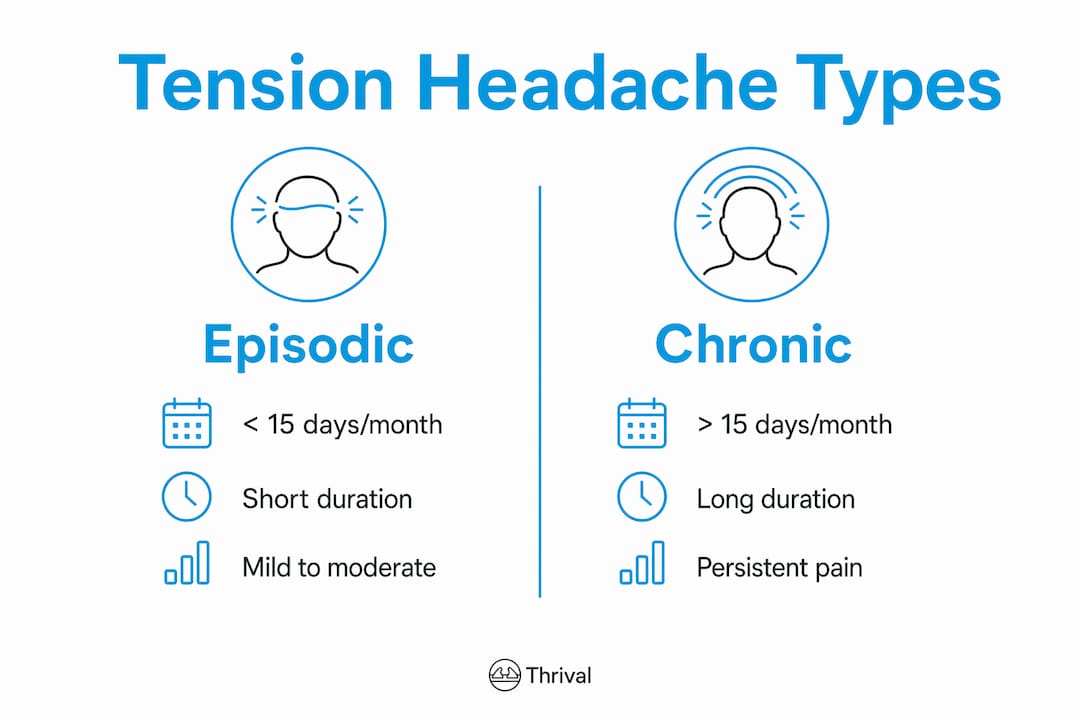
Clinicians classify tension headaches into two categories based on frequency. Episodic tension headaches occur fewer than 15 days per month, while chronic tension headaches occur 15 or more days per month for at least three consecutive months. That distinction matters because the two forms respond to different treatment strategies. Episodic headaches typically resolve with over-the-counter (OTC) medication and rest, while chronic cases often require preventive therapies and lifestyle restructuring.
What are the common symptoms and types of tension headaches?
The core tension headache symptoms are consistent across most sufferers, which makes self-identification reasonably reliable. Pain is bilateral, meaning it affects both sides of the head simultaneously. It does not throb, it does not worsen with physical activity, and it does not come with nausea or vomiting.
Typical symptoms include:
- Dull, aching pressure around the forehead, temples, or back of the head
- A sensation of tightness or squeezing, often described as band-like
- Tenderness in the scalp, neck, and shoulder muscles
- Duration ranging from 30 minutes to several days
- No accompanying nausea, vomiting, or sensitivity to light and sound
The table below summarizes the two main forms of tension headache and their defining characteristics.
| Type | Frequency | Duration | Typical Management |
|---|
| Episodic | Fewer than 15 days/month | 30 minutes to a few hours | OTC analgesics, rest, hydration |
| Chronic | 15 or more days/month for 3+ months | Hours to days | Preventive medications, physical therapy, lifestyle changes |
Chronic tension headaches are the more disruptive form. They can blur into a near-constant background pain that people begin to accept as normal. That normalization is a problem because it delays treatment and increases the risk of medication overuse.
What causes tension headaches and common triggers?
Stress is the most reported trigger for tension headaches, but that single fact leads many people to overlook the full picture. Stress activates muscle tension in the neck, shoulders, and jaw, which then feeds into the headache cycle. Managing stress alone, without addressing the other contributing factors, rarely produces lasting relief.
One important update from recent research: muscle contraction is likely a symptom of increased pain sensitivity, not the root cause of tension headaches. This means the nervous system becomes sensitized first, and the muscle tightness you feel in your neck and shoulders follows from that sensitization. That insight shifts the focus of effective treatment from simply relaxing muscles to also calming the nervous system through sleep, stress reduction, and consistent movement.
Common causes and triggers include:
- Poor posture, especially forward head position during desk work
- Eye strain from prolonged screen use without breaks
- Jaw clenching or teeth grinding (bruxism), often during sleep
- Dehydration, which reduces blood volume and increases muscle fatigue
- Sleep disturbances, including both insufficient and irregular sleep
- Skipping meals, leading to blood sugar drops
- Environmental factors such as strong odors, bright lights, or loud noise
Pro Tip: Set a recurring reminder every 45 minutes during screen-heavy work sessions to check your posture, relax your jaw, and take a 60-second neck stretch. This single habit addresses three of the most common tension headache triggers simultaneously.
For a structured approach to releasing muscle tension in the neck and shoulders, consistent daily practice matters more than any single technique.
Tension headache vs migraine: how to tell the difference
The distinction between a tension headache and a migraine is clinically significant because the treatments differ substantially. Misidentifying a migraine as a tension headache leads to undertreatment and unnecessary suffering.
The table below outlines the key differences between the two conditions.
| Feature | Tension headache | Migraine |
|---|
| Pain quality | Dull, pressing, band-like | Throbbing, pulsating |
| Location | Bilateral (both sides) | Often unilateral (one side) |
| Nausea/vomiting | Absent | Common |
| Light/sound sensitivity | Absent or mild | Pronounced |
| Physical activity effect | No worsening | Worsens with movement |
| Aura | Never | Present in some cases |
| Severity | Mild to moderate | Moderate to severe |
Tension headaches do not include nausea, vomiting, or sensitivity to light or sound. That absence is the fastest clinical differentiator. If your headache comes with any of those symptoms, a migraine or another condition is more likely. Seek a professional evaluation if your headaches are severe, sudden in onset, or accompanied by neurological symptoms like vision changes or weakness.
Tension headaches rarely disrupt daily life the way migraines do. Most people can continue working through a tension headache, even if productivity drops. That functional tolerance is useful for identification but should not become a reason to ignore recurrent pain.
How to relieve tension headaches: treatments and self-care
Tension headache treatment works best as a layered approach. OTC medications handle acute episodes, while lifestyle changes and physical therapies reduce how often those episodes occur.
Step-by-step relief and prevention plan:
Hydrate consistently. Health guidelines recommend daily fluid intake of 3.1 liters for men and 2.1 liters for women to reduce headache triggers. Dehydration is one of the most correctable triggers, yet most people underestimate how much it contributes.
Prioritize sleep. Getting at least 7 hours of sleep per night directly reduces headache frequency. Irregular sleep schedules, even when total hours are adequate, can still trigger tension headaches by disrupting the nervous system’s recovery cycle.
Fix your workstation posture. Maintaining 90-degree angles at hips and knees and positioning your monitor at eye level reduces the forward head posture that strains the neck and upper back. A monitor riser and a lumbar-supported chair are two of the most cost-effective investments for desk workers with recurrent headaches.
Use OTC analgesics carefully. Ibuprofen, acetaminophen, and aspirin are effective for episodic relief. However, overusing OTC medications can cause medication-overuse headaches, a rebound cycle that makes headaches more frequent and harder to treat. Limit OTC use to no more than two to three days per week.
Apply targeted muscle therapy. Trigger point therapy addresses specific tight spots in the neck, suboccipital muscles, and upper trapezius that directly refer pain to the head. Regular massage of these areas reduces the muscle sensitization that feeds tension headaches.
Incorporate stretching. Cervical stretches and upper back mobility work reduce accumulated muscle tension between work sessions. Research confirms that stretching relieves tension by increasing blood flow to contracted muscles and reducing the neural drive that keeps them tight.
Manage stress actively. Techniques like diaphragmatic breathing, progressive muscle relaxation, and consistent aerobic exercise all reduce the baseline stress load that makes the nervous system more reactive to headache triggers.
For chronic tension headaches, management may require preventive therapies including physical therapy, massage, and tricyclic antidepressants like amitriptyline, which reduce pain sensitivity at the neurological level. OTC analgesics alone are insufficient for chronic cases and can worsen the condition through medication overuse.
Pro Tip: Keep a headache diary for two weeks, logging time of onset, duration, pain intensity, sleep hours, water intake, and stress level. Patterns emerge quickly, and you will identify your personal triggers faster than any general advice can predict.
Key takeaways
Tension headaches are best managed through a combination of targeted muscle therapy, consistent hydration and sleep, ergonomic corrections, and careful OTC medication use to avoid rebound headaches.
| Point | Details |
|---|
| Core definition | Tension headaches produce bilateral, band-like pressure without nausea or light sensitivity. |
| Two classifications | Episodic (under 15 days/month) and chronic (15+ days/month) require different treatment approaches. |
| Root cause insight | Increased pain sensitivity drives tension headaches; muscle tightness is a secondary symptom, not the origin. |
| Medication caution | Overusing OTC analgesics more than 2-3 days per week creates medication-overuse headaches. |
| Most effective prevention | Hydration, 7+ hours of sleep, ergonomic posture, and regular muscle therapy reduce headache frequency. |
Why I think most people manage tension headaches backwards
Most people reach for ibuprofen the moment a tension headache starts, wait for it to pass, and do nothing until the next one arrives. That reactive cycle is exactly why so many people end up with chronic tension headaches. The research is clear that muscle contraction follows pain sensitization, not the other way around. That means treating the muscle tightness after the headache starts is already a step behind.
What actually works is reducing the baseline load before the headache triggers. That means fixing your workstation, drinking enough water, sleeping consistently, and doing regular neck and shoulder work on the days you feel fine, not just the days you are in pain. The people I have seen get genuine long-term relief are the ones who treat muscle therapy as a daily maintenance habit rather than an emergency response.
The medication overuse point is also underappreciated. Reaching for acetaminophen or ibuprofen more than two or three times a week for headaches creates a rebound cycle that most people never connect to their worsening headache frequency. If your headaches are getting more frequent, your medication habits are the first thing worth examining, not the last.
For chronic tension headache management, the shift from reactive analgesic use to preventive therapy, including physical therapy and professional massage, is not optional. It is the only approach that actually changes the trajectory.
— Cameron
Target the muscle tension behind your headaches with Thrival
If recurrent neck and shoulder tightness is feeding your headaches, addressing that muscle tension directly is one of the most practical steps you can take.

The Thrival Deep Tissue Pro is a non-motorized, US-manufactured deep tissue massage tool designed to target the specific muscle groups most associated with tension headaches, including the suboccipital muscles, upper trapezius, and cervical spine. The base board accepts interchangeable attachments including the Bullseye, Wave, Arch, and Ballhead, each designed to reach different muscle depths and contours. It comes with a dedicated app, instructional routines, free shipping, and a lifetime warranty. For desk workers and active individuals dealing with recurrent neck and shoulder tension, it delivers professional-grade muscle release at home.
FAQ
What is a tension headache exactly?
A tension headache is a bilateral, dull, pressing headache that feels like a tight band around the head, without nausea, vomiting, or sensitivity to light and sound. It is the most common headache type in adults and is classified as either episodic or chronic based on monthly frequency.
How long does a tension headache last?
Tension headaches can last anywhere from 30 minutes to several days, depending on severity and whether triggers are addressed. Episodic headaches typically resolve within a few hours with rest, hydration, or OTC analgesics.
What triggers tension headaches most often?
Stress is the most frequently reported trigger, followed by poor posture, eye strain, jaw clenching, dehydration, and disrupted sleep. Identifying your personal combination of triggers through a headache diary is the most reliable path to reducing frequency.
How do I know if it’s a tension headache or a migraine?
If your headache is bilateral, dull, and comes without nausea or light sensitivity, it is most likely a tension headache. Migraines typically throb on one side, worsen with movement, and come with nausea or pronounced sensitivity to light and sound.
When should I see a doctor about tension headaches?
See a doctor if your headaches occur 15 or more days per month, if OTC medications are no longer effective, or if headaches are sudden and severe. Chronic tension headaches may require preventive therapies including physical therapy, massage, or prescription medications like tricyclic antidepressants.
Recommended