Friday, July 3, 2026
Personalized recovery is defined as a tailored, evidence-based approach to healing that matches treatment methods, tools, and goals to an individual’s specific physical, mental, and social needs. Unlike generic protocols that apply the same plan to every person, individualized recovery accounts for your unique biology, trauma history, lifestyle, and life goals. The result is a plan that fits you rather than a plan you have to fit into. If you have ever followed a standard recovery routine and felt like it was missing something, that feeling is usually correct.
What is personalized recovery and how does it work?
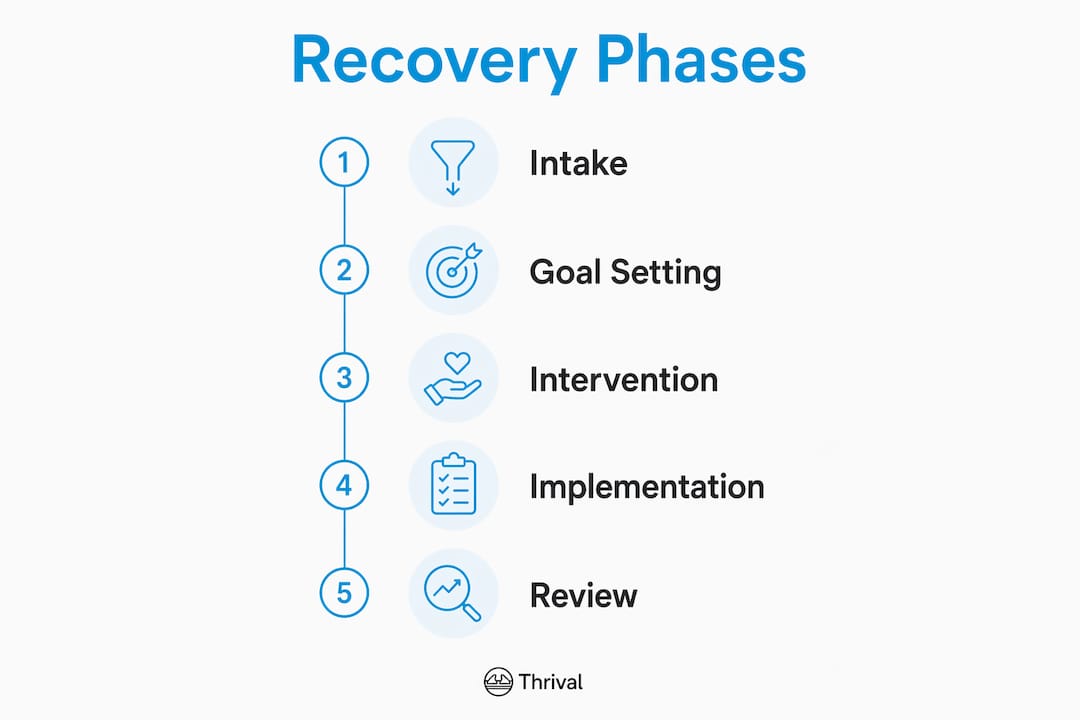
Personalized recovery works through a structured, five-phase process that builds a plan around you rather than around a diagnosis. Clinical protocols outline five core phases: intake and assessment, collaborative goal setting, intervention matching, implementation, and regular progress review. Each phase feeds into the next, and the plan changes as you change.
Phase 1: Intake and assessment. A thorough intake covers physical health, mental health history, trauma, substance use, lifestyle habits, and social support. This is the foundation. A weak assessment produces a weak plan.

Phase 2: Collaborative goal setting. Goals are set with you, not for you. They align with your personal values, daily responsibilities, and long-term vision. A goal that does not connect to your real life rarely sticks.
Phase 3: Intervention matching. Therapies, tools, and support structures are selected based on what your assessment revealed. This is where therapy modalities like Cognitive Behavioral Therapy (CBT), Dialectical Behavior Therapy (DBT), Medication-Assisted Treatment (MAT), and physical therapies get assigned to specific needs.
Phase 4: Implementation. The plan goes into action. Frequency, intensity, and method are calibrated to your current capacity, not an average person’s.
Phase 5: Progress review. A personalized recovery plan is a living document. It gets reviewed and adjusted based on real progress, not a fixed schedule. This prevents dropout and keeps the plan relevant.
Pro Tip: Ask your provider to schedule a formal plan review every four to six weeks. Plans that go unreviewed for months tend to drift out of alignment with where you actually are.
Recovery is not linear. Setbacks, plateaus, and breakthroughs all require the plan to flex. That flexibility is a feature, not a flaw.
What are the benefits of personalized recovery compared to generic approaches?
The evidence for individualized recovery over generic programs is direct and measurable. Treatment completion rates increase by up to 40% when plans are personalized rather than standardized. Higher completion means better outcomes across every metric, from pain management to long-term physical function.
Generic plans fail most often because they ignore co-occurring conditions. Between 45% and 75% of people entering treatment have co-occurring mental health disorders or trauma histories. A plan that addresses only the primary complaint while ignoring anxiety, PTSD, or chronic pain is structurally incomplete.
The benefits of a personalized approach include:
- Higher completion rates. People stay with plans that fit their lives.
- Better co-occurring condition management. Anxiety, depression, and trauma get addressed alongside physical recovery.
- Reduced relapse risk. Plans that adapt to life changes keep people on track when circumstances shift.
- Stronger motivation. Goals tied to personal values produce more consistent effort than abstract clinical targets.
- Real-world sustainability. Plans built with your schedule and responsibilities in mind are far easier to maintain.
Personalized recovery also addresses the four dimensions of recovery: Health, Home, Purpose, and Community. That framework connects medical care to meaningful life goals. A person who sees their recovery as building a better life, not just managing a condition, stays engaged far longer.
Personalized recovery programs draw from a wide range of therapy types and physical tools, selected based on individual need rather than convenience or availability.
Behavioral and psychological therapies form the clinical backbone. CBT targets thought patterns that drive harmful behaviors. DBT builds emotional regulation skills, particularly for people with trauma histories. MAT uses FDA-approved medications to manage withdrawal and cravings while behavioral therapy runs in parallel. Family therapy brings support networks into the plan, which research confirms increases accountability and long-term success.
Physical therapies and recovery tools address the body directly. Massage therapy, myofascial release, spinal decompression, and mobility work all serve specific physical recovery goals. The choice of tool depends on where your pain or restriction is, how severe it is, and how your body responds to pressure and movement.
For physical recovery specifically, adjustable muscle release tools let you target the back, hips, neck, and shoulders with different attachments based on the muscle group you are working. That kind of specificity is exactly what a personalized approach requires. You can read more about how recovery tools for athletes fit into structured programs.
| Therapy type | Best suited for |
|---|
| CBT | Thought pattern and behavior change |
| DBT | Emotional regulation and trauma |
| MAT | Substance-related withdrawal management |
| Physical myofascial release | Muscle tension, pain, and mobility |
| Family therapy | Accountability and social support |
| Lifestyle coaching | Habit formation and daily structure |
Pro Tip: Do not treat physical and behavioral recovery as separate tracks. Chronic physical pain drives psychological distress, and unmanaged stress creates physical tension. A plan that addresses both simultaneously produces faster results.
Customizing intensity and frequency matters as much as choosing the right method. A technique applied too aggressively or too infrequently loses its effect. Your plan should specify not just what to do, but how often and at what level.
You do not need a clinical setting to apply individualized recovery principles. The same logic that drives formal programs works for self-directed physical health and performance goals.
Step 1: Conduct an honest self-assessment. Identify where you feel pain, restriction, or weakness. Note when symptoms appear, what makes them worse, and what provides relief. This is your baseline.
Step 2: Seek a professional evaluation. A physical therapist, chiropractor, or sports medicine provider can identify issues you cannot see yourself. Personalized treatment plans consistently outperform generic protocols in pain relief outcomes. A professional evaluation gives you data to build from.
Step 3: Set specific, measurable goals. “Feel better” is not a goal. “Reduce lower back pain enough to sit for two hours without discomfort within eight weeks” is a goal. Specificity makes progress visible.
Step 4: Select the right tools for your target areas. A deep tissue tool with interchangeable attachments lets you address the back differently than the hips or shoulders. Match the attachment and pressure level to the muscle group and your current pain tolerance.
Step 5: Build a consistent routine. Recovery routines drive performance gains when applied consistently. Sporadic effort produces sporadic results.
Step 6: Review and adjust every four to six weeks. Track what is working and what is not. Adjust frequency, intensity, or tool selection based on real feedback from your body.
Pro Tip: Keep a simple recovery log. Note the date, what you did, how long, and how your body felt afterward. Three weeks of data will show you patterns that feel invisible day to day.
Flexibility and mobility work belong in every personalized physical recovery plan. They reduce injury risk, improve range of motion, and accelerate tissue repair. Skipping them to save time is one of the most common reasons physical recovery stalls.
Key Takeaways
Personalized recovery outperforms generic approaches because it addresses the specific biological, psychological, and social factors that drive each person’s condition, producing measurably higher completion rates and better long-term outcomes.
| Point | Details |
|---|
| Defined by specificity | Personalized recovery matches every element of a plan to the individual’s unique needs and goals. |
| Five-phase structure | Effective plans follow assessment, goal setting, intervention matching, implementation, and regular review. |
| 40% higher completion | Individualized plans increase treatment completion rates by up to 40% compared to generic programs. |
| Physical tools matter | Adjustable muscle release tools and targeted physical therapies are core components of physical recovery plans. |
| Plans must evolve | A recovery plan that does not get reviewed and adjusted will fall out of alignment with your actual progress. |
Why personalized recovery is a technical requirement, not a philosophy
People often treat personalization as a nice-to-have. I have seen that assumption cost real progress. Personalized recovery is not a philosophical preference. It is a technical requirement.
Generic plans ignore the biological, psychological, and social triggers that are specific to each person. Those triggers do not disappear because a plan does not address them. They resurface as relapse, plateau, or injury. I have watched people follow textbook recovery protocols and still stall, not because the protocol was wrong in general, but because it was wrong for them specifically.
The flexibility built into a good personalized plan is often misread as a lack of rigor. The opposite is true. Flexible outpatient plans sustain engagement far better than rigid programs, because they can absorb life. A plan that breaks every time your schedule changes is not a plan you can keep.
What I find most underused is the physical dimension. People invest in behavioral and psychological support but neglect the body. Chronic muscle tension, restricted mobility, and unmanaged pain all feed back into psychological stress. Addressing the physical side with the same specificity you bring to the mental side changes the entire recovery picture.
Think of your recovery plan as a customized lifestyle roadmap, not a temporary fix. It should build across health, home, purpose, and community simultaneously. That is when recovery stops feeling like treatment and starts feeling like progress.
— Cameron
Physical recovery works best when your tools match your target areas precisely. Thrival builds non-motorized, adjustable muscle release systems designed for exactly that kind of specificity.
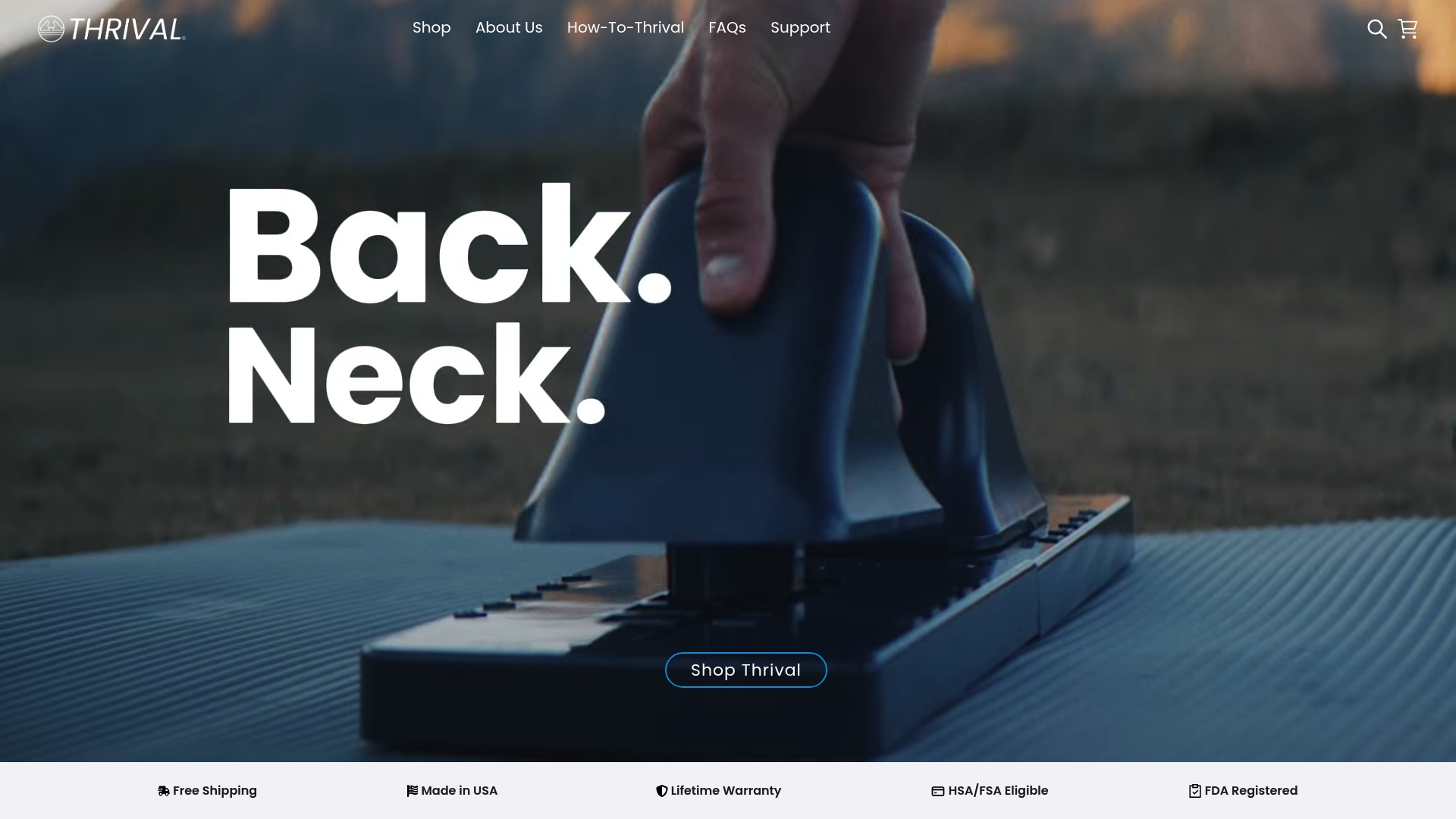
The Thrival base board accepts interchangeable attachments including the Arch, Bullseye, Wave, and Ballhead, each designed for a different muscle group and pressure profile. You select the attachment that fits your current recovery goal, whether that is spinal decompression, hip flexor release, or shoulder and neck work. Every product is FDA-registered, US-manufactured, and backed by a lifetime warranty. Thrival also provides instructional routines and a dedicated app to guide you through each session. Explore the full Thrival recovery system to find the right combination for your plan.
FAQ
What is the difference between personalized and generic recovery?
Personalized recovery tailors every element of a plan to the individual’s specific physical, mental, and social needs. Generic recovery applies the same protocol to everyone, regardless of their unique circumstances.
How does personalized recovery work in practice?
It follows five phases: assessment, goal setting, intervention matching, implementation, and progress review. The plan is updated regularly based on real results rather than a fixed timeline.
What techniques are used in personalized recovery programs?
Common techniques include CBT, DBT, MAT, family therapy, physical myofascial release, mobility training, and lifestyle coaching. The specific combination depends on the individual’s assessment results.
Why do personalized recovery plans produce better outcomes?
Treatment completion rates increase by up to 40% with individualized plans because they address co-occurring conditions, align with personal goals, and adapt to life changes over time.
Can I apply personalized recovery principles without a clinical program?
Yes. Self-assessment, professional evaluation, specific goal setting, targeted physical tools, and regular plan reviews all apply outside formal clinical settings and produce measurable improvements in pain management and physical performance. A step-by-step rehab approach can guide you through the process.
Recommended