Thursday, April 30, 2026
Most people think of massage as something you book at a spa for a birthday treat. That picture is incomplete. Therapeutic massage is a hands-on manual therapy intended to address health issues by working on soft tissues to reduce pain and muscle tension and support overall wellbeing. It has a clinical purpose. Whether you’re managing chronic low-back pain, recovering from a sports injury, or dealing with persistent neck tightness from sitting at a desk all day, understanding what therapeutic massage actually does and what the science says about it can help you make smarter choices for your recovery.
Table of Contents
Key Takeaways
| Point | Details |
|---|
| Problem-focused therapy | Therapeutic massage targets health concerns like pain and muscle tension, not just relaxation. |
| Technique variety | Multiple massage techniques exist to address different tissue types and treatment goals. |
| Evidence is mixed | Research shows benefits for certain pains, but effects may vary by condition and individual. |
| Safety matters | Massage can have side effects and is not suitable for everyone—talk to your provider if you have health conditions. |
| Integrate with care | Massage works best when combined with other treatments and active self-care routines. |
Defining therapeutic massage and how it works
Therapeutic massage is not a single technique. It is a category of treatment with a specific clinical focus. Where a relaxation massage is designed to create a general sense of calm, therapeutic massage targets a defined problem in soft tissue, which includes muscles, tendons, ligaments, and fascia (the connective tissue that wraps around muscles and organs).
According to the Cleveland Clinic, therapeutic massage is typically delivered by trained or licensed professionals with a clinical outcome focus on specific problem areas. That distinction matters. A licensed massage therapist working in a clinical setting will assess your posture, ask about your history of injury, and build a session plan around your specific complaint rather than simply applying generalized pressure across your back.
The manipulation of soft tissues is designed to reduce pain, relieve muscle tension, and reduce stress, using both light and deep touch techniques depending on what the tissue requires. At a mechanical level, targeted pressure increases local circulation, which helps flush metabolic waste from overworked muscle fibers. At a neurological level, it can temporarily reduce the intensity of pain signals reaching the brain, which is why many people feel relief during and immediately after a session.
Here is a quick reference for the tissue types therapeutic massage can address:
| Tissue type | Role in the body | Common problem |
|---|
| Muscle | Movement and force production | Spasm, tightness, strain |
| Tendon | Connects muscle to bone | Tendinopathy, overuse pain |
| Ligament | Connects bone to bone | Post-sprain stiffness |
| Fascia | Wraps and connects all structures | Restriction, trigger points |
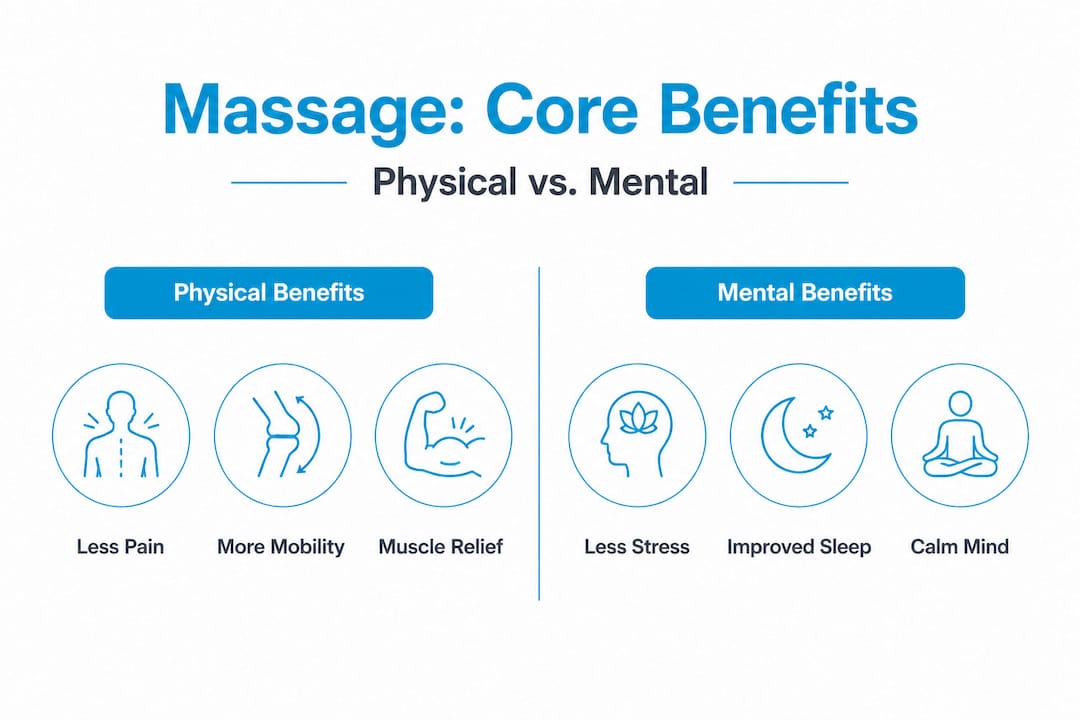
For those interested in replicating targeted soft tissue work between professional sessions, deep tissue approaches can extend the clinical benefits into your daily routine.
Main types of therapeutic massage techniques
With a foundational understanding in place, it helps to know the specific techniques that practitioners use and when each one tends to be most appropriate.
Swedish massage uses long gliding strokes, kneading, and rhythmic tapping applied to the superficial muscle layers. It is primarily used for general tension, circulation support, and stress reduction. The pressure is lighter than other styles, making it accessible to people who are new to massage or who have a low pain threshold.
Deep tissue massage works on the deeper layers of muscle and fascia. Therapists use slower, more deliberate strokes and greater pressure to reach tissue that surface-level work cannot access. This technique is most appropriate for persistent muscular pain, postural problems, and areas with significant tightness or restriction.
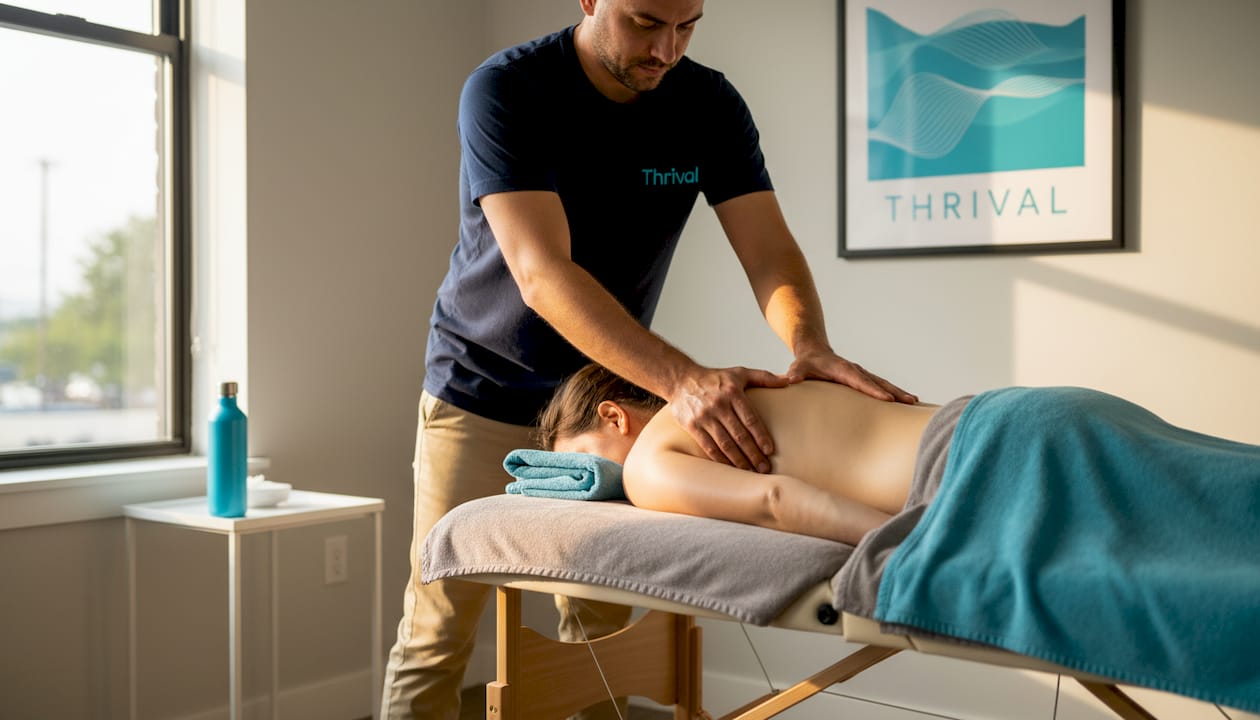
Trigger point therapy focuses on specific, hyperirritable spots in muscle tissue (often called “knots”) that can refer pain to distant areas of the body. For example, a trigger point in the upper trapezius muscle can create a recognizable pain pattern that runs up the side of the neck and into the temple. Sustained pressure on these points aims to interrupt the pain cycle and release the contraction.
Shiatsu and acupressure are rooted in East Asian medicine. These techniques apply rhythmic pressure to specific points along the body, often following meridian lines. While the theoretical framework differs from Western anatomy, research has examined these methods for conditions like headaches, lower back pain, and nausea.
Research consistently shows that massage therapy uses multiple technique categories matched to specific goals such as pain reduction, muscle tension relief, and stress reduction. No single approach works for every person or every condition.
Here is a comparison of the four major techniques:
| Technique | Pressure level | Primary target | Best suited for |
|---|
| Swedish | Light to moderate | Superficial muscle, circulation | General stress, relaxation |
| Deep tissue | Moderate to firm | Deep muscle layers, fascia | Chronic pain, stiffness |
| Trigger point | Focused and sustained | Specific muscle knots | Referred pain, tight spots |
| Shiatsu/acupressure | Moderate | Meridian points, energy pathways | Headaches, stress, low back pain |
Key things to keep in mind when choosing a technique:
- Deep tissue massage is not simply “harder” Swedish massage. It requires specific training to perform safely.
- Trigger point therapy may produce a temporary ache during treatment. That response is normal and generally short-lived.
- Swedish massage can be a good starting point if you are new to therapeutic work or particularly sensitive to pressure.
- Communication with your therapist about pressure preference and areas to avoid is critical regardless of the technique.
Pro Tip: Tell your therapist exactly where your pain is located, what movements aggravate it, and how long the problem has been present. This information shapes the session far more effectively than simply saying “my back hurts.”
For home-based follow-up, deep tissue techniques can be replicated with the right tools to maintain progress between professional appointments.
What the evidence says: Benefits and limitations
Understanding how the major techniques work leads to the next logical question: what does the science actually show about whether therapeutic massage produces meaningful results?
The honest answer is nuanced. The evidence is strong enough to support the use of massage for certain pain conditions, but it is not uniformly strong across all applications.
“Massage therapy appears to have benefits for some health conditions, including low-back pain and chronic neck pain, but the research is preliminary or conflicting for many other conditions.” — NCCIH
For low-back pain specifically, multiple reviews suggest short-term improvement in pain and function. For cancer-related pain, some studies show short-term reductions in self-reported discomfort. However, the NCCIH notes that results are condition-dependent, and many studies have methodological limitations such as small sample sizes and lack of blinding.
For neck pain, a Cochrane review found low-certainty evidence suggesting that massage probably results in little to no difference in pain or function at up to 12 weeks compared to placebo for subacute or persisting neck pain. This does not mean massage is without value for neck pain, but it does mean you should not expect it to be a standalone cure for a persistent problem.
Here is a clear-eyed summary of where the evidence currently stands:
- Low-back pain: Moderate short-term evidence supports massage as a useful addition to care, particularly when combined with exercise.
- Chronic neck pain: Evidence exists but is low certainty; outcomes at 12 weeks are modest at best.
- Headaches and migraines: Preliminary evidence shows some benefit for tension-type headaches; research is ongoing.
- Anxiety and stress: Consistent short-term reductions in self-reported anxiety are observed across studies, though mechanisms are not fully established.
- Cancer-related pain: Short-term pain reduction noted in some studies; massage is often used as a complement to medical care in palliative settings.
Understanding massage research for pain conditions can help you approach any treatment decision with realistic expectations. Similarly, looking into the evidence for chronic illness and mobility underscores why consistency across multiple recovery strategies matters more than any single intervention.
Side effects worth knowing: Post-session soreness is the most commonly reported effect and typically resolves within 24 to 48 hours. Bruising can occur, especially with deeper techniques or in individuals on blood-thinning medications.
Safety, contraindications, and who should avoid massage
After examining benefits and limitations, it is critical to address when therapeutic massage may not be appropriate, or may even carry risk.
Most people tolerate therapeutic massage well. But certain health conditions require extra caution or make massage inadvisable without medical clearance.
Safety and contraindications matter: massage may cause bruising or bleeding in people with clotting disorders, and pressure should not be applied directly to bones affected by osteoporosis or metastatic cancer. These are not just theoretical concerns. A therapist applying firm pressure to a vertebra compromised by bone metastasis could cause a fracture. Knowing these limits protects you.
Conditions that require caution or medical consultation before massage:
- Bleeding disorders or anticoagulant medication use: Increases risk of bruising and internal bleeding.
- Advanced osteoporosis: Bones are fragile; firm pressure carries fracture risk.
- Active infections, fever, or open wounds: Massage can spread infection or worsen inflammation.
- Blood clots or deep vein thrombosis (DVT): Massage could potentially dislodge a clot, creating a serious medical emergency.
- Unstable cardiovascular conditions: Including uncontrolled hypertension or recent cardiac events.
- Pregnancy: Certain techniques and pressure points are contraindicated during pregnancy; seek a therapist specifically trained in prenatal massage.
- Recent surgery: Scar tissue and healing structures need time before manual therapy is safe.
Before your first session, review the contraindications for massage to understand what conditions require a conversation with your doctor first.
Pro Tip: Always fill out your intake form honestly. Therapists rely on your health history to keep the session safe and effective. Leaving out medications or conditions does not result in a better session; it increases your risk.
Integrating therapeutic massage in your recovery plan
Once you understand the risks and safety considerations, you can think clearly about how to make therapeutic massage part of a realistic recovery routine.
A single session can provide temporary relief, but sustained improvement typically comes from a structured approach. Here is a practical step-by-step framework:
Define your goal. Are you trying to reduce chronic low-back pain, recover from a soft tissue injury, or manage tension headaches? Your goal determines the technique and frequency you will need.
Find a licensed professional. Look for a licensed massage therapist (LMT) with documented training in the area relevant to your concern. Ask about their experience with your specific condition before booking.
Set realistic expectations upfront. Plan for multiple sessions. Most clinical improvements are observed over a series of 4 to 8 treatments rather than after a single appointment.
Combine massage with active recovery. Stretching, targeted strengthening, and movement are critical partners to manual therapy. Massage relaxes tissue; exercise rebuilds it. One without the other produces incomplete results.
Communicate progress at every session. Tell your therapist what changed, what improved, and what did not. This feedback directly shapes how your treatment evolves.
Supplement between sessions. Use self-care tools for muscle release between appointments to extend the effects of professional treatment and prevent the full return of tension.
Coordinate with your medical team. If your pain is tied to a diagnosed condition, make sure your massage therapist and your doctor know about each other’s involvement in your care.
As the Cleveland Clinic notes, therapeutic massage may be used effectively as part of broader care plans alongside conventional management, but it is not universally effective for every pain condition or at every timeframe. Positioning it as one tool among many is the most evidence-informed approach.
If you are managing ongoing pain and building a full plan, resources on comprehensive pain management can help connect the dots across all your recovery strategies.
What most guides miss about therapeutic massage
Most articles on this topic either oversell therapeutic massage as a cure-all or dismiss it because the evidence is not uniformly strong. Neither position reflects reality, and neither serves you well.
Here is what actually matters: one session of massage rarely produces lasting change in a problem that took months or years to develop. Expecting a single appointment to resolve chronic pain is a setup for disappointment. That expectation is not your fault. Marketing language around wellness often implies dramatic, immediate transformation. The clinical picture is more measured.
What the evidence consistently supports is this: massage works best as part of a broader, sustained effort. The people who see lasting improvement from therapeutic massage are not the ones who book a session in crisis and stop when the acute pain fades. They are the ones who combine professional treatment with movement, self-care tools, and realistic timelines.
There is also an empowerment gap that most guides ignore. Many people approach massage as a passive experience, something that happens to them. But informed clients get better results. When you understand which tissue is being targeted, why a technique is being used, and what signs of progress to look for, you can actively participate in your own recovery rather than simply hoping the therapist fixes something.
The mobility and recovery perspective reinforces a consistent principle: recovery is not a single event. It is a practice built through regular attention to how your body moves, rests, and responds to stress. Therapeutic massage is a powerful input into that practice, but it works best when you are an active participant, not a passive recipient.
How Thrival supports your recovery and wellness journey
If this article has motivated you to take your muscle health seriously, you do not have to wait for your next appointment to act.

Thrival designs muscle recovery tools built to extend the principles of professional deep tissue massage into your daily routine. Whether you are managing tension in your back, hips, neck, or shoulders, the Thrival product line brings targeted, professional-grade relief to wherever you need it. The deep tissue relief tools are engineered to address tight spots precisely, manufactured in the US, and backed by a lifetime warranty and FDA registration. Explore the full catalog and start building a recovery routine that works between your professional sessions.
Frequently asked questions
Is therapeutic massage the same as deep tissue massage?
No. Therapeutic massage is a broader category that may include deep tissue and lighter techniques, and it always focuses on a specific health outcome rather than general relaxation.
Who should not get therapeutic massage?
People with bleeding disorders, severe osteoporosis, active infections, or unstable cardiovascular health should consult a doctor first, since pressure on compromised bones or inflamed tissue can cause harm rather than relief.
How many sessions are needed to see results from therapeutic massage?
Some people feel meaningful relief after one session, but sustained improvement for chronic conditions usually requires several sessions combined with other therapies, given that research shows modest outcomes even at 12 weeks for some conditions.
Does insurance cover therapeutic massage?
Coverage depends on your specific insurance plan, your diagnosis, and your region. Check with your insurance provider and confirm whether your massage therapist is licensed and whether the treatment is considered medically necessary under your plan.
Recommended