Sunday, June 14, 2026
Back health is defined as the structural integrity and functional capacity of the spine, muscles, and supporting tissues that enable movement, protect the nervous system, and prevent pain and disability. Back pain affects approximately 80% of Americans at some point in their lifetime, making spinal care one of the most pressing health priorities in the country. Annual U.S. spending on back pain management reaches an estimated $200 billion. That number reflects not just medical costs but lost productivity, reduced quality of life, and preventable disability. Understanding the role of back health gives you the foundation to act before pain becomes a chronic problem.
Why is the role of back health so critical?
The spine is the structural core of your entire body. It supports your weight, enables every movement from bending to walking, and protects the spinal cord, which carries nerve signals between your brain and the rest of your body. When the spine functions well, you move freely and without pain. When it breaks down, the effects reach far beyond your back.
The spine consists of 33 vertebrae stacked in a natural S-curve, separated by intervertebral discs that act as shock absorbers. Facet joints connect the vertebrae and allow rotation and bending. Surrounding muscles, including the lumbar multifidus, erector spinae, and obliques, hold everything in alignment and offload pressure from the discs and joints. This system works as a unit. Weakness or dysfunction in any one component shifts load to others, accelerating wear and injury.
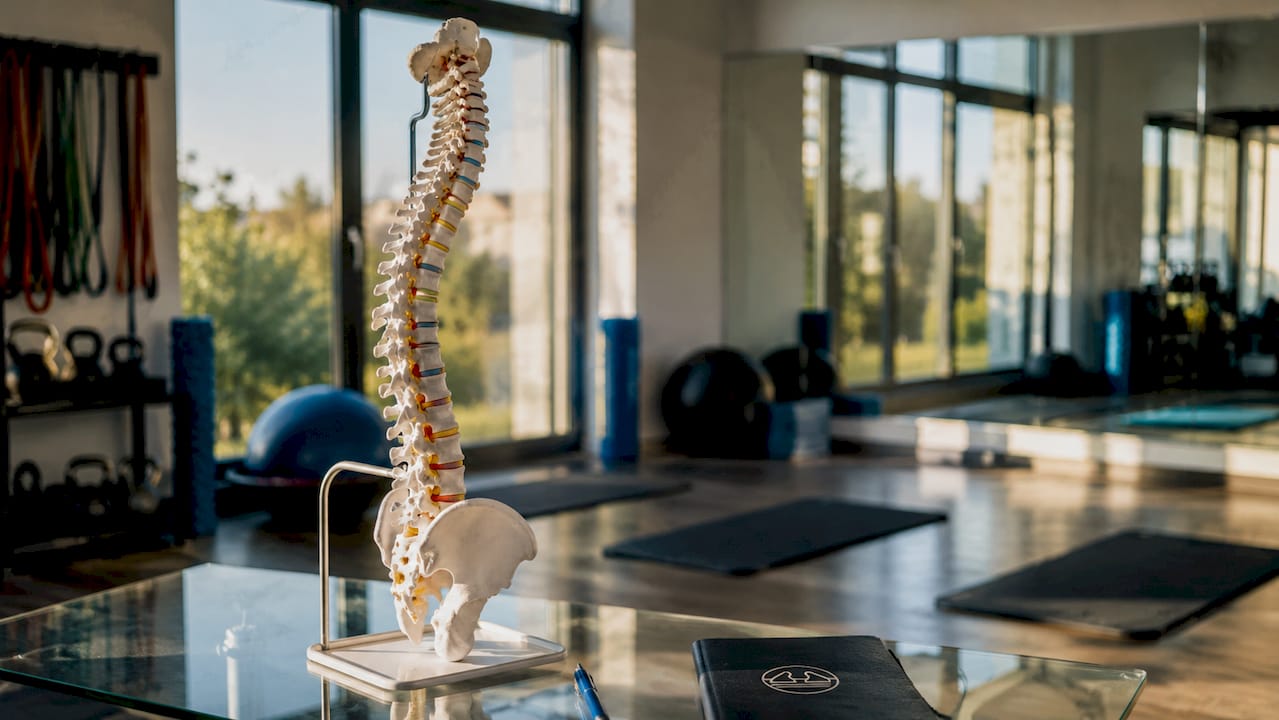
The table below breaks down the key spinal structures and their functions:
| Structure | Primary Function |
|---|
| Vertebrae | Provide structural support and protect the spinal cord |
| Intervertebral Discs | Absorb shock and allow spinal flexibility |
| Facet Joints | Enable rotation, bending, and extension |
| Lumbar Multifidus | Stabilize individual vertebrae during movement |
| Erector Spinae | Maintain upright posture and support extension |
| Core Muscles (Obliques, Transverse Abdominis) | Distribute load and reduce disc pressure |
Posture is directly tied to spinal anatomy. When you slouch, the natural curves of the spine flatten or reverse, increasing disc pressure and straining the posterior muscles. Over time, poor posture reshapes muscle length and joint mechanics, creating the conditions for chronic pain. The benefits of spinal care start with understanding this anatomy, because you cannot protect what you do not understand.
What causes poor back health and pain?
Poor back health rarely has a single cause. It develops through a combination of lifestyle patterns, physical habits, and biological responses that compound over time.
The most common risk factors include:
- Sedentary behavior: Sitting 9–12 hours daily conflicts with the spine’s evolutionary design for movement, increasing disc pressure and reducing muscle activation.
- Weak core muscles: When the lumbar multifidus and deep abdominals fail to stabilize the spine, joints and discs absorb forces they were not designed to handle.
- Poor posture: Sustained forward head posture and rounded shoulders alter spinal loading patterns and fatigue the posterior chain.
- Obesity: Excess body weight increases compressive load on lumbar discs and accelerates degeneration.
- Previous injury: Scar tissue, altered movement patterns, and reflex muscle inhibition following injury raise the risk of reinjury significantly.
- Psychological stress: Chronic stress elevates muscle tension and alters pain perception, contributing to persistent pain cycles.
About 13% of U.S. adults live with chronic low back pain. Transition from acute to chronic pain occurs in a median of 26% of primary care cases. That transition is not inevitable, but it becomes far more likely when early warning signs are ignored.
Chronic pain alters nervous system signaling and muscle recruitment patterns, creating a pain-inactivity cycle that worsens spinal instability and requires multimodal treatment approaches.
The impact of back pain extends beyond physical discomfort. Chronic back pain is the leading cause of disability worldwide, accounting for 60.1 million years lived with disability globally. That figure underscores why maintaining back health is not optional for anyone who wants to stay active and independent.
How can you prevent back pain and maintain spinal health?
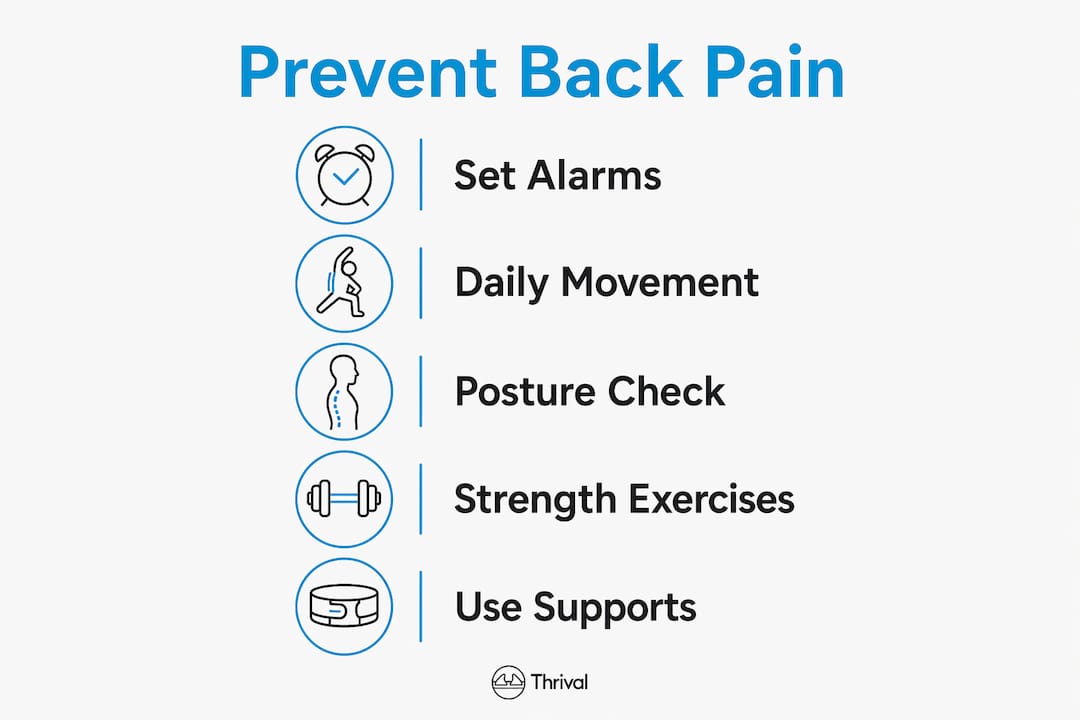
Prevention is the most cost-effective strategy for back health. The research is clear: regular exercise is the single most protective factor for spine health, outperforming ergonomic furniture and passive aids. The spine relies on active muscular support from the extensors, glutes, and obliques. Without consistent exercise, that support system fails.
Here are the most effective prevention strategies, ordered by impact:
- Build core stability. Exercises like planks, dead bugs, and Pilates-based movements train the deep stabilizers, specifically the transverse abdominis and lumbar multifidus, to protect the spine under load. Clinical trials show core stability training produces significant reductions in both pain and disability scores in chronic low back pain patients.
- Train postural control. Postural control training (PCT) teaches your body to maintain spinal alignment during daily tasks. PCT reduces disability as measured by the Oswestry Disability Index by a mean difference of 13.36 to 14.05 points. That is a clinically meaningful improvement.
- Add micro-movements throughout the day. Small daily movements act as critical punctuation for spinal health. Set a timer to stand, walk, or stretch every 30–45 minutes if you sit for work.
- Optimize your sleep position. Sleeping on your side with a pillow between your knees or on your back with a pillow under your knees maintains the spine’s natural curves and reduces overnight muscle tension.
- Reconsider ergonomic tools as your only solution. Ergonomic chairs reduce discomfort short-term but lack evidence for preventing long-term back pain. Active muscular support is what actually protects your spine.
Pro Tip: Set a recurring phone alarm labeled “spine break” every 40 minutes during your workday. Stand up, do 10 bodyweight squats or a 30-second hip flexor stretch, and sit back down. This takes under two minutes and directly counteracts the disc pressure buildup from prolonged sitting.
How you improve back health is less about any single intervention and more about consistent daily habits that keep the spine loaded, mobile, and supported.
What are the best treatment options for back pain?
When back pain is already present, the treatment approach determines whether it resolves or becomes chronic. Early, active intervention is the gold standard. Avoiding inactivity and medication-only approaches reduces both pain and disability cycles. Waiting too long to seek care carries a specific biological cost.
Reflex inhibition during persistent back pain causes rapid atrophy of the lumbar multifidus. This muscle atrophy is often irreversible, which is why early physical therapy is not just helpful but necessary. The longer you wait, the harder recovery becomes.
Effective treatment options include:
- Physical therapy with joint mobilization: Early PT involving movement re-education and joint mobilization directly addresses the mechanical causes of pain and prevents muscle wasting.
- Core stability and postural control training: Both CST and PCT show clinically significant improvements in pain scores, with mean reductions of 2.48 to 2.96 points on standard pain scales.
- Soft tissue and muscle recovery work: Targeted deep tissue release breaks up adhesions, reduces muscle guarding, and restores normal movement patterns. Tools that apply focused pressure to the lumbar paraspinals, glutes, and thoracic spine can complement formal therapy between sessions.
- Avoiding long-term brace dependency: Long-term brace usage leads to muscle disuse syndrome. Braces have a role in acute injury management, but relying on them beyond the short term weakens the very muscles your spine needs for support.
Pro Tip: If you are using a back brace during recovery, treat it as a temporary scaffold, not a permanent fix. Work with a physical therapist to progressively load your core muscles so you can transition off the brace without losing spinal stability.
Back health and overall wellness are directly connected. Addressing pain early, staying active, and using the right recovery tools keeps the pain-inactivity cycle from taking hold. For additional strategies, breaking the inactivity cycle with the right tools makes a measurable difference in recovery outcomes.
Key takeaways
Maintaining back health requires consistent exercise, early intervention, and daily movement habits that keep the spine strong and mobile.
| Point | Details |
|---|
| Spine health drives total wellness | A functional spine supports movement, posture, and nervous system protection every day. |
| Exercise outperforms ergonomics | Regular core and postural training protects the spine better than chairs or braces alone. |
| Act early on pain signals | Muscle atrophy from delayed treatment is often irreversible, so seek care at first signs. |
| Micro-movements prevent damage | Standing or stretching every 30–45 minutes counters disc pressure from prolonged sitting. |
| Passive aids have limits | Braces and ergonomic tools reduce short-term discomfort but cannot replace active muscle support. |
What i’ve learned after years of watching people ignore their backs
Most people treat their back like a car they never service until it breaks down on the highway. I’ve seen it repeatedly. Someone ignores a dull ache for months, convinces themselves it will resolve on its own, and then ends up in a physical therapist’s office with atrophied stabilizers and a chronic pain pattern that takes a year to unwind.
The uncomfortable truth is that passive approaches feel easier in the short term. Sitting in an ergonomic chair, wearing a brace, taking an anti-inflammatory. None of those are wrong in isolation. But they become traps when they substitute for movement and active recovery. The spine is a dynamic structure. It needs load, motion, and muscular engagement to stay healthy.
What actually works, in my experience, is building non-negotiable daily habits. Not a 60-minute gym session three times a week. Short, consistent movement breaks. A few targeted exercises before bed. Deliberate attention to how you sit, stand, and lift. These small inputs compound over months into a spine that functions well into your 60s, 70s, and beyond.
The other thing I’d push back on is the idea that back pain is inevitable with age. It is common, but common is not the same as inevitable. The people I’ve seen maintain strong, pain-free backs into older age share one trait: they never stopped moving. Start now, stay consistent, and your spine will reward you for it.
— Cameron
Support your back recovery with Thrival
If you are ready to take your back health seriously, the right recovery tools make a real difference between sessions with your physical therapist or trainer.

The Thrival Deep Tissue Pro is a non-motorized, US-made recovery board designed to deliver targeted muscle release to the back, hips, and surrounding tissue. You choose the attachment based on the area you need to address. The Arch targets the lumbar curve, the Bullseye works on specific tight spots, and the Wave covers broader muscle groups across the thoracic spine. Each tool is built for professional-grade performance at home. Thrival backs every product with a lifetime warranty and free shipping. Explore the full system at Thrival.com and find the setup that fits your recovery needs.
FAQ
What is the role of back health in daily life?
Back health enables every movement you make, from sitting and standing to lifting and walking. A healthy spine also protects the spinal cord and nerve roots that control sensation and function throughout the body.
How does poor posture affect spinal health?
Poor posture flattens the spine’s natural curves, increases disc pressure, and fatigues the posterior muscles over time. Sustained poor posture reshapes joint mechanics and is a primary contributor to chronic back pain.
What exercises are best for back strength?
Core stability exercises like planks, dead bugs, and bird dogs are the most evidence-backed options for building spinal support. Postural control training combined with core work produces the greatest reductions in pain and disability.
Why should you avoid long-term back brace use?
Long-term brace use causes muscle disuse syndrome, weakening the stabilizing muscles your spine depends on. Braces are appropriate for short-term acute injury management but should be phased out as active strength training progresses.
When should you seek treatment for back pain?
Seek care as soon as back pain limits your normal movement or persists beyond a few days. Early physical therapy prevents the muscle atrophy and chronic pain patterns that develop when treatment is delayed.
Recommended