Saturday, May 23, 2026
Most people assume massage devices are a luxury add-on, something you use when your budget allows and skip when it doesn’t. The research tells a different story. The role of massage devices in fitness runs deeper than simple comfort, touching on blood circulation, fascia health, range of motion, and how quickly your muscles are ready to perform again. This guide breaks down the actual science, the real benefits, the honest limitations, and how to use these tools in a way that produces results. No hype, just what the evidence supports.
Table of Contents
Key takeaways
| Point | Details |
|---|
| Percussive therapy reduces DOMS | Post-exercise massage device use can reduce soreness by up to 30% compared to passive rest. |
| Timing matters significantly | Using a device immediately after intense training may increase soreness; rest days show more consistent relief. |
| Technique determines results | Moving the device slowly across tissue, rather than holding it stationary, prevents bruising and irritation. |
| Devices improve mobility, not power | Research confirms flexibility and range of motion gains, but not strength or explosive performance gains. |
| Consistency beats intensity | Regular, moderate sessions outperform infrequent heavy sessions for long-term muscle recovery. |
The role of massage devices in fitness recovery
Massage devices, particularly percussive therapy tools, work by delivering rapid, rhythmic mechanical pressure into soft tissue. This isn’t vibration for the sake of it. The pressure penetrates deeper than surface-level foam rolling, reaching fascial layers that manual hands often miss during a quick self-massage session.
The core physiological mechanisms are worth understanding because they explain why these tools work and, more importantly, when they work:
- Increased blood circulation. Rhythmic pressure stimulates local blood flow, which delivers oxygen and nutrients to fatigued muscle fibers while flushing out metabolic waste like lactic acid.
- Lymphatic drainage support. Percussive therapy improves lymphatic drainage, which reduces localized inflammation and swelling after training.
- Fascia release. Repetitive mechanical input softens the fascia surrounding muscles, reducing the stiffness and tightness that builds after hard workouts or long periods of inactivity.
- Neuromuscular desensitization. Sustained vibration and percussion temporarily reduce pain signals from overworked muscles, which explains the near-immediate relief many users feel.
Compared to traditional massage, a percussive device can target a specific area with consistent depth and speed for the full duration of your session. A trained therapist brings adaptive skill and instinct that no device replicates, but they also cost $80 to $150 per session and are not available at 6 a.m. before your training block. Foam rolling, by contrast, is limited by your own body weight and joint mobility. Getting deep pressure into your hip flexors with a foam roller requires positions that many people cannot hold comfortably or long enough to matter.
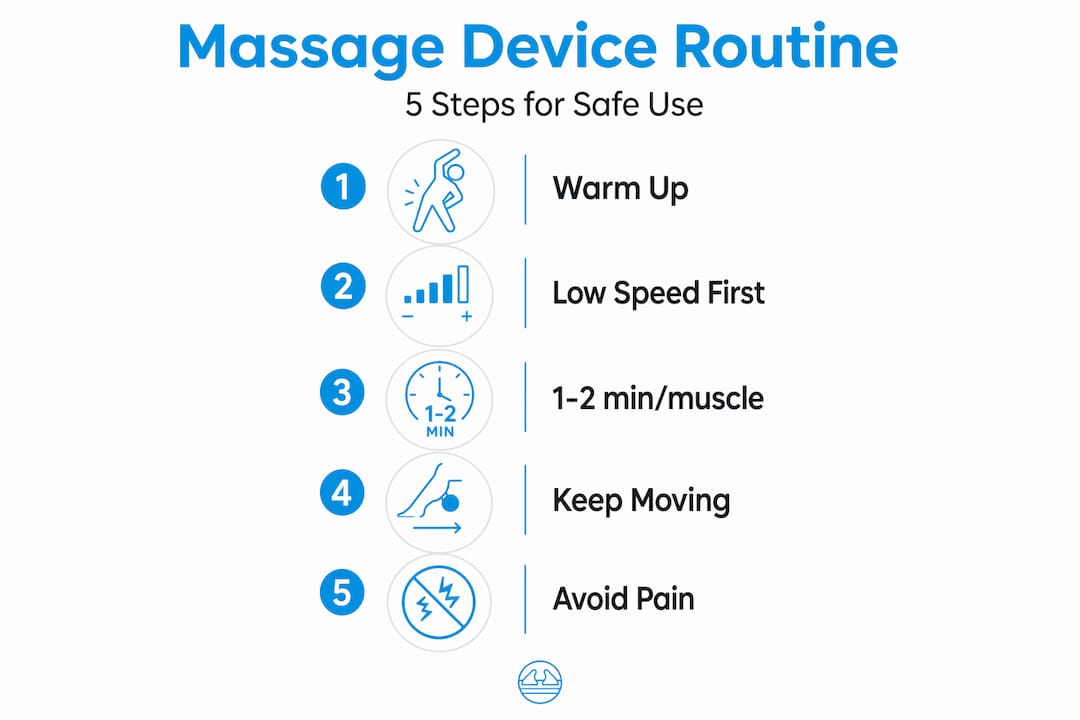
Pro Tip: Start your first percussive session on your lowest speed setting. The temptation is to go hard immediately, but your nervous system and soft tissue need time to adapt. Low intensity for two minutes per muscle group is more effective and far safer than maxing out the speed from day one.
Specific fitness benefits supported by research
The fitness and wellness industry overstates a lot of claims. With massage devices, it helps to separate what the research actually confirms from what is marketing copy.
Here are the benefits that have genuine scientific support:
- Reduced delayed onset muscle soreness. Percussion device use reduces DOMS by up to 30% in the 24 to 72 hours following intense exercise, compared to passive recovery. If you train legs on Monday and are normally destroyed by Wednesday, this is the benefit that will be most noticeable.
- Improved range of motion and flexibility. A 5-minute massage device session produced a 5.4-degree increase in range of motion compared to 4.9 degrees from 5 minutes of static stretching. Slightly better results, with significantly less effort and time.
- Temporary pain relief and muscle knot release. Concentrated pressure on trigger points disrupts the pain-spasm cycle, providing relief from tight spots in the upper back, neck, and glutes that accumulate from training and desk work.
- Pre-workout activation. Using a device on a cold muscle before training increases local circulation and tissue pliability without the fatigue that comes from an extended dynamic warmup. Two minutes per target area before a lift is enough.
Now for the honest part. Massage guns do not improve strength, balance, or explosive power. If a product pitch includes claims about increasing your vertical jump or max squat, that is not supported by current research. The device helps your body recover so you can train harder and more frequently. The performance gains come from the training itself, not the tool.
“Massage guns are excellent for short-term pain relief and mobility improvement but are not substitutes for rest, nutrition, or professional medical care.”
Understanding this distinction is what separates athletes who use these tools strategically from those who wear them out chasing results they were never designed to deliver. Learn more about the top recovery benefits backed by muscle release therapy.
Best practices for using massage devices effectively
Knowing what a massage device can do is half the equation. Knowing how to use it correctly is where most people fall short. Poor technique does not just reduce effectiveness. It can actively cause harm.
Session length and frequency
Limit each session to 5 to 15 minutes total, spending 1 to 2 minutes per individual muscle group. Treating the same muscle group more than twice within 24 hours risks tissue irritation and overload. More is not better here. Your tissue needs time to respond and recover between inputs.
Movement technique
This is the most overlooked rule. Keep the device moving at roughly one inch per second across the muscle. Holding it stationary on one spot, especially on a smaller muscle, causes localized bruising, increased soreness, and potential nerve irritation. Think of it like slowly ironing a shirt, steady, deliberate movement that covers the whole surface.
Timing your sessions strategically
Immediate post-exercise use may actually increase soreness rather than reduce it. A 2024 study found a measurable increase in muscle soreness four hours after applying a percussive device immediately following intense lower-body training. The smarter approach: use the device during your cooldown period, several hours after exercise, or on active rest days when muscles are primed to respond.
Attachment and speed selection
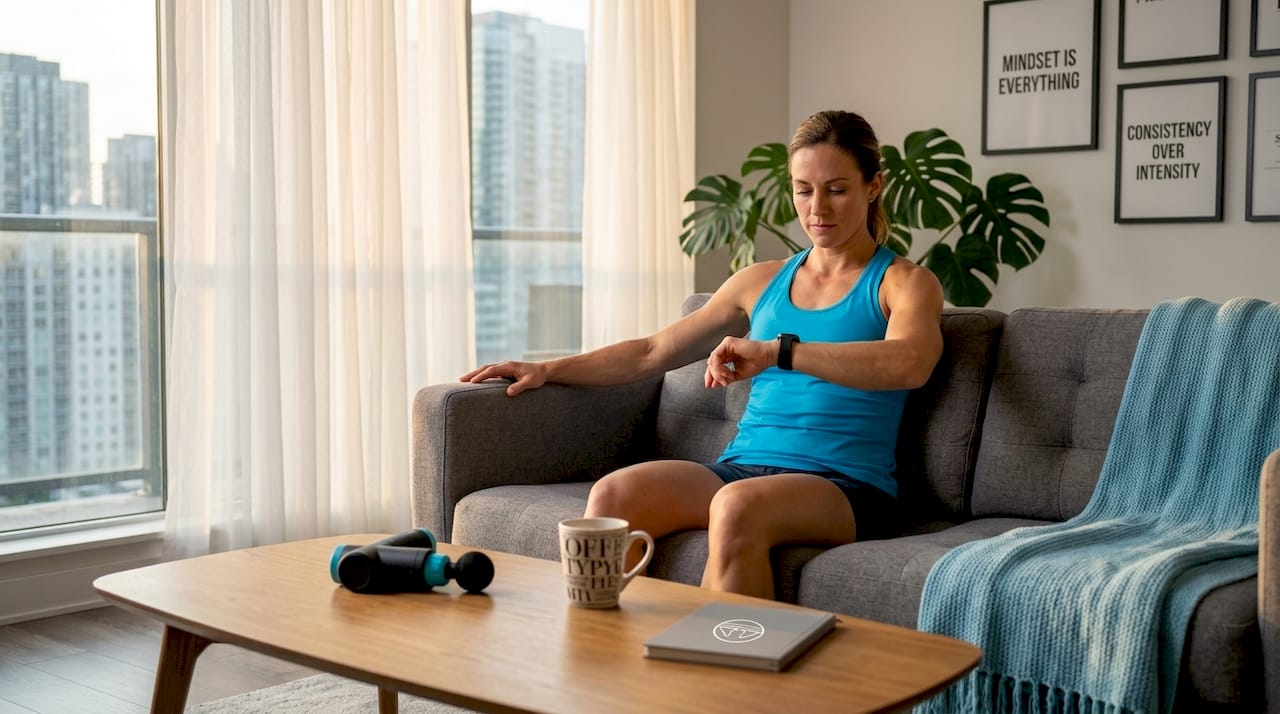
Devices with multiple attachments and speed settings allow you to tailor pressure and coverage to the specific muscle group you are targeting. A large ballhead works well for broad areas like the quads and hamstrings. A pointed or fork-style head is better suited for the spine’s erector muscles or smaller muscle groups, where precision matters and avoiding direct bone contact is critical.
Here is a quick-reference guide for attachment selection:
| Attachment type | Best for | Avoid on |
|---|
| Ballhead | Quads, hamstrings, glutes | Direct bone contact |
| Fork/arch head | Spine erectors, calves, neck | Small joint areas |
| Flat head | Large flat muscle surfaces | Inflamed tissue |
| Pointed head | Trigger points, tight knots | Sensitive or injured areas |
Pro Tip: Never use a massage device directly over a recent injury, inflamed area, or bony prominence. If you can feel the bone clearly under your skin in that area, move the device to the surrounding muscle belly instead.
Recovery is not a one-tool problem. The best results come from understanding what each modality does well and building a plan that uses them together. Here is how percussive massage stacks up against the most common alternatives:
| Recovery method | Effectiveness for DOMS | Time required | Skill needed | Cost over time |
|---|
| Percussive massage device | High | 5 to 15 minutes | Low to moderate | One-time device cost |
| Foam rolling | Moderate | 10 to 20 minutes | Moderate | Low |
| Static stretching | Moderate | 10 to 20 minutes | Low | Free |
| Professional massage | Very high | 60 to 90 minutes | None (passive) | High per session |
| Vibration therapy | High | 10 to 15 minutes | Low | Moderate |
Vibration therapy outperforms cross-friction massage for pain reduction, swelling, and hip range of motion improvements in gym trainees. That positions purpose-built vibration and percussion devices as genuinely effective tools, not just consumer gadgets repackaged from physical therapy clinics.
The key limitations to acknowledge: massage devices do not address sleep quality, protein intake, or training load management. All three of those factors have a far greater impact on recovery than any device you put on your muscles. The device fills a specific role in a larger system. When nutrition and rest are dialed in, the impact of massage on performance becomes measurable and meaningful. When those fundamentals are missing, the device becomes a band-aid on a structural problem.
Foam rolling is still worth doing, particularly as a warmup tool and for areas where a device cannot safely reach. Static stretching remains effective for improving long-term flexibility over months of consistent practice. The most practical approach is to use your device for targeted post-training relief and trigger point work, while keeping foam rolling and stretching as complementary habits. You can explore how recovery modalities compare in depth to build the right stack for your training goals.
I’ve seen massage devices go from niche physical therapy equipment to something every gym bag seems to contain. That visibility is mostly a good thing. But I’ve also watched people use them in ways that actively work against their goals.
The biggest mistake I see is treating a massage device as a substitute for rest. People use it aggressively after every session, on every muscle group, at maximum intensity, because they believe they are accelerating recovery. What they are actually doing is layering more mechanical stress onto tissue that needs time to repair. Consistent moderate-intensity sessions deliver better long-term results than sporadic high-intensity ones. That principle is consistent across every form of physical therapy I have seen work.
The second thing I want to address is the expectation problem. Massage devices are recovery tools, not performance shortcuts. If your training, sleep, and nutrition are all working together, a good device session will make a noticeable difference in how your body feels between workouts. If those fundamentals are off, the device is running cleanup duty on a system that is not functioning.
My practical recommendation: use the device two to three times per week on your highest-volume training days, targeting the muscle groups you worked that day but waiting at least three to four hours post-training. On rest days, a short 10-minute full-body session is one of the most productive things you can do for tissue health. Start slow, stay consistent, and resist the urge to max out the intensity because it feels more effective. It isn’t.
— Cameron
If you are ready to put these principles into practice, Thrival builds the tools to do it right. The Thrival Deep Tissue Pro is a non-motorized, precision-designed system with a durable base board and interchangeable attachments for targeted muscle release across your back, hips, neck, and shoulders. Each attachment, including the Thrival Bullseye for focused trigger point work and the Thrival Wave for broader muscle coverage, is designed to match specific muscle areas with professional-grade accuracy. Thrival products are FDA registered, US manufactured, and backed by a lifetime warranty. Explore the full system and find your best fit for recovery at Thrival.com.
FAQ
What is the role of massage devices in fitness?
Massage devices support fitness by reducing delayed onset muscle soreness, improving range of motion, increasing local blood flow, and relieving muscle tension between training sessions. They do not replace rest or nutrition but complement a structured recovery plan.
When is the best time to use a massage device after exercise?
Avoid using a percussive device immediately after intense exercise, as research shows it can temporarily increase soreness. The most effective timing is several hours post-workout or during active rest days.
Research confirms that massage devices improve flexibility and reduce soreness, but they do not directly increase strength, power, or balance. Performance improvements come from better recovery, which allows more consistent and higher-quality training.
How long should a massage device session last?
Sessions should run 5 to 15 minutes total, with 1 to 2 minutes per muscle group. Treating the same area more than twice within 24 hours risks tissue irritation rather than promoting recovery.
Non-motorized tools like the Thrival system allow for precise, user-controlled pressure and targeted attachment options, making them highly effective for deep tissue release, spinal decompression, and trigger point therapy without the risk of over-percussing sensitive tissue.
Recommended