Saturday, July 18, 2026
Step by step back pain relief is a systematic process that combines acute care, targeted movement, and progressive strengthening to reduce pain and rebuild function. 4 out of 5 Americans will experience back pain in their lifetime, making it one of the most common physical complaints in the country. That statistic reflects a massive need for clear, practical guidance that goes beyond “rest and take ibuprofen.” The good news is that most back pain responds well to structured self-care. Physical therapy and targeted exercise are first-line recommendations for chronic back pain, and 15–20 minutes of daily exercise is the clinically supported standard for meaningful relief.
How to manage acute back pain flare-ups at home
The first 48–72 hours of a back pain flare-up set the tone for your recovery. Getting this phase right prevents a short-term problem from becoming a chronic one.
Step 1: Limit bed rest to 1–2 days maximum.
Prolonged bed rest delays recovery and causes the surrounding muscles to stiffen. Rest when pain is severe, but plan to move gently as soon as you can tolerate it.
Step 2: Apply cold therapy for the first 48 hours.
Cold therapy reduces inflammation during the acute phase. Apply an ice pack wrapped in a cloth for 15–20 minutes every hour. Never place ice directly on skin.
Step 3: Switch to heat after 2–3 days.
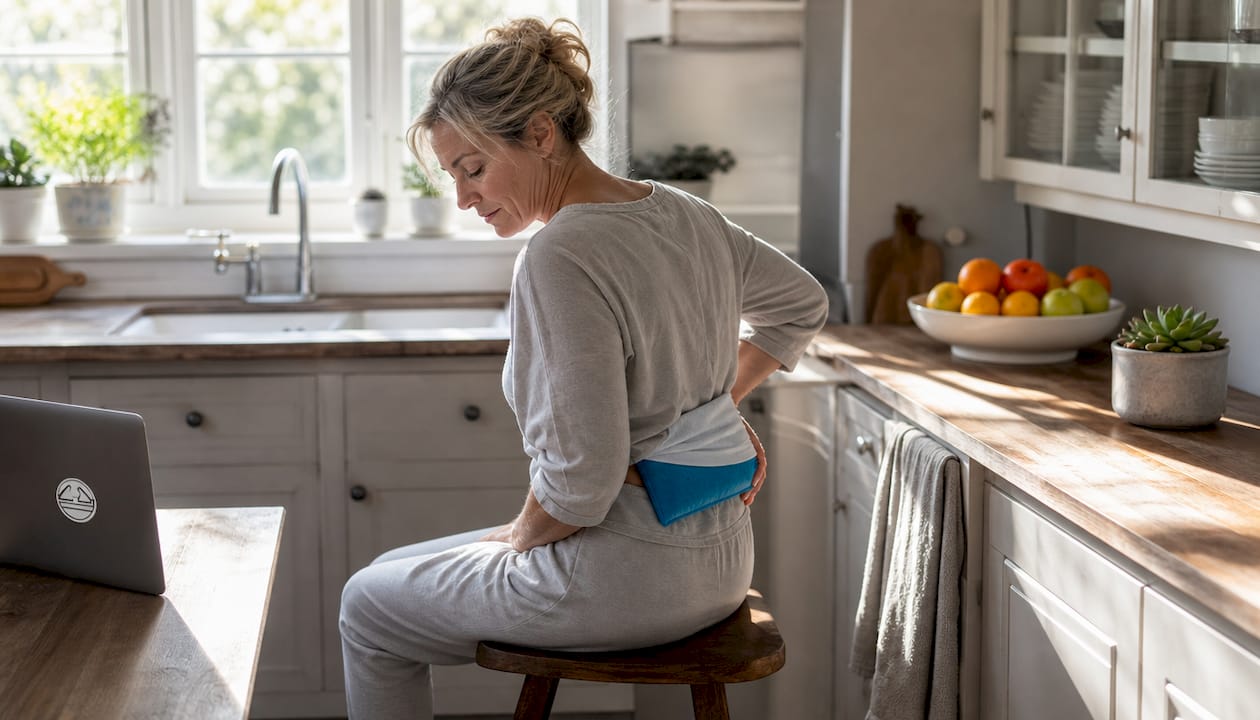
Once the initial inflammation settles, heat relaxes tight muscles and promotes blood flow to the area. A heating pad set to a comfortable temperature for 15–20 minutes works well.
Step 4: Begin gentle movement early.
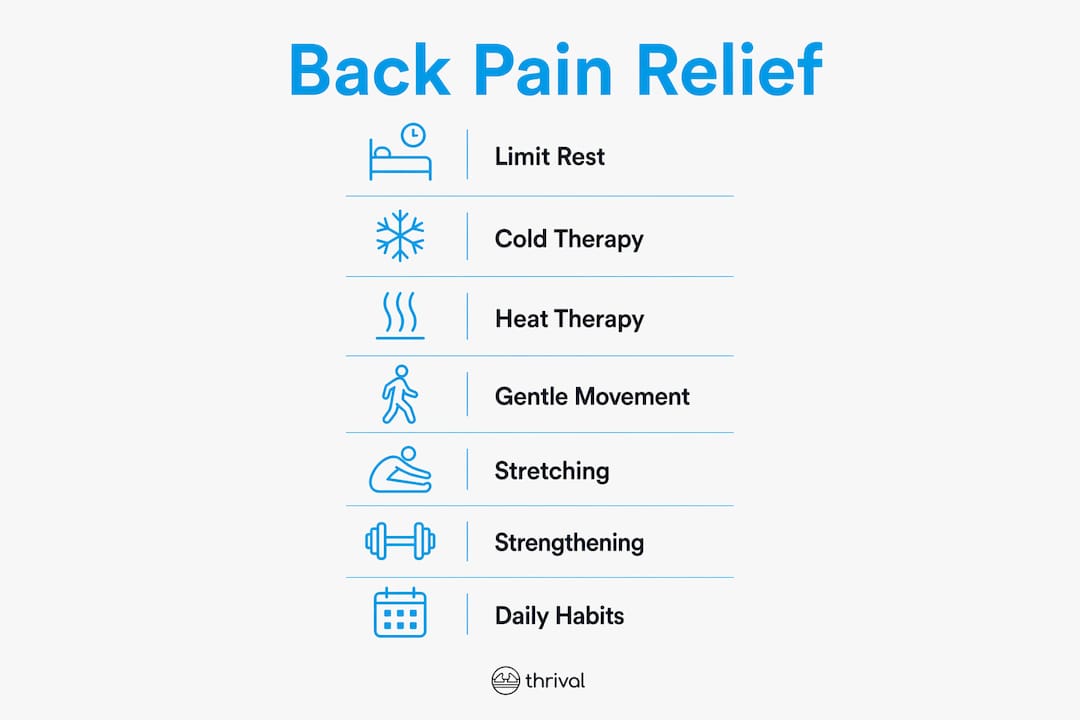
Short, slow walks of 5–10 minutes are enough to start. The concept “motion is lotion” captures this well. Moderate daily movement maintains spinal health and prevents the stiffness that makes recovery harder.
Step 5: Avoid movements that sharpen your pain.
Skip aggressive stretches, heavy lifting, and any position that sends pain shooting down your leg. Sharp or radiating pain is a signal to stop and reassess.
“Early controlled movement, not extended rest, is the foundation of effective acute back pain management. The goal in the first 72 hours is to calm the tissue, not challenge it.”
Pro Tip: Keep a simple pain log during a flare-up. Note what positions or movements reduce your pain versus increase it. This information is gold for identifying your personal movement pattern and guiding your recovery.
What are the best stretches for lower back pain relief?
Stretching during a back pain flare-up requires a different approach than standard flexibility work. The goal is to calm the nervous system and reduce muscle guarding, not to force range of motion.
Flare-up phase stretches
These three moves are the safest starting point when pain is still acute. Gentle movements like knee-to-chest, prone press-ups, and cat-cow are more effective during flare-ups than aggressive stretching.
- Knee-to-chest: Lie on your back. Pull one knee gently toward your chest and hold for 30–45 seconds. Switch sides. Repeat 2–3 times per side.
- Cat-cow: On hands and knees, slowly arch your back upward (cat), then let it sag downward (cow). Move at a gentle, controlled pace for 10 repetitions.
- Prone press-up: Lie face down with hands under your shoulders. Slowly press your upper body up while keeping your hips on the floor. Hold 2–3 seconds, lower, and repeat 10 times.
Hold each static stretch for 30–45 seconds and repeat 2–3 times. Never bounce or force a stretch past the point of mild tension.
Maintenance stretches after the flare-up subsides
Once acute pain settles, you can add stretches that target the muscles most commonly linked to lower back problems.
- Hip flexor stretch: Kneel on one knee, shift your weight forward until you feel a stretch at the front of the hip. Hold 30–45 seconds per side.
- Piriformis stretch: Lie on your back, cross one ankle over the opposite knee, and gently pull both legs toward your chest.
- Child’s pose: Sit back on your heels, extend your arms forward on the floor, and hold for 30–45 seconds.
- Thread the needle: On hands and knees, slide one arm under your body to rotate the thoracic spine gently.
- Hamstring stretch: Lie on your back and use a towel or strap to extend one leg toward the ceiling.
Pro Tip: Avoid toe touches and deep lumbar rotations during any active flare-up. These movements increase compression on already irritated spinal structures and can extend your recovery time significantly.
For a broader look at back pain exercises and self-care, Thrival’s resource library covers progressive routines in detail.
What strengthening exercises support long-term back pain relief?
Stretching calms pain. Strengthening prevents it from coming back. The key is choosing exercises that protect the spine rather than load it in a vulnerable position.
Spine-sparing core exercises
Traditional sit-ups increase spinal compression and can worsen back pain. Spine-sparing alternatives build core stability without that risk.
- Modified curl-up: Lie on your back with one knee bent. Place your hands under your lower back to maintain its natural curve. Lift only your head and shoulders slightly off the floor. Hold 8–10 seconds. Repeat 8–10 times.
- Bird-dog: On hands and knees, extend one arm and the opposite leg simultaneously. Hold 8–10 seconds, return, and switch sides. Keep your spine neutral throughout.
- Side bridge: Lie on your side, supported on your forearm and feet. Lift your hips to form a straight line from head to feet. Hold 8–10 seconds per side.
Motor control drills for gluteal activation
Gluteal amnesia is a real and common problem. When the glutes stop firing properly, the lumbar spine compensates and takes on load it was not designed to handle. These drills fix that.
- Glute bridges: Lie on your back with knees bent. Drive your hips toward the ceiling by squeezing your glutes. Hold 2–3 seconds at the top. Repeat 15 times.
- Clamshells: Lie on your side with knees bent and feet together. Rotate your top knee upward like a clamshell opening. Repeat 15 times per side.
| Exercise | Primary target | Sets x reps | Key cue |
|---|
| Modified curl-up | Deep core stabilizers | 3 x 10 | Maintain lumbar curve |
| Bird-dog | Multifidus, glutes | 3 x 10 per side | No hip rotation |
| Side bridge | Lateral core | 3 x 10 per side | Straight body line |
| Glute bridge | Glutes, hamstrings | 3 x 15 | Squeeze at the top |
| Clamshell | Gluteus medius | 3 x 15 per side | Feet stay together |
Research from a 2026 meta-analysis of 24 trials shows that 15–20 minutes of exercise per session, six to seven times per week, over at least 16 weeks produces the best outcomes for chronic low back pain. Consistency over 16 weeks matters more than any single session.
Pro Tip: Learn the hip hinge before adding any load. Stand with feet hip-width apart, push your hips back as if closing a drawer with them, and keep your spine long. This single movement pattern, combined with the stop-twist technique, replaces the two most common daily habits that re-trigger back pain.
Daily habits that prevent back pain from coming back
Recovery is not just about what you do during exercise. The other 23 hours of your day shape your spine’s health just as much.
- Walk or swim three times per week. Low-impact aerobic exercise strengthens the muscles that support your spine and reduces the risk of recurrence. Aim for 30 minutes per session.
- Take microbreaks every 30–45 minutes when sitting. Stand, walk briefly, or do a quick cat-cow. Sustained static postures compress spinal discs over time.
- Check your sleep position. Side sleeping with a pillow between your knees keeps the spine aligned. Back sleeping with a pillow under your knees reduces lumbar load. Stomach sleeping increases lumbar extension and is best avoided.
- Lift with your hips, not your back. Hinge at the hips, keep the load close to your body, and avoid twisting while holding weight.
- Maintain a healthy body weight. Excess weight shifts your center of gravity forward and increases mechanical load on the lumbar spine.
Pro Tip: Pair your back health habits with stress management. Chronic stress increases muscle tension and pain sensitivity. Practices like yoga and tai chi address both, making them effective complementary therapies for persistent back pain.
Effectiveness of back exercises depends on the underlying cause and your symptom behavior. Stop any exercise that causes pain to worsen or radiate down your leg, and consult a physical therapist if that happens.
Key Takeaways
Effective back pain relief requires a sequenced approach: calm the acute phase first, then build strength and fix daily movement habits to prevent recurrence.
| Point | Details |
|---|
| Limit early bed rest | Rest no more than 1–2 days; early gentle movement speeds recovery. |
| Use cold then heat | Apply cold for the first 48 hours, then switch to heat to relax muscles. |
| Prioritize spine-sparing exercises | Choose bird-dog, modified curl-up, and side bridge over sit-ups to protect spinal structures. |
| Train consistently for 16+ weeks | Research supports 15–20 minutes of daily exercise over at least 16 weeks for chronic pain relief. |
| Fix daily movement patterns | Hip hinge and stop-twist techniques prevent the habits that re-trigger back pain. |
What I’ve learned about back pain that most guides get wrong
Most back pain articles treat the problem as a single event. You hurt your back, you rest, you do some stretches, and you move on. That model fails the majority of people who deal with recurring or chronic pain.
The real issue is almost always a combination of weak stabilizers, poor movement habits, and a nervous system that has learned to guard the area. Stretching alone does not fix any of those three things. I have seen people spend months doing daily hamstring stretches with zero improvement because the actual driver was gluteal weakness and a habit of rounding the lower back every time they picked something up off the floor.
The other thing most guides miss is the importance of symptom behavior over diagnosis. Two people can have the same MRI finding and have completely different responses to the same exercise. One person’s pain-relieving move is another person’s flare-up trigger. The step-by-step framework in this article works because it starts with the safest options and progresses based on how your body responds, not based on a generic protocol.
Patience is the part nobody wants to hear. The 16-week research benchmark exists because tissue adaptation and motor re-learning take time. Three weeks of bird-dogs will not undo years of poor movement. But three months of consistent, well-chosen exercise absolutely can change your baseline.
— Cameron
Physical exercise and daily movement habits form the foundation of back pain relief. Targeted muscle release tools can accelerate that process by addressing the tight spots that stretching alone cannot fully reach.

The Thrival Deep Tissue Pro is a US-manufactured, FDA-registered tool designed for targeted muscle release across the back, hips, and shoulders. Its modular attachment system includes the Wave, Bullseye, Arch, and Ballhead, each designed to address specific muscle groups and movement patterns. For people dealing with hip flexor tightness and lower back tension, the Adjustable Psoas Release Tool provides targeted spinal decompression without motors or complicated setup. Both tools come with a lifetime warranty and free shipping, and pair directly with Thrival’s guided app routines for structured at-home recovery.
FAQ
How long does step by step back pain relief take?
Most people notice meaningful improvement within 4–6 weeks of consistent daily exercise and movement correction. Full recovery from chronic back pain typically requires at least 16 weeks of structured effort.
Is it safe to exercise during a back pain flare-up?
Gentle movement like short walks, knee-to-chest stretches, and cat-cow is safe and beneficial during most flare-ups. Stop any exercise that causes sharp pain or pain that radiates down your leg.
What is the best exercise for lower back pain?
The bird-dog, modified curl-up, and glute bridge are among the most effective spine-sparing exercises for lower back pain. They build core and gluteal stability without compressing the spine.
How does cold therapy differ from heat therapy for back pain?
Cold therapy reduces inflammation and is most effective in the first 48 hours of a flare-up. Heat therapy relaxes muscle tension and promotes healing, making it the better choice after the initial inflammatory phase passes.
Can poor daily habits cause back pain to return?
Poor movement habits like rounding the lower back when lifting or sitting for long periods without breaks are leading causes of recurring back pain. Correcting these patterns with hip hinge mechanics and regular microbreaks significantly reduces recurrence risk.
Recommended