Sunday, June 28, 2026
Sports injury recovery is defined as a structured, criteria-based process that restores an athlete’s physical function, strength, and confidence after tissue damage. Approximately 8.6 million sports injuries occur annually in the US, and 30–40% of athletes experience re-injury within 12 months without proper rehabilitation. That statistic points to one clear problem: most athletes return too soon, without meeting objective readiness benchmarks. The sports injury recovery steps covered here follow the POLICE protocol and a four-phase rehabilitation framework, giving you a proven path from acute care back to full performance.
What are the first critical sports injury recovery steps?
The first 48 hours after an injury set the tone for everything that follows. The POLICE protocol, which stands for Protection, Optimal Loading, Ice, Compression, and Elevation, has replaced the older RICE method as the standard for acute injury management. The key difference is Optimal Loading. Instead of complete rest, POLICE promotes early, controlled movement to stimulate tissue repair without causing further damage.
Complete immobilization is one of the most common mistakes athletes make. Relative rest with optimal loading maintains tissue health and prevents the deconditioning that makes re-injury more likely. Think of it this way: a sprained ankle benefits from gentle weight-bearing within pain limits, not six days on the couch.
Here is what the acute phase looks like in practice:
- Protection: Shield the injured area from further harm using bracing, taping, or modified movement patterns.
- Optimal Loading: Introduce controlled, pain-free movement as early as tolerated to promote circulation and tissue repair.
- Ice: Apply cold therapy for 15–20 minutes at a time to reduce swelling and pain, especially in the first 72 hours.
- Compression: Use a compression bandage or sleeve to limit swelling and support the injured tissue.
- Elevation: Keep the injured limb above heart level when resting to reduce fluid buildup.
Getting a professional assessment within 48 hours can reduce overall recovery time by up to 30%. Early diagnosis rules out fractures, ligament tears, or other complications that change the entire recovery plan.
Pro Tip: Icing works best in the first 48–72 hours. After that, heat and movement typically do more to promote healing than continued cold application.
“Relative rest is not passive recovery. It is active management of tissue load to keep the healing environment optimal.”
How to progressively restore mobility and strength during rehabilitation
Rehabilitation progresses through four phases: Acute, Repair and Early Rehab, Strengthening and Conditioning, and Return to Sport. These phases are governed by physical capacity markers, not calendar days. An athlete moves forward when the body is ready, not when two weeks have passed.
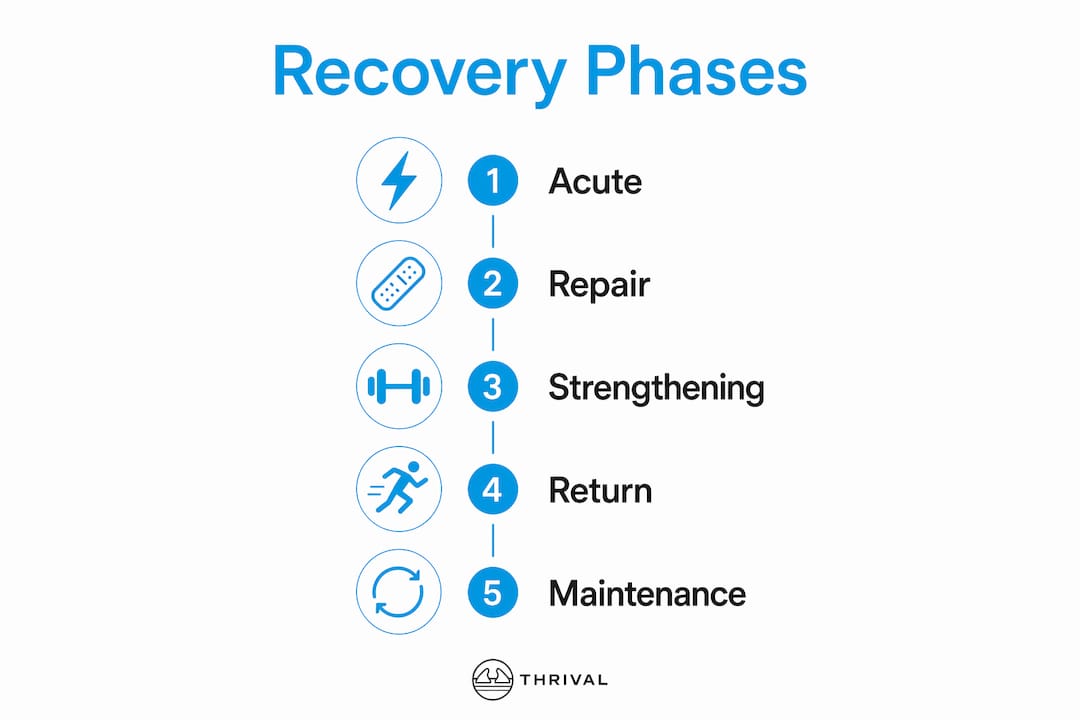
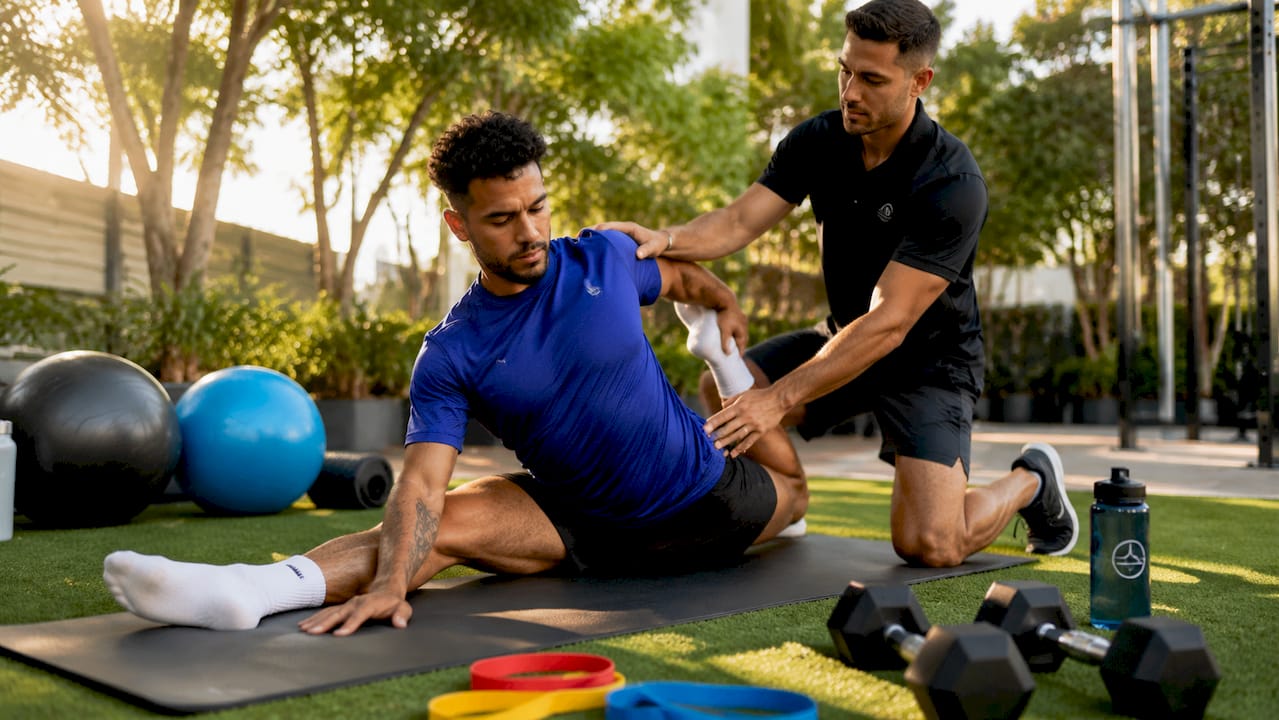
The Repair and Early Rehab phase focuses on restoring range of motion and basic tissue tolerance. Active-assisted exercises, where a therapist or the athlete’s other limb helps guide movement, come first. As pain decreases and mobility improves, active exercises replace assisted ones. Resistance bands enter the picture once the joint moves freely and without significant discomfort.
Manual therapies like massage work best as a complement to active exercise, not as a standalone treatment. Massage reduces muscle tension and improves local circulation, but progressive mechanical loading through exercise is what actually rebuilds tissue capacity. Relying on passive treatment alone stalls recovery.
The Strengthening and Conditioning phase adds load systematically. Here is a practical progression:
- Isometric exercises: Contract the muscle without joint movement. These build initial strength without stressing healing tissue.
- Isotonic exercises: Move through a full range of motion against resistance, starting light and increasing gradually.
- Resistance band work: Add variable resistance to mimic functional movement patterns.
- Neuromuscular control drills: Balance boards, single-leg stands, and proprioception exercises retrain the nervous system to stabilize the joint.
- Cardiovascular conditioning: Swimming or cycling maintains aerobic fitness without loading the injured area.
Evidence-based rehabilitation plans lower re-injury risk by up to 50%, with measurable strength gains appearing within 6–8 weeks of consistent exercise. Consistency matters more than intensity at this stage.
Pro Tip: Follow the 10% rule: never increase weekly training load by more than 10% at a time. Soreness that lingers beyond 24 hours after a session means you pushed too hard.
What are the criteria for safe return to sport?
Return to sport is not a date on a calendar. It is a set of objective benchmarks that confirm the body and mind are ready for full competition demands. Successful return requires meeting criteria like at least 90% strength symmetry between the injured and uninjured limb, passing functional hop tests, and demonstrating clean movement quality under fatigue.
Advanced rehabilitation exercises in this phase include:
- Plyometrics: Box jumps, depth drops, and bounding drills rebuild explosive power and train tendons to absorb and release force.
- Agility drills: Cone patterns, lateral shuffles, and reactive change-of-direction work restore sport-specific movement.
- Resisted sport-specific patterns: Simulate the exact demands of your sport under controlled load before returning to live competition.
- Sport-specific scrimmage: Controlled practice scenarios that gradually reintroduce game-speed contact and decision-making.
Psychological readiness is an independent predictor of safe return to sport. Fear of re-injury causes compensatory movement patterns, which shift load onto uninjured structures and create new problems. Mental skills training, including visualization, confidence-building exercises, and gradual exposure to feared movements, belongs in every rehab plan.
Premature return driven by impatience or external pressure is the primary cause of the injury-recovery cycle. Athletes who skip objective testing and return on feel alone are far more likely to re-injure within the first competitive season. A criteria-based return to sport approach protects that investment.
Pro Tip: Use a sport-specific readiness checklist before every return-to-play decision. If you cannot pass the hop test or your strength symmetry is below 90%, you are not ready, regardless of how good you feel.
| Criteria | Benchmark |
|---|
| Strength symmetry | =90% compared to uninjured limb |
| Functional hop test | Pass on standardized single-leg hop protocol |
| Movement quality | Clean mechanics under fatigue conditions |
| Psychological readiness | Confidence score =90% on validated readiness scale |
| Pain level | Zero pain during sport-specific drills |
Nutrition plays a direct role in tissue repair, inflammation control, and muscle recovery after a sports injury. Protein is the building block for muscle and connective tissue repair. Athletes need adequate daily protein intake, distributed across meals, to support the anabolic processes that rebuild damaged structures. Anti-inflammatory foods like fatty fish, berries, leafy greens, and turmeric reduce the chronic low-grade inflammation that slows healing.
Hydration is equally non-negotiable. Dehydrated tissue heals more slowly and is more prone to re-injury. Collagen-supporting nutrients like vitamin C and zinc accelerate connective tissue repair, particularly for ligament and tendon injuries where blood supply is limited.
Recovery tools complement nutrition and exercise by targeting soft tissue directly:
- Deep tissue massage tools: Break up adhesions, improve local circulation, and reduce muscle tension between training sessions. Thrival’s non-motorized recovery system uses interchangeable attachments, including the Wave, Bullseye, Arch, and Ballhead, to deliver targeted pressure to specific muscle groups and tight spots.
- Compression garments: Reduce post-exercise swelling and support venous return, particularly useful after lower-body rehabilitation sessions.
- Cold therapy devices: Manage acute inflammation and pain in the early recovery phases.
- Foam rollers and massage balls: Provide self-myofascial release for broader muscle groups between formal therapy sessions.
Recovery tools like massage devices and compression sleeves effectively complement rehabilitation exercises to speed muscle repair and reduce inflammation. The key word is complement. Tools work best when paired with structured exercise, not used as a substitute for it. A soft tissue care routine built around both active rehab and targeted muscle release produces faster, more durable results than either approach alone.
Key Takeaways
Structured, criteria-based rehabilitation is the single most effective way to recover from a sports injury, reduce re-injury risk, and return to full athletic performance safely.
| Point | Details |
|---|
| Apply POLICE immediately | Replace RICE with POLICE to promote early controlled loading and faster acute healing. |
| Get assessed within 48 hours | Early professional diagnosis can cut total recovery time by up to 30%. |
| Progress by capacity, not calendar | Move through rehab phases based on physical benchmarks, not time elapsed. |
| Meet return-to-sport criteria | Achieve =90% strength symmetry and pass functional tests before returning to competition. |
| Pair nutrition with recovery tools | Protein, hydration, and targeted muscle release tools all accelerate tissue repair. |
Why I think most athletes are recovering wrong
The biggest mistake I see athletes make is treating recovery like a waiting game. They rest, they ice, they wait to feel better, and then they go back to training. That approach ignores everything we know about how tissue actually heals and adapts.
Recovery is a performance skill. The athletes who come back stronger are the ones who treat each phase with the same discipline they bring to training. They track their strength symmetry. They do their neuromuscular drills. They work on the mental side, because fear of re-injury is just as real a barrier as a weak quad.
The other thing I have seen consistently is that people underestimate how much passive treatment can become a crutch. Massage, cold therapy, and compression are genuinely useful tools. But they do not rebuild tissue capacity. Only progressive loading does that. If your recovery plan is mostly passive, you are managing symptoms, not fixing the problem.
The athletes who recover fastest are not the ones who rest the most. They are the ones who load the right amount, at the right time, with the right guidance. That requires patience, objective testing, and a willingness to stay in a phase longer than feels comfortable. That discipline is what separates a full recovery from a recurring injury.
— Cameron
Physical therapy and structured exercise carry the bulk of the recovery work. The right muscle release tools fill the gaps between sessions, keeping tissue mobile and reducing the soreness that slows progress.
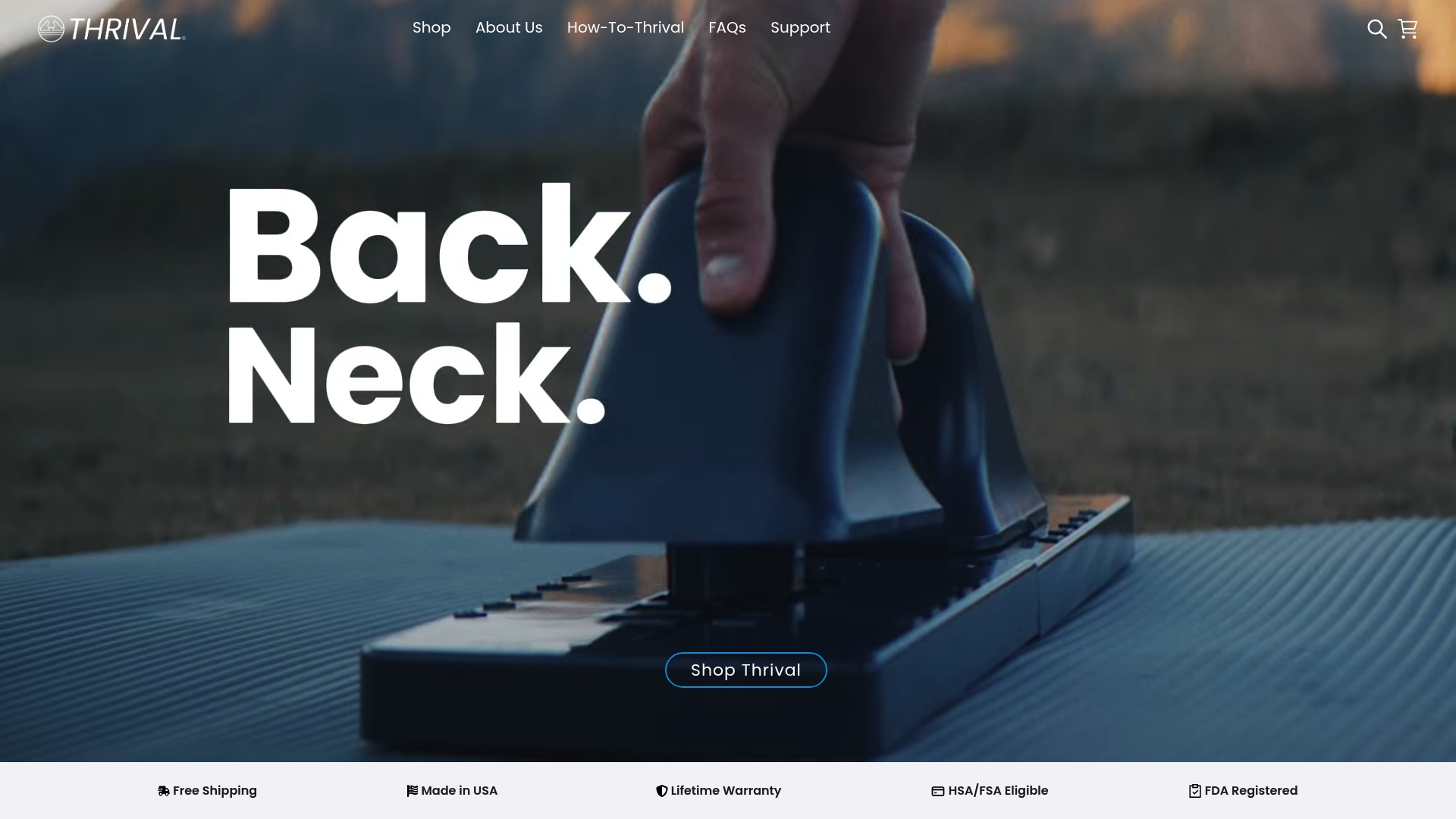
Thrival’s deep tissue recovery system is built around a single base board with interchangeable attachments, each designed for a specific muscle group. The Thrival Arch attachment targets the back and hips, two areas that take significant compensatory load during lower-body injury recovery. The Bullseye attachment delivers pinpoint pressure to tight spots in the shoulders and neck. All attachments are US-manufactured, FDA-registered, and backed by a lifetime warranty. Thrival also offers a dedicated app with guided routines to match each recovery phase. Explore the full Thrival recovery system to find the right tools for your rehab.
FAQ
What is sports injury recovery?
Sports injury recovery is the structured process of restoring physical function, strength, and confidence after an injury through progressive rehabilitation, pain management, and criteria-based return to sport.
How long does sports injury recovery take?
Recovery time depends on the injury type and severity, not a fixed number of days. Progress is measured by physical capacity markers like strength symmetry and pain-free movement, not the calendar.
What is the POLICE protocol?
POLICE stands for Protection, Optimal Loading, Ice, Compression, and Elevation. It replaces the older RICE method by promoting early controlled movement instead of complete rest to speed tissue repair.
When is it safe to return to sport after an injury?
Return to sport is safe when an athlete achieves at least 90% strength symmetry, passes functional hop tests, and demonstrates psychological readiness. Returning before meeting these benchmarks significantly raises re-injury risk.
Yes, but only as a complement to active rehabilitation. Massage tools, compression sleeves, and cold therapy reduce inflammation and muscle tension, but progressive loading through exercise is what rebuilds tissue capacity.
Recommended