Tuesday, June 16, 2026
Spinal alignment is defined as the optimal positioning of the vertebrae to maintain balanced natural curves, free joint movement, and unobstructed nerve function throughout the body. When clinicians and physical therapists explain spinal alignment, they are describing a structural and neurological standard, not just a posture preference. Proper alignment affects how your muscles work, how efficiently you move, and how well your nervous system communicates with the rest of your body. Understanding this gives you a practical foundation for addressing back pain, fatigue, and mobility issues at their source rather than treating symptoms alone.
How is spinal alignment assessed in the body?
Spinal alignment assessment relies on specific anatomical landmarks and biomechanical measurements. Clinicians evaluate alignment by observing a line of gravity passing through reference points including the acromioclavicular joint, the L3–L4 vertebrae, the patella, and the tarsals. Ideal anatomical alignment involves this gravity line minimizing muscular effort and joint stress simultaneously. When these landmarks fall out of sequence, the body compensates with increased muscle activity and uneven joint loading.
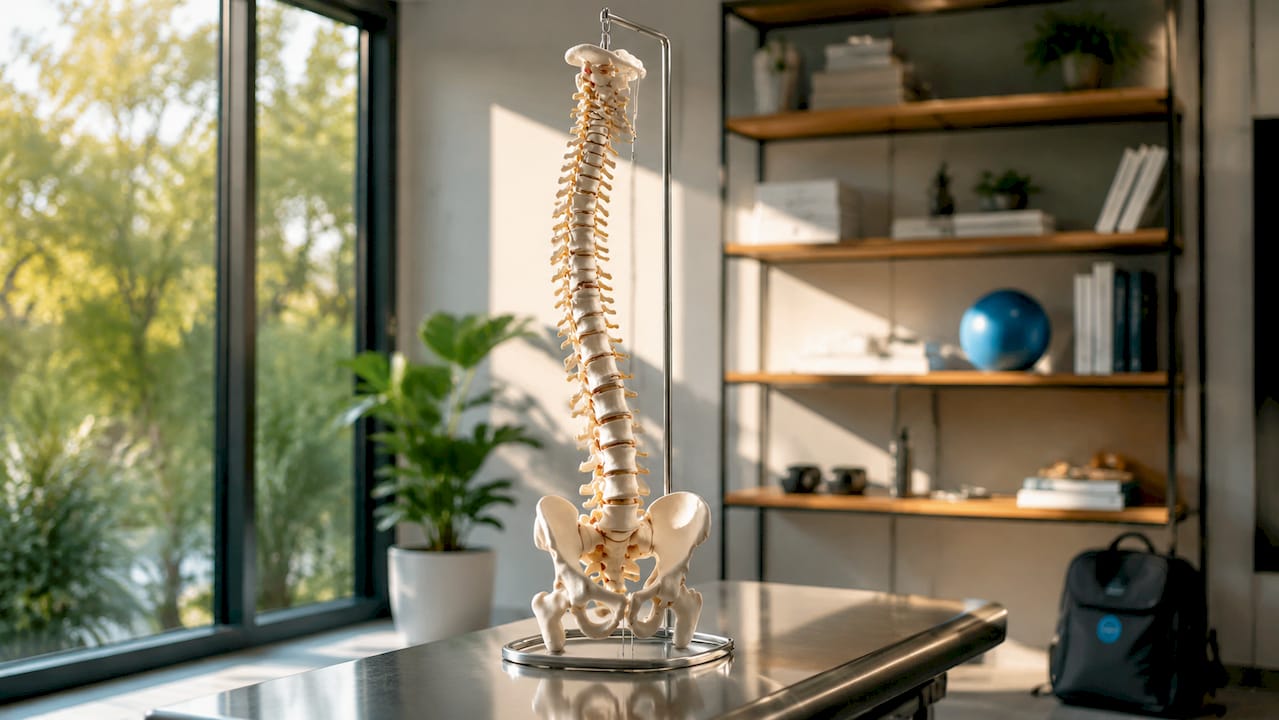
The most widely used clinical tool for measuring sagittal (front-to-back) balance is the C7 plumb line method. A vertical line is dropped from the C7 vertebra, and neutral sagittal balance is defined as this line falling within 2 centimeters of the posterosuperior corner of the S1 vertebra. Deviation beyond that 2-centimeter threshold indicates positive or negative sagittal imbalance. This measurement directly informs treatment decisions in physical therapy, chiropractic care, and orthopedic surgery planning.
The spine’s four physiological curves, the cervical lordosis, thoracic kyphosis, lumbar lordosis, and sacral curve, are not structural accidents. According to Euler’s law of biomechanics, four spinal curves increase resistance to axial load by 17 times compared to a straight column. That means your curved spine is dramatically stronger under compression than a straight one would be. Maintaining those curves is the goal of alignment work, not flattening or exaggerating them.
| Assessment Method | What It Measures | Clinical Significance |
|---|
| C7 Plumb Line | Sagittal balance deviation | Identifies forward or backward postural imbalance |
| Anatomical Landmark Line | Gravity distribution through joints | Detects uneven load on muscles and joints |
| Spinal Curve Evaluation | Lordosis and kyphosis angles | Confirms or rules out structural curve abnormalities |
| Shoe Wear Pattern | Gait and weight distribution | Signals asymmetric loading from misalignment |
Pro Tip: If you notice one shoe wearing down faster than the other, that uneven pattern often reflects asymmetric weight distribution tied to spinal or hip misalignment. Mention it to your physical therapist or chiropractor at your next visit.
What are the benefits of proper spinal alignment for health?
Correcting and maintaining proper spinal alignment produces measurable physiological benefits across multiple body systems. Correcting spinal alignment improves nerve signaling, balances muscle tension, and reduces joint stress and inflammation. These are not minor quality-of-life improvements. They represent the difference between a body that functions efficiently and one that is constantly compensating for structural imbalance.
Here is what proper alignment delivers:
- Reduced chronic pain. When vertebrae sit in their correct positions, nerve roots exit the spinal canal without compression. This directly reduces radiating pain in the neck, arms, lower back, and legs.
- Better energy efficiency. In ideal posture, weight distributes evenly along the spine, hips, knees, and feet, minimizing strain and optimizing muscle function. Your muscles spend less energy just holding you upright.
- Improved balance and coordination. Aligned vertebrae support accurate proprioceptive feedback, the sensory signals your brain uses to track body position. Better feedback means better balance and fewer falls or missteps.
- Lower inflammation. Misaligned joints create friction and abnormal pressure. Restoring alignment reduces that mechanical irritation, which lowers local inflammatory responses over time.
- Greater mobility. Joints that are properly loaded move through their full range of motion more freely. Tight, restricted movement is often a sign of compensatory patterns, not a fixed structural limit.
“Posture is dynamic equilibrium balancing gravity with muscular and ligamentous responses, not rigid positioning.” — Biomechanics of Posture
This distinction matters. Chasing a perfectly rigid “straight back” misses the point. The goal is a spine that adapts fluidly to movement and load while returning to a balanced resting position. That adaptability is what protects you from injury and fatigue over the long term. Explore how mobility and recovery connect to these alignment benefits in daily life.
What are common signs and consequences of spinal misalignment?
Spinal misalignment rarely announces itself with a single dramatic symptom. It builds gradually through a pattern of signals your body sends when compensation has reached its limit. Poor alignment produces symptoms including neck and back stiffness, persistent headaches, fatigue, numbness or tingling in the extremities, and uneven shoe wear. Each of these signals points to a specific mechanical or neurological disruption.
The consequences of ignoring these signs escalate over time:
- Chronic muscle fatigue. Muscles surrounding a misaligned segment work overtime to stabilize the spine. Prolonged spinal misalignment increases workload on muscles and joints, leading to chronic pain, inflammation, and fatigue that does not resolve with rest alone.
- Joint degeneration. Uneven loading accelerates cartilage wear in the facet joints and intervertebral discs. Musculoskeletal compensation for misalignment raises the risk of degenerative conditions and restricted mobility, including conditions like degenerative disc disease.
- Nervous system irritation. Compressed or stretched nerve roots disrupt signal transmission. This shows up as numbness, tingling, weakness, or referred pain in areas far from the actual misalignment site.
- Postural collapse. Over time, the body adopts the compensated position as its new normal. Muscles shorten on one side and lengthen on the other, making the misalignment progressively harder to correct without targeted intervention.
Pro Tip: Persistent headaches that start at the base of the skull and radiate forward are a classic sign of cervical spine tension. Before reaching for pain medication, check in with a physical therapist to assess whether your neck alignment is contributing to the pattern.
Understanding muscle tension causes helps clarify why misalignment creates such widespread discomfort beyond the spine itself.
How can you achieve and maintain healthy spinal alignment?
Achieving healthy spinal alignment requires a combination of awareness, consistent habits, and targeted therapeutic work. No single intervention fixes alignment permanently. The spine responds to repeated inputs, which means daily choices matter more than occasional treatments.
Ergonomics and posture habits
Your workstation setup directly shapes your spinal position for hours each day. Keep your monitor at eye level to prevent forward head posture. Position your chair so your hips sit slightly higher than your knees, which supports the lumbar curve naturally. Take a standing or walking break every 45–60 minutes to reset your postural muscles before fatigue sets in.
Physical therapy and chiropractic care
Physical therapists use targeted exercise programs to strengthen the deep stabilizing muscles of the spine, particularly the multifidus and transverse abdominis. Chiropractors address joint mobility restrictions directly through spinal manipulation. Spinal adjustment changes sensory input to the central nervous system, influencing motor control, coordination, and postural tone through neuroplasticity. This neurological effect is why consistent chiropractic or physical therapy care produces cumulative results rather than one-time fixes.
Exercises that support spinal alignment
- Dead bug exercise. Lying on your back, extend opposite arm and leg while keeping your lower back pressed to the floor. This trains deep core stability without loading the spine under compression.
- Cat-cow stretch. Moving between spinal flexion and extension on all fours restores segmental mobility and reinforces the natural curves.
- Wall angel. Standing with your back flat against a wall, slide your arms up and down in a “snow angel” motion. This activates the thoracic extensors and counters the forward rounding common in desk workers.
- Hip flexor stretch. Tight hip flexors pull the pelvis forward, increasing lumbar lordosis. A daily kneeling stretch releases this tension and restores pelvic neutrality. Learn more about why hip mobility plays a direct role in spinal positioning.
- Muscle release therapy. Targeted soft tissue work on the paraspinal muscles, glutes, and thoracic region reduces the tension patterns that pull vertebrae out of alignment. This complements exercise and manual therapy rather than replacing them.
The neuroplasticity principle applies here directly. Your nervous system learns the positions you repeat most often. Consistent practice of aligned movement patterns gradually retrains your postural default, making good alignment feel natural rather than forced.
Key takeaways
Spinal alignment is a functional, neurological, and structural system that determines how efficiently your body manages load, movement, and nerve signaling every day.
| Point | Details |
|---|
| Alignment is measurable | The C7 plumb line method defines neutral balance within 2 cm of S1, giving clinicians a precise assessment standard. |
| Curves equal strength | Four spinal curves increase load resistance by 17 times compared to a straight spine, so maintaining them is the goal. |
| Misalignment compounds | Ignored misalignment progresses from muscle fatigue to joint degeneration and nervous system disruption over time. |
| Daily habits drive results | Ergonomics, targeted exercises, and muscle release therapy work together to retrain postural patterns through neuroplasticity. |
| Alignment supports nerve health | Proper vertebral positioning reduces nerve compression, improving signaling, coordination, and pain levels throughout the body. |
What i’ve learned after years of watching people chase “perfect posture”
Most people who come to me focused on spinal alignment are thinking about it structurally. They want to know if their spine looks right on an X-ray or whether they are standing straight enough. That framing misses the deeper point.
Spinal balance is a clinical expression of how the spine manages gravity and adapts to demand, not just about appearance. A spine that looks textbook-perfect on imaging but cannot absorb load efficiently under movement is not a healthy spine. The functional test is how your body performs under real conditions, not how it photographs at rest.
The most common mistake I see is people treating alignment as a destination rather than a practice. They do a few weeks of physical therapy, feel better, and stop. Then the old patterns return because the nervous system reverts to what it practiced most. Neuroplasticity works in both directions. You can train good alignment in, but you can also train poor alignment in through years of sedentary habits and unaddressed tension.
My honest recommendation: pair professional assessment with consistent daily input. That means ergonomic awareness at your desk, targeted exercises, and regular muscle release work to address the soft tissue tension that pulls your spine off course. The science behind decompression and muscle release confirms that structural relief starts with releasing the tissue, not just repositioning the bone.
— Cameron
Understanding spinal alignment is the first step. Acting on it requires the right tools in your daily routine.

The Thrival Deep Tissue Pro is a US-manufactured, FDA-registered recovery system built for targeted muscle release across the back, hips, neck, and shoulders. The base board accepts four interchangeable attachments, including the Thrival Arch, Bullseye, Wave, and Ballhead, so you can target the specific muscle groups pulling your spine out of balance. No motor, no complicated setup. Just precise, professional-grade pressure where your body needs it most. Thrival includes free shipping, a lifetime warranty, and a dedicated app with guided routines to help you build a consistent recovery practice that supports long-term spinal health.
FAQ
What does spinal alignment mean?
Spinal alignment refers to the optimal positioning of the vertebrae to maintain the spine’s four natural curves, support free joint movement, and allow unobstructed nerve function. Clinicians assess it using anatomical landmarks and tools like the C7 plumb line method.
Why does spinal alignment matter for overall health?
Proper spinal alignment reduces nerve compression, balances muscle tension, and lowers joint stress, which together decrease chronic pain, fatigue, and injury risk. It also supports efficient movement and better nervous system coordination.
What are the most common signs of a misaligned spine?
Common signs include persistent neck or back stiffness, recurring headaches, numbness or tingling in the arms or legs, uneven shoe wear, and chronic fatigue that does not improve with rest.
Can exercises fix spinal misalignment?
Targeted exercises like dead bugs, cat-cow stretches, and hip flexor releases strengthen stabilizing muscles and restore mobility, but they work best alongside professional assessment from a physical therapist or chiropractor. Neuroplasticity means consistent repetition is required for lasting change.
How does muscle release therapy support spinal alignment?
Muscle release therapy reduces tension in the paraspinal muscles, glutes, and thoracic region that pull vertebrae out of position. Releasing that soft tissue tension allows the spine to return to a more balanced resting position and makes exercise and manual therapy more effective.
Recommended