Monday, July 6, 2026
A rehabilitation tools list is a curated set of devices and equipment designed to restore strength, mobility, and function after injury or surgery. Physical rehabilitation, the clinical term for this practice, relies on selecting the right tools for each phase of recovery. The Pan American Health Organization recommends a practical equipment package spanning exercise mats, resistance bands, balance tools, and mobility aids for primary care rehabilitation. Foundational therapeutic exercise tools like resistance bands, foam rollers, and elastic stretching straps are recommended for 90% of patients across conditions. Getting the right rehab equipment list in place before you start saves time, reduces setbacks, and keeps your progress measurable.
The core of any effective rehab equipment list covers tools that work across nearly every condition and recovery phase. These items appear in clinics, home programs, and athletic training rooms because they are versatile, affordable, and backed by clinical evidence.
- Resistance bands: Available in light, medium, and heavy resistance levels, bands allow progressive loading without stressing joints. They are ideal for rotator cuff rehab, knee strengthening, and hip stabilization.
- Exercise mats: Non-slip surfaces protect you during floor-based movements and stretching. A quality mat reduces fall risk and provides the cushioning needed for prone and supine exercises.
- Foam rollers: Foam rollers improve tissue mobility and modulate pain perception. Consistent daily sessions of 5–10 minutes outperform infrequent long sessions for recovery outcomes.
- Elastic stretching straps: These extend your reach during hamstring, hip flexor, and shoulder stretches, improving range of motion without forcing a joint past its safe limit.
- Treatment tables: Adjustable tables let therapists position patients accurately for manual therapy, joint mobilization, and guided exercise. For home use, a firm, flat surface works as a substitute.
Pro Tip: Start with the lightest resistance band that still challenges the target muscle. Progressing too fast in early rehab is the most common cause of setbacks.
These five categories form the baseline for muscle mobility work in nearly every rehabilitation protocol. Build your setup around them before adding specialized devices.
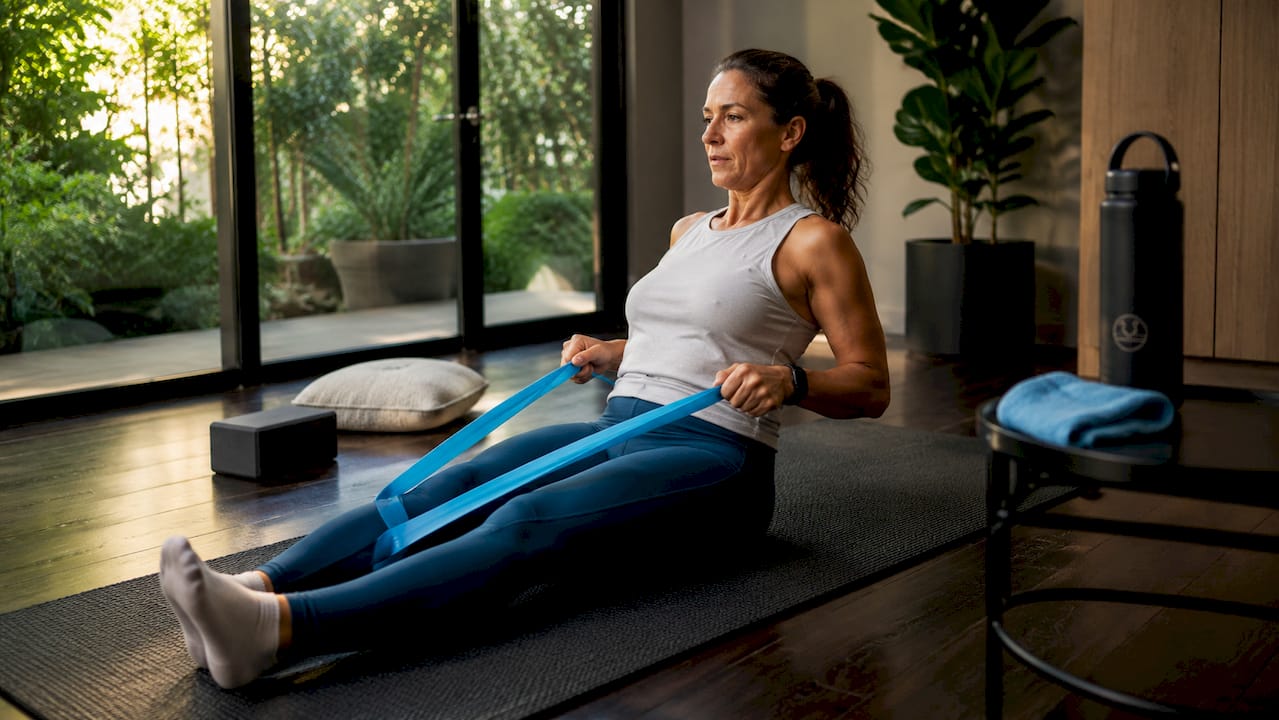
Physical therapy tools fall into three functional categories. Each category targets a different aspect of recovery, and most patients need all three at some point in their program.
Strength-building equipment
Free weights, kettlebells, and cable pulley systems build the muscular support that protects healing joints. Resistance bands, free weights, and stability balls are staples in rehab because of their versatility across conditions and fitness levels. A kettlebell, for example, trains grip, shoulder stability, and hip hinge mechanics simultaneously, making it efficient for time-limited sessions.
| Category | Example Equipment | Primary Benefit |
|---|
| Balance and stability | Balance boards, wobble cushions, stability balls | Restores proprioception and joint control |
| Strength building | Free weights, resistance bands, cable machines | Builds muscular support around injured joints |
| Mobility and flexibility | Stretching straps, mobility bands, massage balls | Improves range of motion and tissue extensibility |
| Cardiovascular endurance | Stationary bikes, treadmills | Maintains fitness without high joint impact |
Balance boards and agility ladders are vital for regaining fluid movement and footwork, especially in post-injury and older patients. Wobble cushions add an unstable surface to seated or standing exercises, forcing the stabilizer muscles to engage. This matters because most joint injuries impair proprioception, the body’s ability to sense joint position, and balance tools directly retrain that system.
Massage balls, mobility bands, and stretching straps address soft tissue restrictions that limit movement. These tools work best when used before strength training to prepare the tissue and after training to aid recovery. A soft tissue therapy workflow that sequences mobility work before loading consistently produces better outcomes than strength training alone.
Objective measurement separates evidence-based rehabilitation from guesswork. These best rehabilitation devices for tracking give therapists and patients real data to guide decisions.
- Digital goniometers: These measure joint range of motion in degrees. Digital goniometers are a standard for objective measurement in evidence-based rehab practice. A physical therapist uses goniometer readings to confirm progress and adjust exercise intensity.
- Handheld dynamometers: These devices measure muscle force output in pounds or kilograms. Handheld dynamometers provide objective force data needed to justify insurance coverage and track subtle post-surgical strength gains. Manual feel tests cannot produce the quantifiable numbers that insurance documentation requires.
- Inclinometers: These measure spinal and limb angles during movement. They are particularly useful for tracking lumbar flexion and cervical range of motion after back or neck injuries.
- Force plates: Used in higher-level clinical and sports settings, force plates measure ground reaction forces during walking, jumping, and landing. They identify asymmetries between limbs that predict reinjury risk.
Integrating these assessment tools with traditional physical therapy tools gives clinicians a complete picture of where a patient stands. Objective data also motivates patients by showing measurable gains that might otherwise go unnoticed.
4. What passive modalities and assistive devices are common in rehab settings?
Electrotherapy devices, exercise tools, mobility aids, and thermal therapy must be categorized properly to address the multiple dimensions of recovery. Passive modalities reduce pain and inflammation so active exercise can proceed safely.
- Hot and cold packs: Heat increases blood flow and relaxes muscle tissue before exercise. Cold reduces swelling and numbs acute pain after activity. Most protocols alternate between the two based on the phase of healing.
- Ultrasound machines: Therapeutic ultrasound delivers sound waves into deep tissue to promote healing and reduce scar tissue formation. Clinics use these for tendon injuries, bursitis, and post-surgical adhesions.
- TENS units (Transcutaneous Electrical Nerve Stimulation): TENS devices deliver low-level electrical current through skin electrodes to block pain signals. They are widely used for chronic back pain, knee pain, and post-operative discomfort.
- NMES units (Neuromuscular Electrical Stimulation): NMES targets motor nerves to produce muscle contractions in patients who cannot voluntarily activate a muscle. This is common after ACL surgery or stroke rehabilitation.
- Parallel bars and handrails: These provide a stable structure for patients relearning to walk or bear weight. The PAHO recommends handrails as part of a first-level care package for primary rehabilitation settings.
- Walkers and mobility aids: Standard walkers, rolling walkers, and forearm crutches assist patients who need partial weight-bearing support during early recovery.
Pro Tip: Never use a TENS unit or NMES device over an open wound, near a pacemaker, or without a therapist’s guidance on electrode placement. Incorrect use can worsen pain rather than relieve it.
Massage tools used for recovery complement passive modalities by addressing soft tissue tension that electrical stimulation alone cannot resolve. Using both in sequence produces better outcomes than relying on either alone.
Key Takeaways
A well-structured rehabilitation tools list, organized by function and matched to each recovery phase, is the single most effective way to support consistent, measurable progress.
| Point | Details |
|---|
| Start with foundational tools | Resistance bands, mats, foam rollers, and stretching straps serve nearly all conditions and recovery phases. |
| Organize by function | Grouping tools into strength, balance, mobility, and pain management categories helps match equipment to specific recovery goals. |
| Measure objectively | Digital goniometers and handheld dynamometers provide the data needed for clinical decisions and insurance documentation. |
| Use passive modalities carefully | TENS, NMES, and thermal therapy reduce pain and inflammation but require professional guidance for safe, effective use. |
| Match tools to phase | Using equipment without phase-appropriate selection risks overloading injured tissues and causing setbacks. |
Most people approach rehab equipment the way they approach a gym membership: they buy everything at once and use nothing consistently. The tools that produce results are rarely the most expensive ones. They are the ones matched precisely to the current healing phase and used with enough frequency to create adaptation.
The biggest mistake I see is skipping the assessment step. Without a baseline measurement, you cannot know whether a tool is working. A digital goniometer costs less than most foam rollers, yet it gives you data that changes every decision downstream. Pair objective measures with how you actually feel during movement, and you get a complete picture.
Passive tools like TENS units and heat packs are genuinely useful, but they are preparation for active work, not a substitute for it. Physical therapy equipment supplements professional care. Timing and dosage determine whether a tool helps or hinders. The patients who recover fastest are those who treat their equipment list as a prescription, not a collection.
The other pattern worth noting: home rehabilitation commonly fails when equipment is used without supervision or phase-specific guidance. A resistance band that is appropriate in week six of recovery can reinjure a tissue in week two. Consult a licensed physical therapist before building your setup, and revisit that conversation as your condition changes.
— Cameron
Physical rehabilitation works best when active exercise and targeted muscle release work together. Thrival’s non-motorized recovery system uses a single base board with interchangeable attachments to deliver precise deep tissue pressure to the back, hips, neck, and shoulders.
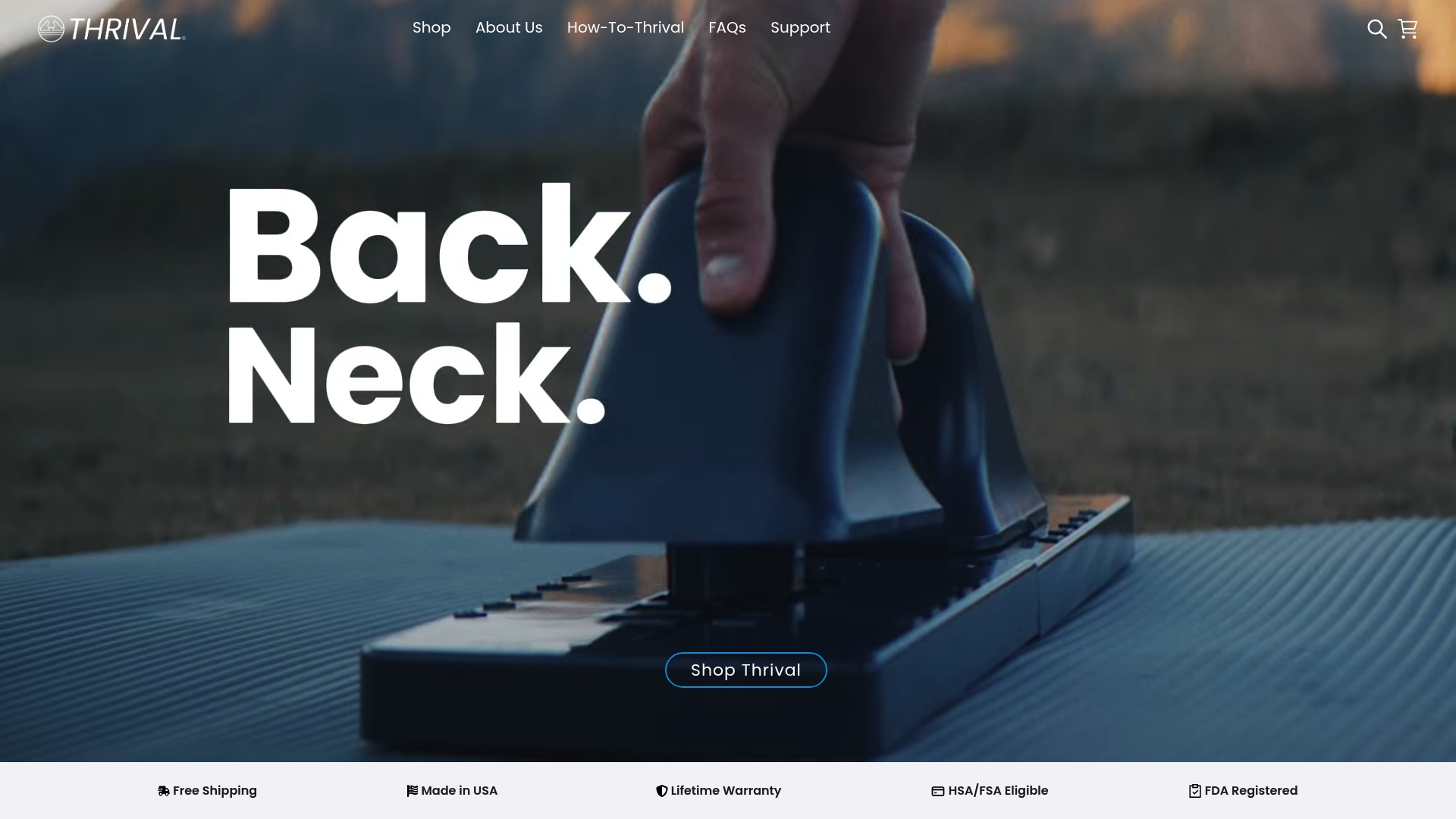
The Thrival Arch Attachment targets spinal decompression and paraspinal muscle release, making it a natural complement to the stretching and mobility work in any rehab program. The Thrival Bullseye Attachment replicates the classic lacrosse ball effect with more control and surface stability. The Thrival Wave Attachment addresses broader muscle groups across the thoracic spine. All attachments are FDA-registered, US-manufactured, and backed by a lifetime warranty. Explore the full Thrival recovery system to find the right attachment for your specific recovery needs.
FAQ
A rehabilitation tools list is a curated set of devices, from resistance bands and foam rollers to digital goniometers and TENS units, selected to support recovery, strength, mobility, and pain management after injury or surgery.
Resistance bands, a non-slip exercise mat, a foam roller, and elastic stretching straps cover the foundational needs of most home rehabilitation programs and are recommended across nearly all conditions.
Digital goniometers measure joint range of motion and handheld dynamometers quantify muscle force, giving therapists objective data to guide treatment decisions and document progress for insurance purposes.
Are passive modalities like TENS safe to use at home?
TENS units are generally safe for home use when a therapist has confirmed the diagnosis, demonstrated correct electrode placement, and ruled out contraindications like pacemakers or open wounds.
How does Thrival’s system fit into a rehabilitation program?
Thrival’s non-motorized base board with interchangeable attachments delivers targeted deep tissue pressure for muscle release and spinal decompression, complementing the active exercise and mobility work in a standard rehabilitation program.
Recommended