Wednesday, July 8, 2026
Post-workout recovery is defined as the process by which your body repairs muscle tissue, replenishes glycogen stores, and regulates hormones after exercise. Without deliberate recovery, the physical stress of training produces no lasting gain. Muscle adaptation, strength increases, and fat loss all happen during recovery, not during the workout itself. Skipping these steps doesn’t just slow progress. It actively reverses it. The post-workout recovery steps covered here follow protocols grounded in exercise physiology, covering hydration, nutrition, active recovery, and sleep, so you can reduce soreness and perform better in every session that follows.

What are the essential components of effective post-workout recovery?
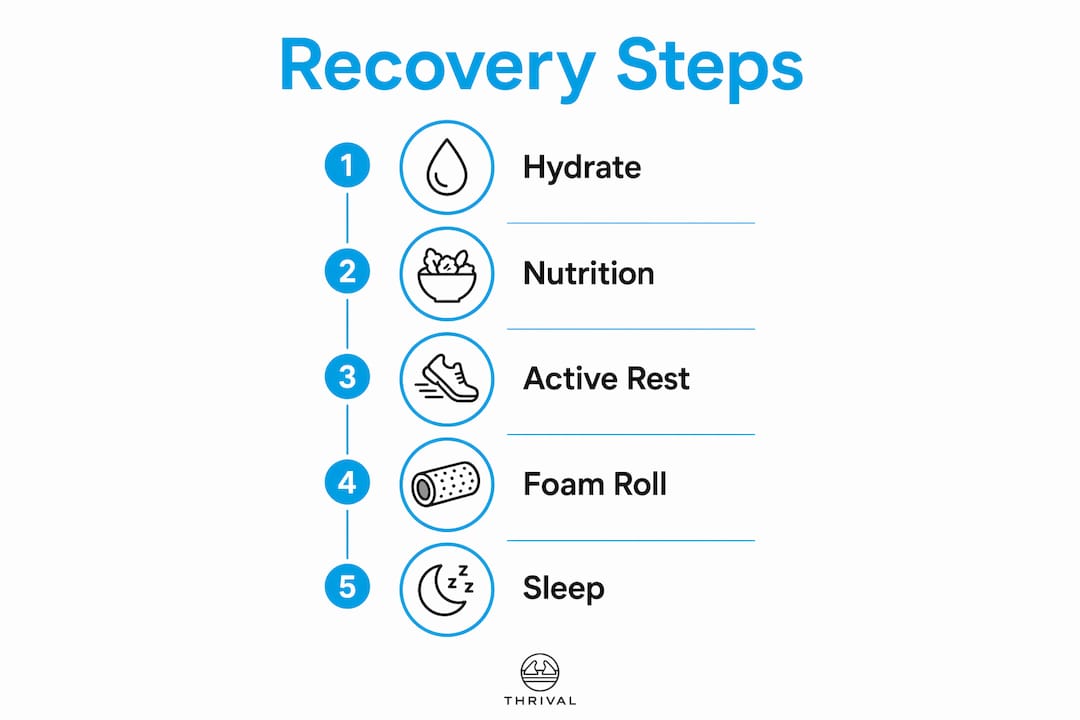
Effective post-workout recovery rests on four pillars: hydration, nutrition, active recovery, and sleep. Each one targets a different physiological need, and missing any one of them limits the others.
Hydration. Sweat losses during intense exercise can reach 1–2 liters per hour. That level of fluid loss impairs muscle function and delays repair if left uncorrected. Replacing fluids with electrolyte water, not plain water alone, restores sodium and potassium balance that plain water cannot fix.
Nutrition. Combining protein and carbohydrates post-workout is more effective than protein alone for accelerating recovery. Protein drives muscle protein synthesis, while carbohydrates replenish glycogen. Together, they create the anabolic environment your muscles need to rebuild.
Active recovery. Light movement at less than 70% max heart rate promotes blood flow and clears metabolic waste from muscle tissue faster than complete rest. A 20-minute walk or gentle mobility session qualifies. Sitting still after a hard workout is one of the most common recovery mistakes athletes make.
Rest and sleep. Deep sleep stages trigger growth hormone release, which is the primary driver of muscle repair. Consistent sleep timing matters as much as duration. Irregular sleep schedules disrupt the circadian rhythm and reduce the quality of hormonal output even when total hours look adequate.
These four components work as a system. Nail all four and your body rebuilds faster, stronger, and with less soreness between sessions.
How to execute the 24-hour post-workout recovery plan
A structured timeline removes guesswork and makes recovery repeatable. Here is how to move through the first 24 hours after a hard session.
Immediately post-workout (0–1 hour). Drink 16–24 ounces of electrolyte water as soon as you finish. Consume 20–40 grams of protein and 30–60 grams of carbohydrates within 30–60 minutes to stimulate protein synthesis and begin glycogen replenishment. Follow your workout with a 5–10 minute cool-down: light walking or gentle stretching to bring your heart rate down gradually.
1–2 hours post-workout. Eat a complete meal containing protein, complex carbohydrates, and vegetables. Chicken with rice and broccoli, or salmon with sweet potato, are solid examples. Continue drinking water steadily. Your kidneys are still processing metabolic byproducts, and hydration supports that clearance.
2–6 hours post-workout. Keep moving gently. A short walk or light mobility work promotes circulation and accelerates waste removal from muscle tissue. Include polyphenol-rich foods like berries, tart cherry juice, or dark leafy greens at your next meal. These compounds reduce exercise-induced inflammation without blunting the adaptation signal.
Evening (6–12 hours post-workout). Eat a balanced dinner with adequate protein. Reduce blue light exposure from screens at least 60 minutes before bed. Blue light suppresses melatonin and delays sleep onset, which directly cuts into the deep sleep stages where growth hormone peaks. A few minutes of diaphragmatic breathing or gentle stretching signals your nervous system to shift out of a high-alert state.
Night sleep (7–9 hours). Sleep in a cool room at 65–68°F with consistent sleep and wake times. Temperature and timing are the two most controllable variables in sleep quality. Optional magnesium glycinate supplementation (200–400 mg) supports muscle relaxation and sleep depth for athletes who train frequently.
Pro Tip: Set a phone alarm not just for waking up, but for starting your wind-down routine. Treating the hour before bed as part of your recovery plan, not dead time, is what separates athletes who sleep well from those who just sleep long.
What role does foam rolling play in reducing muscle soreness?
Foam rolling, or self-myofascial release, is one of the most accessible physical recovery techniques available. It requires no equipment beyond a roller and delivers measurable results when applied correctly.
Foam rolling for 10–15 minutes with steady pressure, spending 30–60 seconds per muscle group, increases blood flow, raises tissue temperature, and reduces delayed onset muscle soreness (DOMS). It also improves range of motion without harming performance when done post-workout. That last point matters: foam rolling after training does not reduce strength or power output the way aggressive static stretching can.
The technique works best with consistent, moderate pressure. Rolling too fast over a muscle does little. Slow, deliberate passes that pause on tight spots allow the tissue to respond. Focus on the quadriceps, hamstrings, calves, glutes, and thoracic spine after lower-body or full-body sessions.
Beyond foam rolling, cold-water immersion and massage are evidence-backed methods that complement sleep and nutrition to reduce soreness and fatigue. Cold-water immersion works best after high-volume training days. Compression garments worn for several hours post-workout reduce swelling and support venous return. None of these methods replace nutrition or sleep, but they add meaningful benefit on top of a solid foundation.
Pro Tip: Target the Thrival Bullseye or Ballhead attachment for pinpoint pressure on tight spots like the piriformis or upper traps. These attachments replicate the targeted feel of a therapist’s thumb without the appointment.
For a deeper look at soft tissue therapy types and how they reduce soreness at the tissue level, Thrival’s blog breaks down the science behind each method.
How to troubleshoot common recovery mistakes
Most recovery failures come from a small set of repeatable errors. Recognizing them early prevents the compounding damage they cause.
Skipping post-workout nutrition. Missing the protein-and-carbohydrate window does not just delay recovery by a few hours. It forces your body to break down existing muscle tissue for energy, which directly undermines the training you just completed.
Relying on complete rest instead of active recovery. Lying still after a hard session feels logical but slows metabolic waste clearance. Active recovery at low intensity promotes blood flow and speeds muscle repair more effectively than doing nothing.
Ignoring the recovery debt cycle. Missing recovery steps repeatedly creates a physiological condition where cumulative fatigue builds faster than your body can clear it. Performance plateaus, injury risk rises, and training effort stops producing results. Breaking the cycle requires a deliberate rest period, not just one good night of sleep.
Underestimating life stress. Fitness professionals warn against grind culture and emphasize that total stress load, including work, relationships, and sleep debt, directly competes with your body’s recovery resources. A hard training week during a high-stress period at work produces worse results than the same week during a calm one.
Poor sleep environment. Environmental factors like bedroom temperature and light exposure directly influence sleep quality and therefore muscle repair efficiency. A room that is too warm or too bright reduces deep sleep duration even when you spend eight hours in bed.
“Recovery is not the absence of training. It is the presence of the right conditions for your body to rebuild. Treat it with the same intention you bring to your hardest sessions, and your results will reflect that.”
When soreness is mild and energy is moderate, active recovery is the right call. When fatigue is deep and motivation is absent, total rest for 24–48 hours protects you from digging a deeper hole.
Key Takeaways
Effective post-workout recovery requires hydration, protein-and-carbohydrate nutrition, active movement, and 7–9 hours of quality sleep working together as a system, not as optional add-ons.
| Point | Details |
|---|
| Nutrition timing matters | Consume 20–40g protein and 30–60g carbs within 60 minutes post-workout to drive muscle repair. |
| Hydration is non-negotiable | Replace fluids with electrolyte water immediately after training to correct sweat-driven losses. |
| Active recovery beats total rest | Light movement at low intensity clears metabolic waste and speeds muscle repair more than sitting still. |
| Sleep drives muscle repair | Aim for 7–9 hours in a cool, dark room with consistent timing to maximize growth hormone release. |
| Recovery debt compounds fast | Missing multiple recovery steps creates cumulative fatigue that training effort alone cannot overcome. |
Recovery is where the real work happens
I spent years treating recovery as something I did when I had time left over. Train hard, eat something, sleep when possible, repeat. The results were mediocre, and the soreness was constant. What changed my approach was understanding that the workout is just the stimulus. Everything your body does with that stimulus happens afterward.
The athletes I have watched make the fastest progress are not the ones who train the hardest. They are the ones who protect their recovery with the same discipline they bring to their training plan. They eat within the hour. They sleep on a schedule. They move on rest days instead of collapsing on the couch. And they treat foam rolling and targeted muscle release as part of the session, not an afterthought.
The other thing I have learned is that recovery does not need to be complicated. A complete meal, a good night’s sleep, and 15 minutes of deliberate muscle work covers most of what your body needs. The recovery routines for athletes that actually work are the ones simple enough to repeat every single week, not the elaborate protocols that fall apart by Wednesday.
View recovery as training. Schedule it. Protect it. Your body will respond accordingly.
— Cameron
Physical recovery techniques work best when you have the right tools to apply them consistently.

Thrival’s Deep Tissue Pro is a non-motorized, US-made recovery system built around one base board with interchangeable attachments, including the Wave, Bullseye, Arch, and Ballhead. Each attachment targets a specific muscle group: the Bullseye for piriformis and glute release, the Arch for spinal decompression, the Ballhead for replicating the classic lacrosse ball effect on tight spots. The system is FDA-registered, backed by a lifetime warranty, and ships free. Whether you are working through post-leg-day soreness or managing chronic upper-back tension, Thrival gives you targeted muscle release at home, on your schedule, without a clinic appointment.
FAQ
What is post-workout recovery?
Post-workout recovery is the process by which your body repairs muscle tissue, restores glycogen, and regulates hormones after exercise. It includes hydration, nutrition, active movement, and sleep working together to rebuild and strengthen muscle.
How soon should I eat after a workout?
Consume 20–40 grams of protein and 30–60 grams of carbohydrates within 30–60 minutes post-exercise. This window maximizes muscle protein synthesis and glycogen replenishment.
Does foam rolling actually reduce muscle soreness?
Yes. Foam rolling for 10–15 minutes with 30–60 seconds of steady pressure per muscle group increases blood flow, reduces DOMS, and improves range of motion without reducing performance.
How much sleep do athletes need for muscle recovery?
Athletes need 7–9 hours of sleep per night, with consistent timing and a cool room temperature of 65–68°F. Deep sleep stages trigger the growth hormone release that drives muscle repair.
What is the recovery debt cycle?
The recovery debt cycle is a physiological condition where repeated missed rest and poor nutrition cause cumulative fatigue to build faster than the body can clear it. Breaking it requires deliberate rest and a return to structured recovery practices.
Recommended