Thursday, May 28, 2026
Neck tension is one of the most common physical complaints among desk workers, athletes, and anyone who spends hours looking at a screen. If you wake up stiff, feel that familiar tightness creeping up by mid-afternoon, or carry chronic knots at the base of your skull, this neck tension release guide is built for you. You will learn how to identify what is actually causing your tension, make quick ergonomic fixes, follow a targeted daily exercise routine, and use heat, cold, and self-massage tools to get faster, more lasting relief. Relief is achievable. You just need the right approach.
Table of Contents
Key Takeaways
| Point | Details |
|---|
| Identify your root cause | Assess posture, stress, and sleep habits before choosing a relief method. |
| Fix your environment first | Ergonomic adjustments to your monitor and chair prevent tension from rebuilding daily. |
| Move consistently | Short movement breaks every 30 to 45 minutes reduce neck strain more than any single stretch. |
| Stack your methods | Combining exercises, heat therapy, and self-massage delivers better results than any one technique alone. |
| Address stress directly | Breathing exercises and relaxation techniques lower muscle tension by activating the parasympathetic nervous system. |
Understanding your neck tension
Your neck holds up a head that weighs between 10 and 12 pounds. When you tilt that head forward to look at a phone or slouch at your desk, the effective load on your cervical muscles multiplies. That sustained strain is what you feel as tightness, aching, and reduced range of motion.
The muscles most commonly involved are the upper trapezius, levator scapulae, sternocleidomastoid, and the suboccipital muscles at the base of the skull. These muscles work together to support and move your head. When they stay contracted for hours without a break, they accumulate metabolic waste, restrict blood flow, and trigger the classic tight, sore feeling most people recognize immediately.
Common causes of neck tension include:
- Prolonged screen use with the head jutted forward (“text neck”)
- Poor chair or monitor setup that forces you to look up, down, or sideways
- Sleeping on your stomach or with multiple pillows that push the neck out of alignment
- Chronic stress, which keeps the shoulders raised and muscles contracted
- Dehydration and poor circulation, which reduce tissue recovery
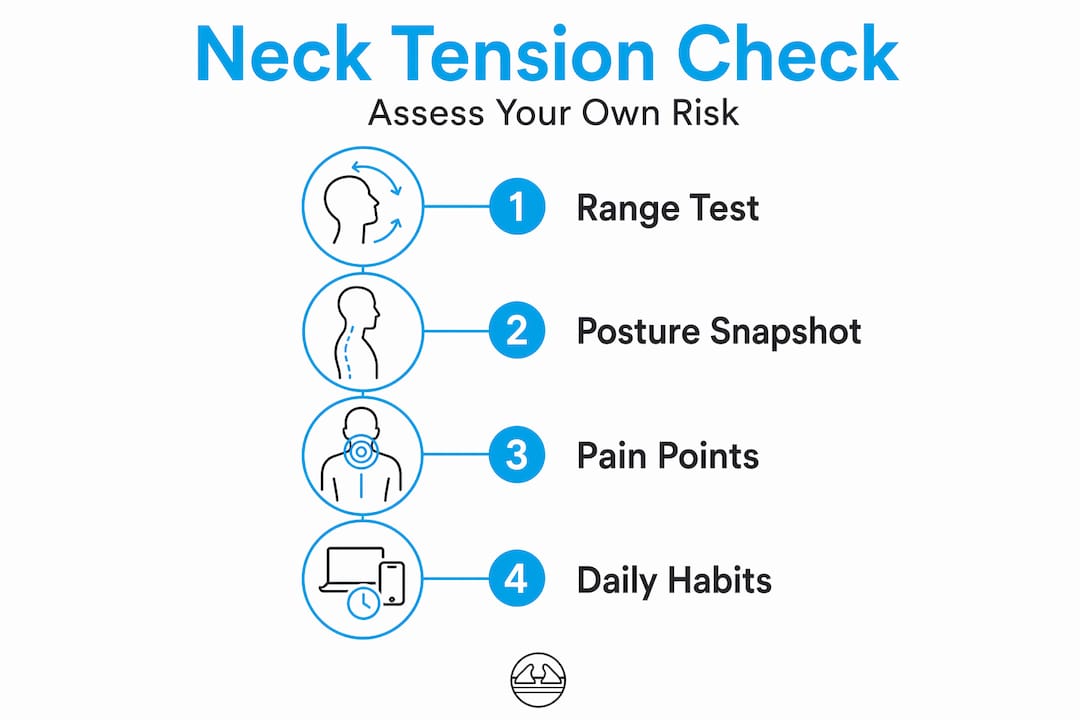
To gauge your own tension severity before you start any routine, ask yourself these questions. Can you rotate your head fully left and right without pain? Does the stiffness appear at the same time of day every day? Does tension ease after movement or worsen with it? Your answers point directly to whether posture, stress, or sleep is the primary driver, and that shapes which part of this guide to prioritize first.
Pro Tip: Take a photo of your seated posture from the side. If your ear is in front of your shoulder rather than directly above it, forward head posture is a primary driver of your neck tension.
Ergonomic adjustments that prevent daily strain
Most neck tension is not random. It is built up hour by hour through a poorly set up work environment. Fixing your workspace removes the source of the problem so that your exercises and stretches actually hold.
| Fix | Benefit | Time to implement |
|---|
| Monitor at eye level | Eliminates forward head tilt | 5 minutes |
| Chair height so feet are flat | Reduces lumbar strain that transfers to neck | 5 minutes |
| Screen 20 to 28 inches away | Reduces eye strain and head jutting | 2 minutes |
| Single, supportive pillow | Keeps cervical spine neutral during sleep | Immediate |
| Headset instead of phone cradling | Eliminates lateral neck strain during calls | 1 minute |
The 20-20-20 rule is one of the most practical habits you can adopt. Every 20 minutes, look at something 20 feet away for 20 seconds. This breaks the fixed forward gaze that pulls your head out of neutral. Pair it with movement breaks every 30 to 45 minutes to prevent the static posture that drives neck strain.
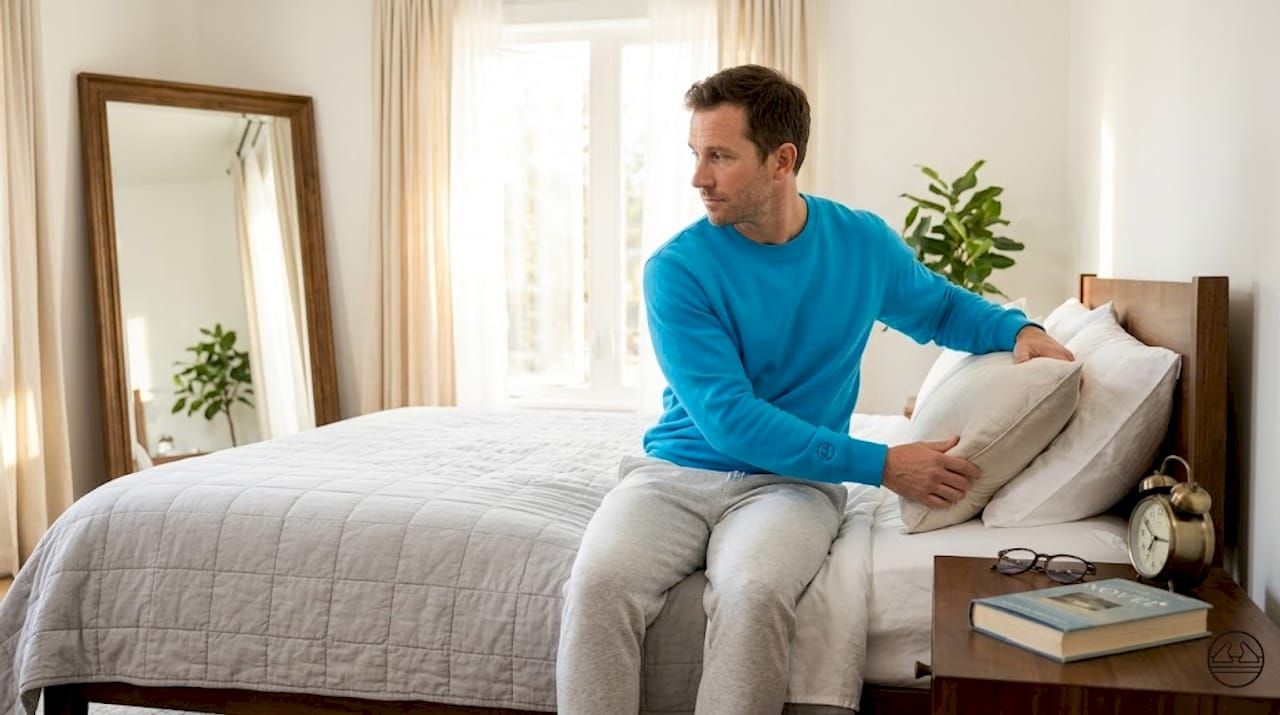
Sleep posture matters more than most people realize. Multiple pillows or poor pillow support limits your neck’s range of motion overnight and keeps muscles in a shortened, strained position for six to eight hours. One medium-firm pillow that keeps your head level with your spine is the standard recommendation for side sleepers. Back sleepers benefit from a thinner pillow that allows slight cervical extension.
Pro Tip: If you wear reading glasses or have an uncorrected prescription, your head posture adjusts to compensate for poor vision. Getting an updated eye exam can eliminate a hidden driver of neck strain you have likely never connected to your discomfort.
Step-by-step neck tension release routine
This 10-minute daily routine targets the specific muscles responsible for most neck tension. Structured programs combining cervical exercises with self-massage reduce pain more effectively than stretching alone, so do not skip the strengthening steps in favor of just holding a stretch.
Warm up for two minutes before starting. Gentle shoulder rolls, slow head rotations within a pain-free range, and a warm towel on your neck for 90 seconds are enough to increase tissue temperature and reduce injury risk.
- Chin tucks. Sit tall and gently draw your chin straight back, as if making a double chin. Hold for 15 seconds. Repeat 8 to 10 times. This directly counters forward head posture and reactivates the deep cervical flexors.
- Upper trapezius stretch. Sit or stand upright. Drop your right ear toward your right shoulder. Place your right hand gently on the left side of your head for a light assist. Hold for 20 to 30 seconds each side. Feel the pull along the side of your neck. Do not yank.
- Levator scapulae stretch. Turn your head 45 degrees to one side and look down at a 45-degree angle, as if looking into your armpit. Apply gentle downward pressure with the same-side hand. Hold 20 seconds each side. This targets one of the most chronically tight muscles in people who work at desks.
- Thoracic extension over a rolled towel. Roll a bath towel tightly and place it horizontally across your mid-back as you lie on the floor. Let your upper back extend over it gently for 60 to 90 seconds. This releases thoracic stiffness that forces your neck muscles to compensate, a connection most people miss entirely.
- Wall angels. Stand with your back against a wall, feet a few inches out. Press your lower back, upper back, and head into the wall. Raise your arms to 90 degrees with elbows bent, then slowly slide them up overhead while keeping contact with the wall. Do 10 repetitions slowly. This retrains scapular control and reduces the upper trap dominance that causes neck tension.
- Breathing finish. End with five slow belly breaths. Inhale for four counts, hold for two, exhale for six. This activates your parasympathetic nervous system and helps the muscles you just worked release the remaining tension.
Most mild-to-moderate tension improves within two to three weeks of consistent practice, with noticeable relief possible within 10 to 15 minutes per session.
Pro Tip: Do this routine twice on days when tension is severe: once in the morning before your screen time begins and once at the end of your workday. The second session removes what accumulated during the day before it sets overnight.
Heat, cold, and self-massage for deeper relief
Exercises create the foundation. Heat, cold, and manual pressure are the tools that get you faster relief and help you recover from acute flare-ups.
When to use cold vs. heat:
- Ice (first 24 to 72 hours after acute strain): Reduces inflammation and numbs sharp pain. Apply for 15 to 20 minutes at a time with a cloth barrier between the ice and skin.
- Heat (chronic tension and stiffness): Increases blood flow, relaxes muscle fibers, and improves tissue extensibility before stretching. Use for 15 to 20 minutes before your exercise routine for best results.
Self-massage is where you can make significant progress without professional appointments. The science behind stretching and targeted pressure shows that manual release of trigger points reduces local tightness and referred pain patterns into the head and shoulders.
| Tool | Cost range | Best use | Evidence strength |
|---|
| Trigger point ball | $10 to $20 | Suboccipital and upper trap release | Strong |
| Foam roller | $20 to $40 | Thoracic extension, broader coverage | Moderate |
| TENS device | $30 to $100 | Nerve pain, acute flare-ups | Strong |
| Heat pack | $15 to $30 | Pre-stretch warm-up, chronic tightness | Strong |
| Deep tissue massage board | $80 to $200 | Targeted spinal and muscle release | Strong |
Combining TENS with heat therapy offers stronger relief than either method alone by blocking nerve pain signals and increasing blood flow at the same time. If you use both, apply heat first for 10 minutes to warm the tissue, then switch to TENS.
One important safety note: soft cervical collars used longer than one to two weeks and more than three hours daily can weaken the neck muscles and make tension worse over time. Collars are for short-term acute management only.
Pro Tip: For suboccipital release, lie on your back and place a trigger point ball at the base of your skull on one side. Let gravity do the work for 60 to 90 seconds rather than rolling aggressively. The pressure melts the muscle without irritating it.
Managing stress to prevent tension from coming back
Physical techniques lose their impact quickly if chronic stress keeps refilling the tension reservoir. Neck tension often stems from systemic stress, meaning mindfulness and breathing practices are not optional add-ons. They are part of the actual treatment.
When your nervous system stays in a heightened state, your shoulders rise and your neck muscles stay partially contracted around the clock. No amount of stretching fully resolves that until the underlying stress response calms down.
Quick stress-relief techniques you can use anywhere:
- 4-7-8 breathing: Inhale for 4 counts, hold for 7, exhale for 8. Two cycles shift your nervous system toward rest.
- Progressive muscle relaxation: Tense and release muscle groups from feet to neck over five minutes. The contrast between tension and release teaches your neck muscles to let go.
- Yoga for neck tension: Cat-cow, thread-the-needle, and child’s pose directly address the upper back and cervical spine. Even 10 minutes of gentle yoga before bed measurably reduces next-morning stiffness.
- Screen time cutoff: Stop looking at screens 30 minutes before sleep. Blue light and mental stimulation keep the nervous system active, which maintains muscle guarding overnight.
- Aerobic movement: Even a 20-minute walk increases endorphins and reduces circulating cortisol, which directly lowers baseline muscle tension.
Sleep quality rounds out the picture. Your muscles do most of their repair during sleep. Poor sleep means incomplete recovery, which means you wake up starting the day already behind. Consistent sleep and wake times, a dark and cool room, and a supportive pillow are the non-negotiables.
Pro Tip: Set a 30-minute alarm after sitting down at your desk. When it goes off, stand, roll your shoulders back five times, and take five deep breaths. That single habit prevents the majority of tension buildup for most desk workers.
My honest take on what actually works
When I look at the people who fully resolve their neck tension versus those who manage it indefinitely, the difference is almost never the specific exercise they chose. It is whether they addressed the full picture.
I have seen clients do every stretch correctly and still wake up tight every morning because their workstation was poorly set up, or they were running on five hours of sleep and high cortisol. The stretches help. They are not enough on their own.
The insight that changed my thinking most was learning how much the thoracic spine contributes to neck problems. Thoracic spine stiffness forces the neck muscles to compensate, which means your neck is often the victim, not the source. Once I started recommending thoracic extension work alongside neck stretches, outcomes improved significantly. Most guides skip this entirely.
Rest is another area where common thinking creates real harm. Rest beyond a few days leads to muscle atrophy and increased stiffness. The instinct to protect a sore neck by moving it less is understandable, but it backfires. Gentle, consistent movement accelerates recovery every time.
The last thing I would tell anyone dealing with persistent neck tension: treat it as a system problem. Your posture, your stress levels, your sleep, and your movement habits all feed into the same outcome. Fix one piece and you get partial relief. Fix the system and the tension stops coming back.
— Cameron
How Thrival supports your neck tension routine

The exercises and techniques in this guide work best when you have the right tools to reinforce them. Thrival’s Deep Tissue Pro is a non-motorized recovery board with interchangeable attachments, including the Bullseye and Ballhead, designed to deliver targeted trigger point pressure and spinal decompression at home. It replicates the effect of professional manual therapy on your neck and upper back without a recurring appointment cost. Pair it with the daily routine above for deeper muscle release and faster recovery between sessions. For more on building a complete relief plan, explore Thrival’s guide to easing muscle tension and practical muscle therapy tips that complement everything covered here.
FAQ
How long does neck tension take to resolve?
Mild-to-moderate neck tension typically resolves within two to three weeks with consistent self-care, though you can feel noticeable relief within a single 10 to 15 minute session.
Is heat or ice better for neck tension?
Use ice within the first 24 to 72 hours of an acute strain to reduce inflammation, then switch to heat for chronic tightness. Heat applied for 15 to 20 minutes before stretching improves muscle extensibility and speeds relief.
Can stress alone cause neck tension?
Yes. Stress keeps the nervous system in a heightened state, which maintains partial muscle contraction in the neck and shoulders around the clock. Breathing exercises and relaxation methods for neck stress directly lower that baseline tension.
What exercises are best for neck tightness?
Chin tucks, upper trapezius stretches, levator scapulae stretches, and thoracic extension exercises consistently deliver the best results. Cervical stabilization combined with self-massage outperforms stretching alone in structured programs.
Should I rest my neck when it hurts?
Short rest is fine for the first day or two after an acute injury. Beyond that, movement is more effective than rest for recovery. Gentle, consistent motion prevents the muscle atrophy and stiffness that prolonged rest causes.
Recommended