Friday, May 1, 2026
Muscle tension is not just an athlete’s problem. Millions of desk workers, caregivers, students, and anyone managing daily stress deal with persistent tightness, cramping, and restricted movement every single day. Yet most people either dismiss it as normal or reach for the wrong solution. This guide breaks down exactly what muscle tension is, why it happens to so many different people, and which recovery strategies actually deliver results so you can move and feel better without guesswork.
Table of Contents
Key Takeaways
| Point | Details |
|---|
| Definition matters | Understanding what muscle tension is helps target the right recovery methods. |
| Common causes | Inactivity, stress, and poor hydration are frequent triggers of tension—not just overuse. |
| Red flag symptoms | See a doctor if muscle tension is severe, persistent, or coupled with other symptoms. |
| Best relief is multi-modal | Combining stretching, massage, rest, and hydration works better than any one method alone. |
| Recovery takes time | Most mild strains heal in weeks, while more severe issues or overuse may require consistent care and patience. |
What exactly is muscle tension?
Most people confuse muscle tension with other issues, so it’s crucial to clarify what sets it apart before choosing any recovery approach.
Muscle tension, often referred to interchangeably with stiffness or tightness, is “the sensation of tight, cramped, or painful muscles that interferes with normal activities and movements.” That definition matters because it narrows the scope. You’re not just sore. You’re dealing with a persistent state that affects your range of motion, comfort, and quality of life.
Common symptoms of muscle tension include:
- A feeling of fullness or pressure deep in the muscle
- Stiffness that limits how far a joint can move
- Dull, aching discomfort that lingers for hours or days
- Visible tightness or a “knotted” sensation in a specific area
- Tenderness when pressure is applied to the affected spot
Knowing what you’re actually dealing with changes how you treat it. For example, if you also experience hip flexor pain alongside tension in the lower back, the root cause and recovery approach can differ significantly from general tightness.
It also helps to understand what muscle tension is not. The Cleveland Clinic draws clear distinctions between conditions: muscle tension or stiffness involves lingering tightness and pain, while spasticity refers to involuntary muscle spasms linked to neurological conditions like multiple sclerosis or ALS. Weakness is a lack of strength without necessarily involving pain. And a muscle strain is a fiber tear, graded I through III based on severity.
| Term | Core characteristic | Common cause |
|---|
| Muscle tension | Persistent tightness and discomfort | Stress, posture, inactivity |
| Spasticity | Involuntary spasms | Neurological conditions (MS, ALS) |
| Muscle weakness | Reduced strength | Injury, nerve issues, deconditioning |
| Muscle strain | Fiber tear (Grade I-III) | Sudden overexertion or trauma |
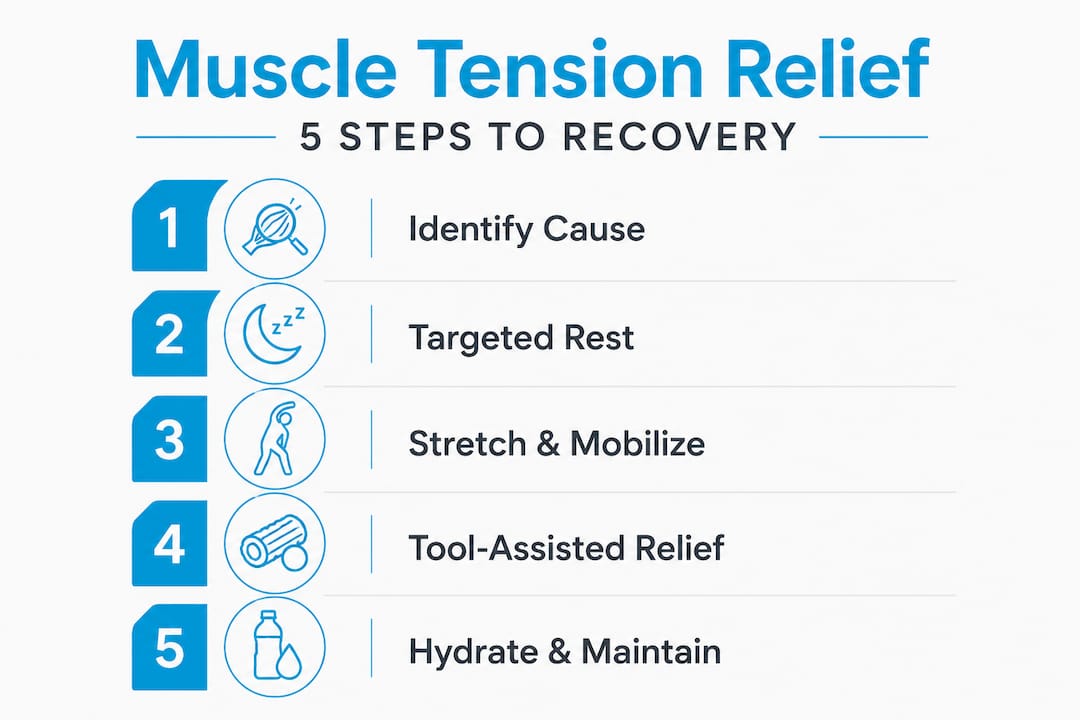
Choosing the right recovery tool starts with the right diagnosis. A strain needs rest and gradual loading. Tension needs a different approach entirely.
“Muscle tension is often subjective and multifaceted, making standardized definitions and assessment tools essential for accurate care.” — Expert consensus research
Causes of muscle tension: Beyond overuse and exercise
With a better grasp of what muscle tension is, let’s uncover where it actually comes from, often in surprising ways.
The primary causes include periods of inactivity such as prolonged desk work, muscle strains and sprains, delayed-onset muscle soreness (DOMS) after intense exercise, dehydration, electrolyte imbalances, poor posture, and stress. That’s a broad list, and it explains why muscle tension is so widespread across different populations.
Physical and lifestyle contributors:
- Sitting for extended periods without movement, which shortens hip flexors and compresses lumbar discs
- Repetitive motions at work or during training, which overload specific muscle groups
- Poor sleeping position, especially stomach sleeping, which strains the cervical spine
- Sudden increases in exercise volume or intensity without adequate rest
- Inadequate fluid and electrolyte intake, which impairs muscle contraction and relaxation
The role of inactivity in creating chronic tension is often underestimated. When a muscle stays in a shortened position for hours, the neural drive to that muscle can change, making it harder for the fibers to fully relax even when you do move. That’s not just tightness. That’s a neuromuscular adaptation working against you.
Physical causes are only part of the picture. Stress is a major and often overlooked driver. Research confirms that tension is frequently stress-related, driven by the SAM and HPA axes activating sustained muscle contraction. When stress becomes chronic, your body enters a guarding cycle. Muscles brace, blood flow decreases, and the tissue never fully recovers between episodes.
Stress-related contributors to chronic tension:
- Work pressure and emotional anxiety increasing baseline muscle tone
- Poor sleep quality, which reduces recovery hormone output
- Unresolved trauma or anxiety disorders contributing to body-wide holding patterns
- Shallow breathing habits, which chronically engage neck and upper back muscles
Pro Tip: If your tension consistently returns to the same spot, such as the upper traps or lower back, consider whether stress or posture is the repeating trigger. Treating the symptom without addressing the cause is a cycle with no exit.
For athletes and active individuals, intense training impact is also a serious contributor. DOMS peaks 24 to 72 hours after unfamiliar or high-volume exercise and is caused by microtrauma and the resulting inflammatory response, not lactic acid buildup as the old myth claimed. Understanding the real cause helps you choose recovery tools that actually target inflammation and tissue repair.
Spotlight: When muscle tension signals a bigger problem
While most tension is routine, it’s crucial to recognize when it might indicate something more serious.
The overwhelming majority of muscle tension is benign and responds well to self-care. But there are situations where tightness is a symptom of something that needs medical evaluation. Knowing the difference protects you and prevents delayed treatment of a more serious condition.
Watch for these red flags:
- Fever accompanying muscle pain or stiffness, which can indicate infection
- Fatigue that is disproportionate to your activity level
- Stiffness that is severe, spreading, or persisting beyond several days without improvement
- New neurological symptoms such as numbness, tingling, or weakness alongside tension
- Stiffness upon waking that gradually improves, which can signal inflammatory arthritis
- Pain following a tick bite, which may point to Lyme disease
According to the Cleveland Clinic, muscle stiffness rarely indicates serious conditions like infections such as tetanus or meningitis, chronic diseases like fibromyalgia, lupus, or stiff person syndrome, or neurological issues. But “rarely” is not “never.” Seek care if stiffness comes with fever, significant fatigue, or persists beyond a few days without improvement.
“Stiff person syndrome, fibromyalgia, and lupus are rare but real causes of muscle tension. If standard self-care isn’t working after a week, a medical evaluation is the right next step.”
Stiff person syndrome, for example, involves progressive muscle rigidity and painful spasms, often beginning in the trunk and spreading. It is autoimmune in nature and requires specific medical management, not foam rolling. Fibromyalgia produces widespread musculoskeletal pain and is often accompanied by fatigue and cognitive issues. Both conditions can initially be mistaken for ordinary tension.
Knowing when to seek help is a critical skill. Most people wait too long. If your self-care plateau has lasted more than a week, get evaluated before continuing any recovery protocol.
Proven methods for muscle tension relief and recovery
Knowing the possible risks helps you approach self-care more confidently. Here are the most effective recovery techniques based on research.
Evidence-based recovery strategies:
- RICE method for acute tension or strain: Rest the area, apply Ice for 20 minutes at a time, use Compression if appropriate, and Elevate if the limb is involved. This is most effective in the first 24 to 48 hours after onset.
- Stretching: Static stretching improves range of motion and can reduce the sensation of tightness. However, post-exercise stretching alone shows no significant recovery benefit compared to no stretching when used in isolation. It works best as part of a broader protocol.
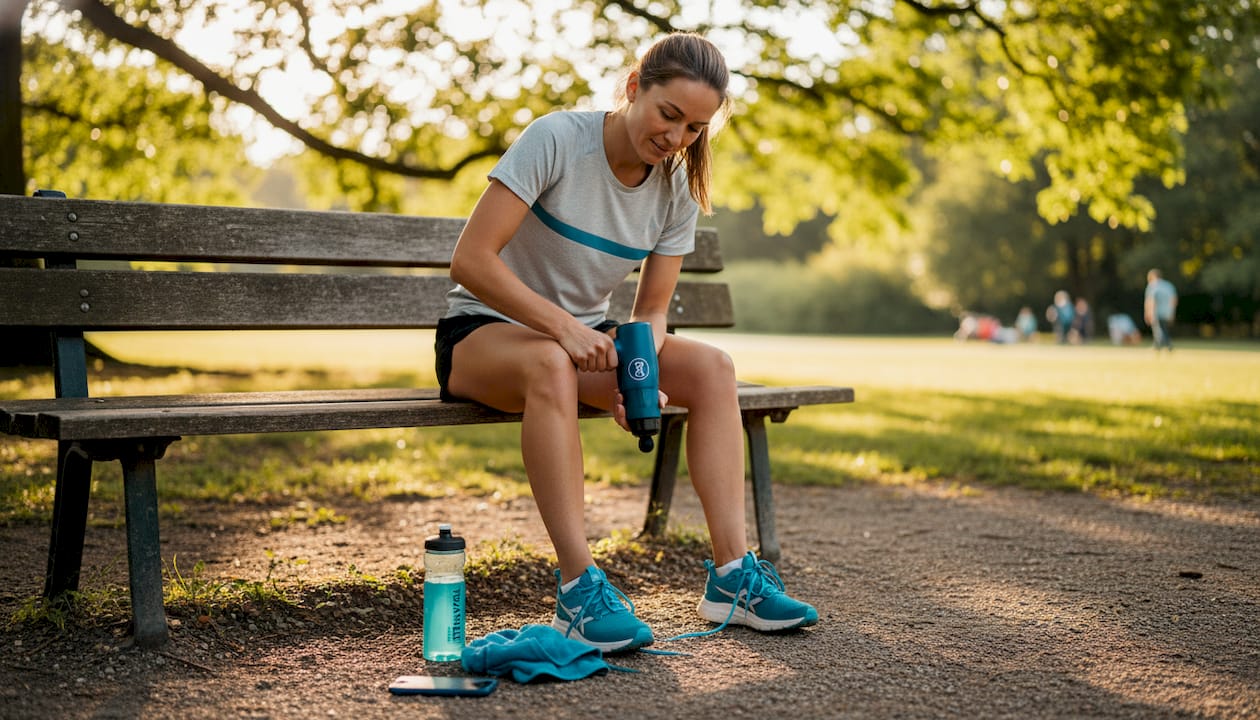
- Percussive massage: Research shows percussive tools immediately reduce tone and stiffness post-fatigue. They also reduce creatine kinase (CK) and interleukin-6 (IL-6) markers in DOMS, both indicators of muscle damage and inflammation.
- Vibration and functional electrical stimulation (FES): These modalities enhance muscle strength response and recovery, particularly when combined with other approaches.
- Heat and cold alternation: Applying heat relaxes tight tissue and increases blood flow. Cold reduces acute inflammation. Alternating both addresses multiple dimensions of tension and soreness.
- Hydration and electrolyte replenishment: Adequate fluid intake maintains muscle function and supports faster tissue repair. Dehydration directly impairs the muscle’s ability to relax.
- Gradual return to exercise: Harvard Health recommends gradual exercise increase alongside posture correction and hydration as core recovery pillars. Returning too quickly prolongs tension and risks re-injury.
| Recovery method | Best use case | Evidence level |
|---|
| RICE | Acute strain or new injury | Strong |
| Percussive massage | Post-exercise stiffness, DOMS | Strong |
| Static stretching | Improving ROM as part of multi-modal approach | Moderate |
| Heat/cold alternation | Chronic tension and soreness | Moderate |
| Vibration/FES | Strength recovery and neurological engagement | Moderate |
| Hydration | Prevention and general recovery support | Strong |
Pro Tip: Don’t rely on any single method. Combining percussive massage with targeted stretching and proper hydration produces better results than any one approach alone. That’s what mobility and recovery science consistently supports.
The role of professional-grade recovery tools has grown significantly as research validates percussive and vibration-based therapy. These tools were once only available in clinical settings. Now, portable at-home devices can replicate many of those outcomes with proper use.
How long recovery takes: Setting realistic expectations
With the right strategies in hand, understanding recovery timelines helps set realistic goals and avoid frustration.
Recovery is not linear, and your specific timeline depends heavily on the type and severity of the tension or injury. Setting accurate expectations prevents you from stopping too soon or pushing too hard.
- Mild general tightness: Typically resolves within 24 to 72 hours with rest, hydration, and light movement. If you incorporate percussive massage or heat, you may feel relief even faster.
- Delayed-onset muscle soreness (DOMS): Peaks between 24 and 72 hours post-exercise, then gradually reduces over the following two to three days. Harvard Health confirms this DOMS timeline, and the discomfort is a normal sign of muscle adaptation, not damage requiring rest.
- Grade I muscle strain (minor fiber tear): Heals within two to four weeks with proper care. Light activity is usually encouraged after the initial rest period to stimulate collagen repair.
- Grade II muscle strain (partial tear): Recovery typically takes two to three months. Physical therapy and structured loading are often necessary to fully restore strength and range of motion.
- Chronic tension patterns: These require the most patience. If your tension has been building for months due to poor posture or unmanaged stress, resolving it takes consistent effort over weeks, not days.
Several factors influence how fast you recover. Age plays a role since tissue repair slows over time. Sleep quality is significant because most muscle repair occurs during deep sleep stages. Nutrition matters too, particularly protein intake, which supplies the amino acids needed for fiber repair. And stress management directly affects baseline muscle tone. Research data shows that specific intervention techniques like Kansho reduce stiffness ratios to 0.85 to 0.87, illustrating that measurable, targeted improvement is genuinely achievable with the right approach.
Why most people misunderstand muscle tension—and what actually works
There’s a persistent oversimplification in how people approach muscle tension. The assumption is that if you stretch enough, the tightness will go away. Stretch more, feel better. That logic is clean, intuitive, and mostly wrong.
Research on tension as a multifaceted condition shows it involves range of motion limitations, tissue texture changes, pain sensitivity, and movement asymmetries that are all subjective and need to be assessed with standardized tools. Stretching addresses one of those dimensions at best. It doesn’t change tissue quality, reduce inflammation, or reset the nervous system’s holding pattern.
The evidence on post-exercise stretching alone is clear: it shows no significant recovery benefit compared to no stretching in controlled studies. Combined, multi-modal strategies that include percussive massage, cold water immersion (CWI), and functional electrical stimulation show consistently better outcomes for mobility and overall well-being. That’s not a minor footnote. It fundamentally changes how you should think about your recovery routine.
What actually works is identifying why your tension exists and matching the tool to that specific cause. Tension from stress requires addressing the nervous system, not just the muscle belly. Tension from inactivity requires movement pattern retraining, not just a daily stretch. Tension from overuse in advanced recovery programs requires load management and targeted soft tissue work, not more volume.
The people who recover fastest are not those doing the most work. They’re the ones asking the right questions first.
Your next step: Taking control of muscle tension relief
Understanding the science behind muscle tension gives you a real advantage. But knowledge only becomes relief when you put the right tools to work.

At Thrival, we build recovery tools specifically designed to address what research identifies as the most effective modalities: percussive massage, targeted deep tissue pressure, and spinal decompression support. Whether you’re dealing with post-workout stiffness, desk-related tension, or chronic tight spots, our at-home recovery tools are engineered for targeted, professional-grade relief. The Thrival Deep Tissue Pro delivers the percussive power your muscles need to release and recover, while our targeted muscle attachments let you customize your approach to specific areas like the hips, back, shoulders, and neck. Every product is US-made, FDA-registered, and backed by a lifetime warranty.
Frequently asked questions
What does muscle tension feel like?
Muscle tension feels like tightness, cramping, or pain that can limit movement or comfort, often described as a persistent fullness or knotted sensation in a specific area.
Can stress alone cause muscle tension?
Yes, prolonged stress activates the SAM and HPA axes, triggering sustained muscle contraction that can develop into chronic tension even without any physical exertion.
How do I know if my muscle tension needs medical attention?
Seek medical advice if your tension persists beyond a few days or is accompanied by fever, significant fatigue, or new neurological symptoms like numbness or spreading weakness.
What’s the fastest way to relieve muscle tension?
Combining rest, gentle stretching, and percussive massage tools along with proper hydration offers the most effective short-term relief by addressing both the tissue and the inflammatory response simultaneously.
Do I need to stretch daily to combat muscle tension?
Daily stretching can help, but post-exercise stretching alone shows no significant benefit in recovery studies. Multi-modal strategies combining massage, movement, and recovery tools produce better, more lasting results.
Recommended