Thursday, May 21, 2026
Muscle tension and pain are two of the most common physical complaints people deal with daily, yet the advice on how to address them is all over the place. Some sources push complete rest, others demand daily foam rolling, and a few swear by stretching alone. The truth is that effective muscle therapy tips are specific, evidence-based, and depend heavily on the type of pain you’re dealing with. This article cuts through the noise and gives you a practical, curated set of strategies to reduce pain, restore mobility, and keep tension from coming back.
Table of Contents
Key takeaways
| Point | Details |
|---|
| Match therapy to injury phase | Acute injuries need rest and ice first; chronic tension responds better to heat and movement. |
| Active recovery beats full rest | Gentle movement below your pain threshold heals faster than staying completely still. |
| Hydration and sleep matter | Muscle tissue is 75% water, so daily hydration and 7-9 hours of sleep directly impact recovery speed. |
| Use tools with correct technique | Hold pressure on tender spots for 30-90 seconds and never roll directly over joints or bones. |
| Build a consistent routine | A weekly muscle therapy workflow prevents tension buildup far better than occasional intensive sessions. |
1. Understand what type of muscle pain you’re actually dealing with
Not all muscle pain is the same. Acute strains feel sharp and localized, often appearing within hours of an injury. Chronic tension, on the other hand, builds slowly and creates that familiar dull ache in the neck, lower back, or hips after long hours at a desk or repeated athletic stress.
The therapy approach you choose should match the cause. Different muscles respond differently to treatment, so applying heat to an acute strain in the first 24 hours can actually make swelling worse, while using ice on a chronically tight trapezius may provide temporary relief but won’t release the underlying tension. Getting this distinction right is the foundation of every other tip on this list.
There’s also nerve-related pain to consider. Sciatica, for example, mimics deep muscle pain but requires a completely different approach. Early diagnosis of nerve pain before self-treating is critical to avoid making the condition worse.
2. Follow the H.A.R.M. rule after acute injury
If you’ve just strained a muscle, the first 72 hours are a critical window. Avoid H.A.R.M., which stands for Heat, Alcohol, Running, and Massage, during this period. Each of these increases blood flow to the injured area, which can worsen inflammation and delay tissue repair.
This is one of the most frequently ignored muscle pain relief tips. People reach for a heating pad or book a massage the day after a strain because it feels intuitive. Unfortunately, that often makes the injury linger longer. Instead, use the Protection, Rest, Ice, Compression, and Elevation (P.R.I.C.E.) method during those first three days, then gradually reintroduce movement.
Pro Tip: Set a reminder on day three post-injury to start gentle active recovery. Keeping pain at or below a 3 out of 10 on the pain scale gives you a reliable guide for safe movement.
3. Apply ice and heat at the right times
Timing your temperature therapy correctly makes a real difference in outcomes. Ice for 15-20 minutes during the first 24-48 hours of an acute injury reduces inflammation and numbs localized pain. After that window, heat becomes more useful, relaxing tight tissue and increasing blood flow to support repair.
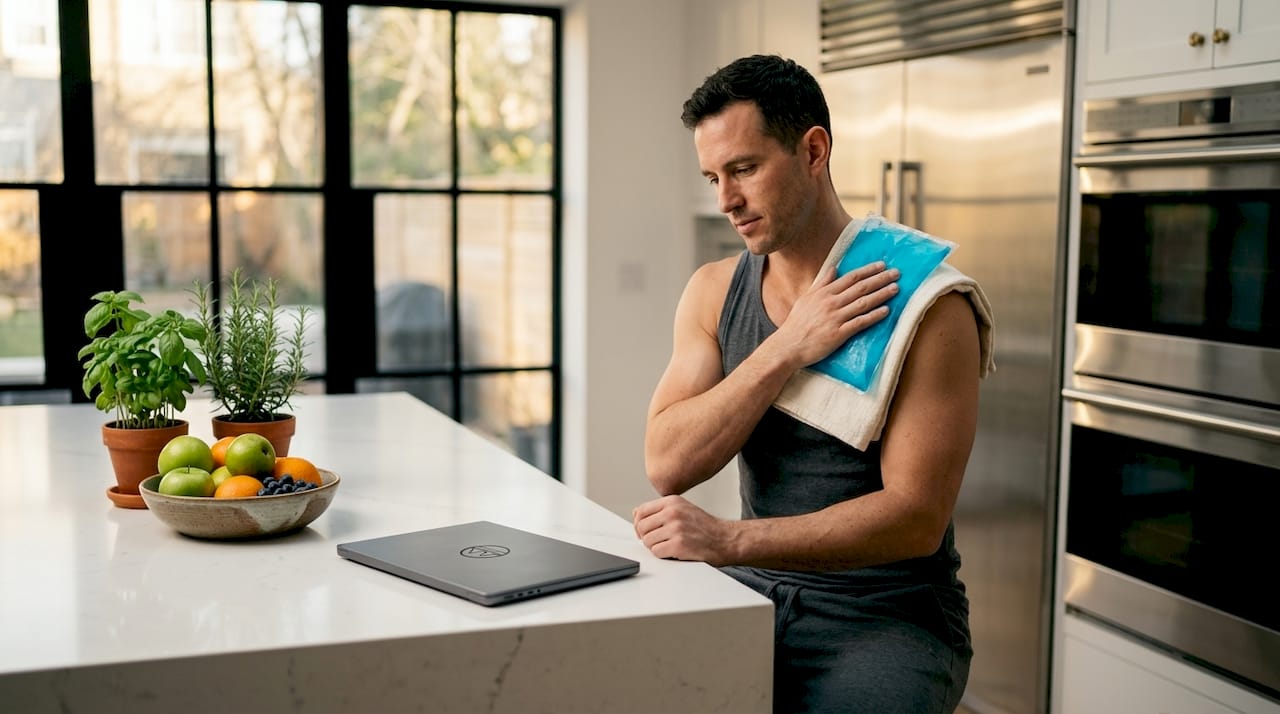
For chronic muscle tension, heat is almost always the better starting point. The trapezius, a muscle that holds enormous amounts of daily stress, responds better to heat than cold. A warm compress or heating pad used for 15-20 minutes before a foam rolling session makes the tissue more pliable and easier to release.
Never apply ice directly to skin. Always wrap it in a cloth. And avoid falling asleep with a heating pad, which is a common cause of skin burns.
4. Practice self-myofascial release correctly
Self-myofascial release (SMR) is one of the best muscle pain relief methods you can do at home, but technique matters more than frequency. The goal is to apply sustained pressure to tight spots in the muscle and fascia to help the tissue release.
Here’s what correct SMR looks like:
- Move slowly over the muscle, about one inch per second
- When you find a tender spot, stop and hold pressure there for 30-90 seconds to allow release
- Never roll directly over joints, the spine, or bones, as this can cause bruising and tissue damage
- Breathe steadily throughout. Holding your breath activates muscle guarding, which defeats the purpose
- Use body weight to control pressure. More isn’t always better, especially on sensitive areas like the psoas or IT band
SMR with a foam roller or massage ball is one of the most accessible muscle therapy tools for fitness on the market, and when done right, it genuinely reduces soreness and improves range of motion.
Pro Tip: Target one muscle group per session rather than trying to roll your entire body in ten minutes. Focused attention on a single area produces better tissue release.
5. Add trigger point therapy for stubborn tight spots
Trigger points are hyper-irritable knots within a muscle that can refer pain to other areas. A trigger point in your upper trapezius, for example, often sends pain to the back of your head or behind the eye, which makes it easy to misidentify as a headache.
Trigger point therapy involves applying direct, sustained pressure to these knots using your thumb, a massage ball, or a specialized tool. Consistent self-care with foam rollers or massage balls prevents tension buildup and reduces the frequency of these flare-ups between professional treatments.
The key is patience. You’re looking for a dull, radiating sensation when you press on a trigger point. Hold the pressure until you feel the sensation ease off, typically within 30 to 90 seconds. Then move to the next spot.
The market for muscle pain relief accessories is wide, and not every tool fits every problem. Here’s a practical comparison to help you decide:
| Tool | Best for | Key consideration |
|---|
| Foam roller (standard) | Large muscle groups: quads, hamstrings, back | Covers broad surface area; less precise |
| Lacrosse or massage ball | Targeted spots: glutes, shoulders, feet | High precision; portable and low cost |
| Psoas release board | Deep hip flexors, spinal decompression | Structural design applies sustained passive pressure |
| Knobbed attachment tools | Trigger point therapy in specific areas | Allows adjustable depth; more control than a ball alone |
When selecting a tool, think about firmness, size, and portability. A very firm roller can be too aggressive for inflamed tissue. A softer surface works better when you’re just starting out or dealing with a sensitive area. Tools that allow you to swap attachments, like the modular systems Thrival builds, give you the ability to address multiple muscle groups with a single platform.
7. Build hydration and nutrition into your recovery plan
Muscle tissue is approximately 75% water, which means dehydration directly reduces muscle elasticity and slows repair. Aim for at least 2 liters of water daily when you’re in active recovery, more if you’re training hard or sweating heavily.
On the nutrition side, protein timing matters more than most people realize. Spreading protein across 3-4 meals daily supports muscle repair more effectively than loading up at dinner. Each meal should include a quality protein source, whether that’s eggs, chicken, fish, legumes, or a protein supplement.
These aren’t optional add-ons to your muscle therapy workflow. They’re the biological substrate your body uses to actually repair the tissue you’re working on.
Sleep is where the majority of muscle repair happens. Growth hormone release, protein synthesis, and inflammation regulation all peak during deep sleep cycles. Aiming for 7-9 hours per night is not a suggestion for athletes alone. It applies to anyone dealing with chronic muscle tension or recovering from a strain.
Poor sleep elevates cortisol, which increases inflammation and muscle tension. If you’re putting in the work with therapy tools and manual techniques but skimping on sleep, you’re working against yourself.
A consistent sleep schedule, combined with avoiding screens and heavy meals in the hour before bed, sets the conditions for genuine overnight recovery.
9. Build a weekly muscle therapy workflow
Consistency produces better outcomes than intensity. Rather than one long, aggressive foam rolling session every two weeks, a shorter 15-minute daily or every-other-day practice does more for long-term relief.
Here’s a practical weekly structure:
- Monday/Wednesday/Friday: SMR and trigger point work on primary problem areas, followed by light stretching
- Tuesday/Thursday: Active recovery. Walking, swimming, or gentle yoga keeps blood moving without adding strain
- Saturday: Slightly longer session targeting secondary muscle groups you haven’t addressed during the week
- Sunday: Rest or very light movement. Prioritize sleep and nutrition
This soft tissue therapy workflow adapts easily whether you’re an athlete or a desk worker. The structure is the same; what changes is the intensity and the tools you use.
Pro Tip: Track which muscles feel tight after each session with a simple note on your phone. Patterns that repeat across weeks signal areas where professional evaluation may be worthwhile.
10. Know when to move from self-care to professional treatment
Self-treatment covers a lot of ground, but it has limits. Active recovery with controlled movement is superior to complete rest for most muscle pain, and home tools can maintain progress between professional appointments. However, certain signals mean it’s time to see a physical therapist or sports medicine physician.
Seek professional evaluation if:
- Pain persists beyond three weeks without improvement
- You notice sudden weakness, numbness, or tingling in a limb
- Pain wakes you from sleep consistently
- The injury involves a pop or snap at the moment of strain
- Self-care techniques consistently make pain worse, not better
Consistent self-care between sessions also helps your therapist fine-tune your treatment plan, because they can see how your body is responding between visits.
11. Compare your options side by side
Matching the right approach to your specific situation is what separates effective muscle therapy from wasted effort. Here’s a quick-reference comparison:
| Method | Best for | Limitation |
|---|
| Ice therapy | Acute injury, first 48 hours | Not effective for chronic tension |
| Heat therapy | Chronic tightness, pre-session warm-up | Avoid on acute or inflamed tissue |
| Self-myofascial release | Ongoing maintenance, mobility improvement | Requires correct technique |
| Trigger point therapy | Localized knots and referred pain | Can be uncomfortable; go slow |
| Active recovery movement | All phases of healing, stiffness prevention | Must stay below pain threshold |
| Professional massage | Complex, layered tension | Cost and access may limit frequency |
The best muscle therapy methods are rarely one-size-fits-all. Using this table as a starting point helps you stack the right techniques together rather than relying on a single approach.
My take on muscle therapy after years in recovery
I’ve watched a lot of people waste months of effort because they followed one hard rule about muscle therapy without any nuance. The biggest one I see: the belief that rest heals everything. It doesn’t. Complete rest is often counterproductive. Controlled movement, even just walking at a manageable pace, keeps tissue from stiffening and maintains circulation to the injured area.
The second misconception I keep running into is that expensive or intense treatment is automatically more effective. I’ve seen a firm massage ball used correctly on the right spot do more for hip tightness than repeated professional sessions that didn’t address the root cause.
What actually works is matching the tool and technique to the tissue, the phase of injury, and your body’s response. That takes observation and patience, not just effort. Track what helps, what doesn’t, and adjust. Recovery isn’t linear, and treating it like a checklist leads to frustration. Build the habit, refine the approach, and give your body the time it needs.
— Cameron
Knowing the right techniques is only part of the equation. Having a tool that lets you apply them precisely is what makes the difference in daily practice.
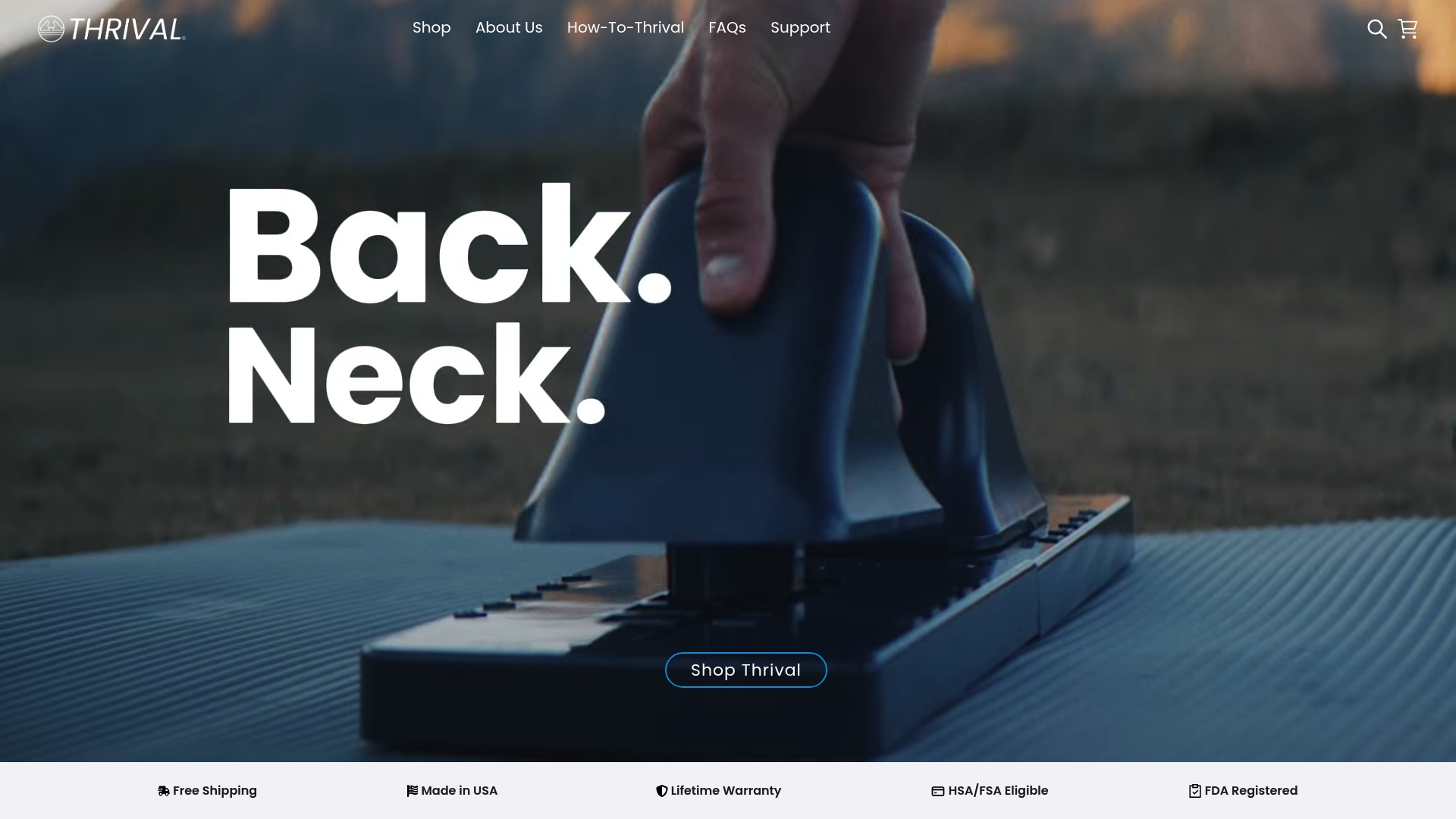
The Thrival Deep Tissue Pro is a non-motorized base board system with interchangeable attachments designed to target specific muscle groups including the back, hips, shoulders, and neck. The Bullseye replicates the classic lacrosse ball effect for precise trigger point work, while the Wave and Arch attachments address broader tissue and spinal decompression needs. It’s built in the US, FDA registered, and backed by a lifetime warranty. If you’re building a consistent muscle therapy workflow, it’s a tool worth having in your muscle recovery toolkit.
FAQ
What are the most effective muscle therapy tips for chronic pain?
For chronic muscle tension, combine heat therapy before sessions, consistent self-myofascial release, and active recovery movement. Spreading these practices across the week produces more lasting relief than occasional intense treatment.
How long should I hold pressure on a trigger point?
Hold sustained pressure on a tender spot for 30-90 seconds to allow the fascia to release. Avoid rolling over joints or bones during the process.
Is foam rolling safe for acute muscle injuries?
No. Avoid massage and direct pressure on an acutely strained muscle during the first 72 hours. The H.A.R.M. principle applies: heat, alcohol, running, and massage can all worsen early-stage inflammation.
How does hydration affect muscle therapy outcomes?
Muscle tissue is approximately 75% water, so dehydration reduces elasticity and slows repair. Drink at least 2 liters of water daily and aim for 7-9 hours of sleep to support your recovery.
When should I stop self-treating and see a professional?
Seek evaluation if pain lasts more than three weeks, is accompanied by numbness or weakness, or consistently worsens despite self-care. Persistent or neurological symptoms need professional diagnosis before you continue any home therapy.
Recommended