Saturday, July 4, 2026
Muscle mobility is defined as the ability to actively move your joints through their full range of motion with strength and control. This is not the same as flexibility. The importance of muscle mobility goes far beyond simply touching your toes. It determines how well you move, how often you get injured, and how your body holds up as you age. Mobility requires flexibility, strength, stability, and coordination working together. Without all four, your movement breaks down in ways that cause pain, limit performance, and accelerate physical decline.
Why does muscle mobility differ from flexibility and strength?
Mobility and flexibility are not interchangeable terms. Flexibility is the passive extensibility of a muscle. It describes how far a muscle can be stretched when an external force is applied. Mobility is active. It describes how far you can move a joint under your own muscular control.
The distinction matters because you can be flexible without being mobile. A person who can passively pull their leg into a deep hip stretch may still lack the strength to hold that position during a squat or a sprint. Mobility requires neuromuscular control at the end ranges of motion, not just tissue extensibility.
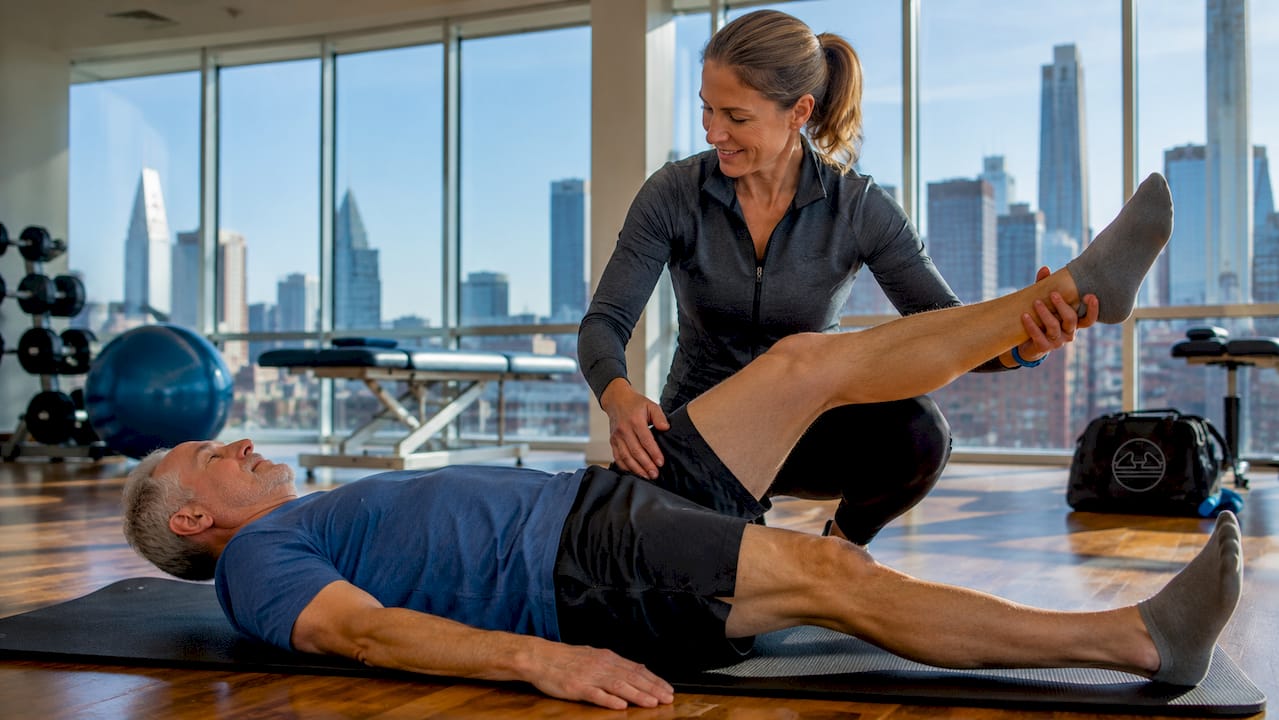
Strength plays a direct role in mobility. When your muscles are strong through their full range, they signal to your nervous system that a given position is safe. Mobility limitation is governed by the nervous system’s perception of safety at joint end-ranges. Without strength at those positions, your brain restricts movement as a protective response.
Research confirms that strength training improves joint range of motion as effectively as stretching alone. This means lifting weights through full ranges of motion builds mobility, not just muscle size. Static stretching alone misses the strength and neuromuscular control components that lasting mobility requires.
- Flexibility: Passive muscle length, measured without active effort
- Mobility: Active joint control through full range, requiring strength and coordination
- Strength: The force capacity that stabilizes joints at their end ranges and makes mobility safe
Pro Tip: Add a slow, controlled lowering phase to exercises like Romanian deadlifts or deep squats. This builds strength at long muscle lengths, which directly expands your usable range of motion.
What are the key benefits of maintaining muscle mobility?
Better mobility protects your joints by distributing mechanical stress more evenly across joint surfaces. When a joint moves freely and fully, no single point absorbs disproportionate load. That even distribution prevents the overuse injuries that accumulate silently over months and years.
The injury prevention benefit is significant. People with higher mobility scores are 6 times less likely to suffer physical injuries. That figure reflects how much your movement quality predicts your injury risk. Improving your mobility is one of the most direct steps you can take to stay physically active without setbacks.
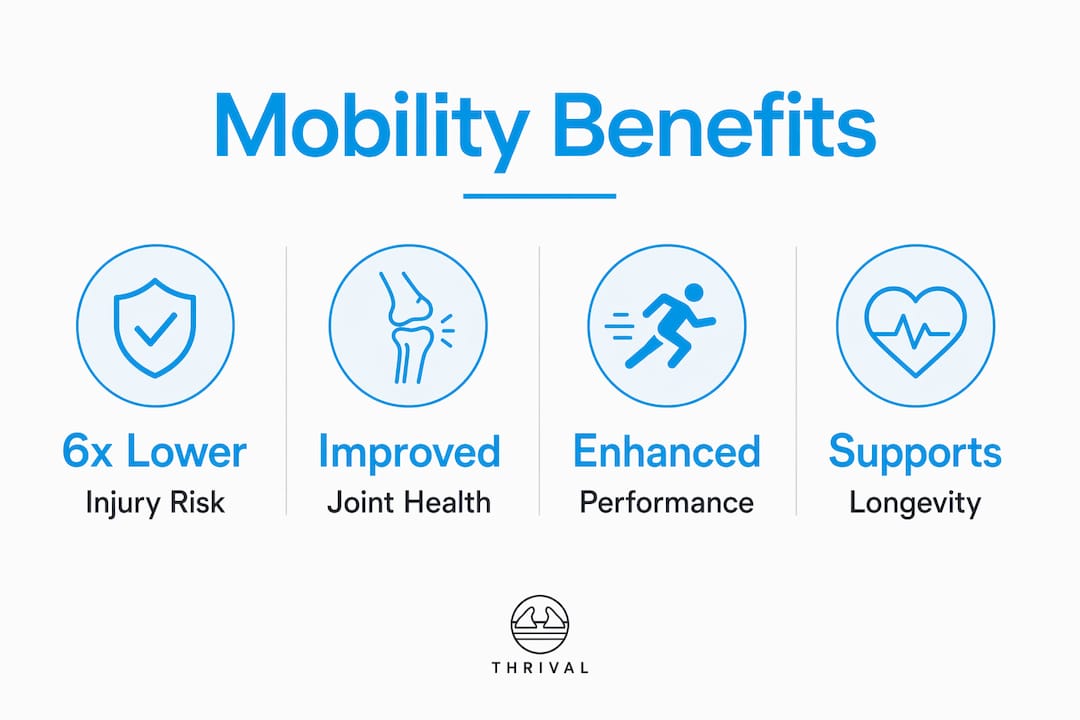
Mobility also shapes exercise quality. A person who can reach full depth in a squat activates more muscle tissue and builds strength more evenly than someone who cuts the movement short. Better range of motion means better muscle development, not just better flexibility.
The long-term benefits extend well beyond the gym. Older adults who maintain active mobility routines reduce dementia risk by up to 45% and lower all-cause mortality by 67%. Those numbers reflect how deeply physical movement is tied to brain health and longevity. Mobility is not a fitness accessory. It is a health foundation.
- Joint protection: Full range of motion distributes load evenly, reducing wear on cartilage and connective tissue
- Injury prevention: Higher mobility scores correlate with dramatically lower injury rates
- Performance: Full range movements recruit more muscle and build strength more completely
- Aging and longevity: Active mobility routines are linked to reduced dementia risk and lower mortality
- Posture and pain: Good mobility reduces compensatory movement patterns that cause chronic pain
What are effective strategies to improve muscle mobility?
The most effective approach to improving muscle mobility combines strength training through full ranges of motion with targeted mobility work. Static stretching alone does not build the neuromuscular control that makes mobility durable. Strength training at long muscle lengths and techniques like foam rolling produce more lasting range of motion gains than passive stretching.
For lasting results, targeted mobility exercises require practice 3–4 times weekly over a minimum of 6 weeks. Consistency matters more than intensity. Short, frequent sessions outperform occasional long ones.
Here is a practical framework for building mobility that lasts:
- Identify your restricted joints. Common problem areas include the hips, thoracic spine, ankles, and shoulders. Focus your effort where movement is most limited.
- Train through full ranges of motion. Exercises like deep squats, Romanian deadlifts, overhead pressing, and hip hinges build strength and mobility simultaneously.
- Add controlled articular rotations (CARs). CARs move each joint through its maximum range under active muscular control. They train the nervous system to accept and own those positions.
- Use foam rolling as a complement. Foam rolling reduces tissue density and can temporarily increase range of motion, making it useful before mobility work. It does not replace strength-based training.
- Progress gradually. Add load or depth only when you can control the current range without compensation.
Pro Tip: Resistance training through full range of motion can substitute for static stretching in your mobility routine. If you lift with full range consistently, you may not need dedicated stretching sessions at all.
The table below compares three common approaches to improving range of motion:
| Approach | Builds strength at range | Trains neuromuscular control | Recommended frequency |
|---|
| Static stretching | No | No | Daily, short holds |
| Foam rolling | No | Partially | Before mobility work |
| Full-range strength training | Yes | Yes | 3–4 times per week |
What signs indicate poor muscle mobility?
Poor muscle mobility announces itself through patterns most people attribute to other causes. Stiffness after sitting for an hour, chronic lower back pain, and recurring shoulder tightness are often mobility deficits in disguise. Recognizing these signs early is the first step toward addressing the root cause rather than chasing symptoms.
Compensatory movement from limited mobility in one joint causes pain in other body areas. A restricted hip, for example, forces the lumbar spine to absorb movement it was not designed to handle. The back hurts, but the hip is the problem. This pattern repeats throughout the body and explains why treating pain at the site of discomfort often fails.
Common signs of limited mobility include:
- Stiffness after rest: Joints that feel locked up after sitting or sleeping signal restricted range of motion
- Chronic pain in adjacent areas: Back, knee, or shoulder pain that does not resolve often traces to a restricted joint nearby
- Reduced exercise range: Inability to reach full depth in squats, lunges, or overhead movements
- Frequent soft tissue injuries: Repeated strains or pulls in the same muscle groups suggest that area is compensating for restricted mobility elsewhere
- Difficulty with daily tasks: Trouble reaching overhead, bending to tie shoes, or getting up from the floor reflects functional mobility loss
Professional assessment is worth pursuing when pain persists despite self-directed effort. A physical therapist or sports medicine clinician can identify specific joint restrictions and design a targeted program. Early intervention prevents compensatory patterns from becoming chronic. You can also explore muscle therapy approaches that address tight spots directly before they limit your movement long-term.
How does integrating mobility training improve long-term health?
Mobility training functions as preventive care for your musculoskeletal system. Every session you invest in maintaining joint range of motion reduces the likelihood of injury, chronic pain, and physical limitation later. Think of it as maintenance for the body you plan to use for decades.
Sedentary patterns accelerate mobility loss. Sitting for extended periods shortens hip flexors, tightens the thoracic spine, and reduces ankle dorsiflexion. Breaking those patterns with regular movement variety, even brief sessions throughout the day, counteracts this decline. Desk workers in particular benefit from structured mobility routines that address the specific restrictions that seated work creates.
Combining mobility training with strength and cardiovascular exercise produces the most complete physical health profile. Mobility alone does not build the cardiovascular fitness or muscle mass that protect against chronic disease. But without mobility, strength training becomes less effective and injury risk rises. The three work together.
Maintaining mobility into older age directly supports independence. Adults who preserve their range of motion and functional movement capacity stay active longer, require less assistance, and maintain independence at higher rates. The connection between mobility and quality of life in later years is direct and well-documented.
Key Takeaways
Muscle mobility is the single most underinvested physical quality, combining flexibility, strength, and neuromuscular control to protect joints, prevent injury, and support long-term health across every stage of life.
| Point | Details |
|---|
| Mobility is not flexibility | Mobility requires active strength and neuromuscular control, not just passive muscle length. |
| Injury risk drops sharply | People with higher mobility scores are 6 times less likely to suffer physical injuries. |
| Strength training builds mobility | Full-range resistance training improves joint range as effectively as stretching alone. |
| Consistency drives results | Targeted mobility work 3–4 times weekly for at least 6 weeks produces lasting gains. |
| Aging outcomes depend on mobility | Active mobility routines reduce dementia risk by up to 45% and lower all-cause mortality by 67%. |
Why I think most people are training mobility completely wrong
Most people treat mobility as a warm-up ritual or an afterthought. They do a few hip circles, touch their toes, and consider the job done. That approach misses the point entirely.
The biggest misconception I see is that stretching equals mobility. Stretching increases passive muscle length. Mobility requires you to own that length under load. A muscle you can only access when relaxed is not a muscle you can rely on when it matters.
The second mistake is chasing range of motion without building strength at that range. Gaining flexibility without corresponding strength is not progress. It is instability. Your nervous system will restrict that range the moment it perceives a threat, which is exactly what happens when people “lose” flexibility they worked hard to gain.
What actually works is progressive strength training through full ranges of motion, combined with deliberate practice of controlled movement at joint end-ranges. Foam rolling and targeted release work complement this by reducing tissue density and improving the quality of movement. Recovery tools that address specific tight spots, like the psoas, hip flexors, and thoracic spine, accelerate the process by releasing restrictions that limit range before you even begin training.
Movement quality matters more than movement quantity. Ten controlled, full-range repetitions build more durable mobility than fifty partial reps. Slow down, go deeper, and build strength where you are weakest.
— Cameron
Tight muscles and restricted joints do not respond well to willpower alone. They need targeted release work that reaches the tissue directly.

Thrival’s adjustable recovery system is built for exactly this purpose. The base board accepts four interchangeable attachments, including the Wave, Bullseye, Arch, and Ballhead, each designed to target specific muscle groups like the psoas, hip flexors, spinal erectors, and shoulders. The system is non-motorized and US-manufactured, with FDA registration and a lifetime warranty. It delivers professional-grade deep tissue release at home, making it a practical complement to any mobility and recovery routine. Free shipping is included on every order.
FAQ
What is muscle mobility and why does it matter?
Muscle mobility is the ability to actively move your joints through their full range of motion with strength and control. It matters because it reduces injury risk, supports joint health, and directly influences physical performance and long-term independence.
How is muscle mobility different from flexibility?
Flexibility is the passive ability to stretch a muscle. Mobility requires active strength and neuromuscular control at joint end-ranges, making it a more complete and functional quality than flexibility alone.
How often should you do mobility exercises?
Targeted mobility exercises practiced 3–4 times weekly over a minimum of 6 weeks produce lasting improvements. Shorter, consistent sessions are more effective than occasional long ones.
Can strength training replace stretching for mobility?
Resistance training through full range of motion improves joint range comparably to stretching and also builds the strength needed to stabilize those ranges. It can substitute for or complement static stretching in a mobility routine.
What are the signs of poor muscle mobility?
Common signs include joint stiffness after rest, chronic pain in areas adjacent to restricted joints, reduced exercise range, frequent soft tissue injuries, and difficulty with everyday tasks like bending or reaching overhead.
Recommended