Monday, June 15, 2026
Muscle inflammation is defined as the body’s biological response to damaged muscle fibers, where immune cells flood the injured tissue to clean up debris and trigger repair. You feel it as soreness, stiffness, warmth, and swelling after a hard workout or an acute injury. This process, known clinically as myositis when it becomes chronic, is not your enemy. Acute muscle inflammation initiates healing by increasing blood flow, activating immune cells, and signaling satellite cells to rebuild damaged fibers. Understanding what drives it, what the symptoms mean, and how to manage it puts you in control of your recovery.
What causes muscle inflammation and how does it heal you?
Muscle inflammation causes fall into two clear categories: mechanical injury and systemic immune activity. The most common trigger is exercise. When you push a muscle beyond its current capacity, microscopic tears form in the muscle fibers. Your body reads those tears as an injury signal and launches an inflammatory response within minutes.
The healing process unfolds in three overlapping phases:
- Inflammatory phase: White blood cells, primarily neutrophils and macrophages, migrate to the damaged site. They clear out cellular debris and release chemical signals called cytokines that coordinate the repair response. Blood flow to the area increases, which causes the warmth and swelling you notice.
- Regeneration phase: Satellite cells activate to rebuild damaged muscle fibers. These are specialized stem cells that fuse to existing fibers, adding new protein strands and making the muscle stronger than before.
- Remodeling phase: New muscle tissue matures and integrates over days to weeks. Collagen deposits stabilize the repair site, and the muscle regains full function.
This sequence is why soreness typically peaks 24–48 hours after exercise, a phenomenon called delayed onset muscle soreness (DOMS). The soreness is not the damage itself. It is the immune response doing its job.
Acute inflammation is also triggered by direct trauma, overuse injuries, poor movement mechanics, and dehydration. Each of these stresses muscle fibers in ways that activate the same immune cascade. The muscle soreness causes and relief process is well-documented and predictable when the trigger is mechanical.

Pro Tip: If your soreness peaks around 48 hours after training and then fades, that is normal acute inflammation doing its job. If it persists beyond five days or gets worse instead of better, that pattern warrants closer attention.
How does chronic muscle inflammation differ from exercise soreness?
Chronic muscle inflammation operates on a completely different mechanism than post-workout soreness. The most important distinction is cause. Exercise soreness comes from mechanical stress. Chronic inflammation, particularly the autoimmune form called myositis, comes from the immune system mistakenly attacking healthy muscle tissue.
Myositis is an autoimmune disease where the immune system targets muscle fibers, causing progressive weakness and fatigue that does not resolve with rest. It is rare, but it is serious. Subtypes include polymyositis, dermatomyositis, and inclusion body myositis, each with distinct patterns of muscle involvement.
One reason chronic muscle inflammation resists treatment is the role of tissue-resident memory T cells. These TRM cells hide within muscle fibers and maintain a local inflammatory state even when systemic immunosuppressive drugs are used. Standard corticosteroids reduce inflammation throughout the body but cannot fully reach these cells embedded in the tissue. This explains why many myositis patients experience flares despite medication.
Here is a direct comparison of the two types:
| Feature | Acute Inflammation | Chronic Inflammation (Myositis) |
|---|
| Cause | Micro-tears, injury, overuse | Autoimmune attack on muscle tissue |
| Duration | Days to two weeks | Months to years |
| Primary symptom | Localized soreness and stiffness | Progressive weakness and fatigue |
| Systemic signs | Rare | Common (arrhythmia, difficulty swallowing) |
| Treatment | Rest, nutrition, physical therapy | Corticosteroids, immunosuppressants, physical therapy |
| Resolves on its own | Yes, typically | No cure; managed long-term |
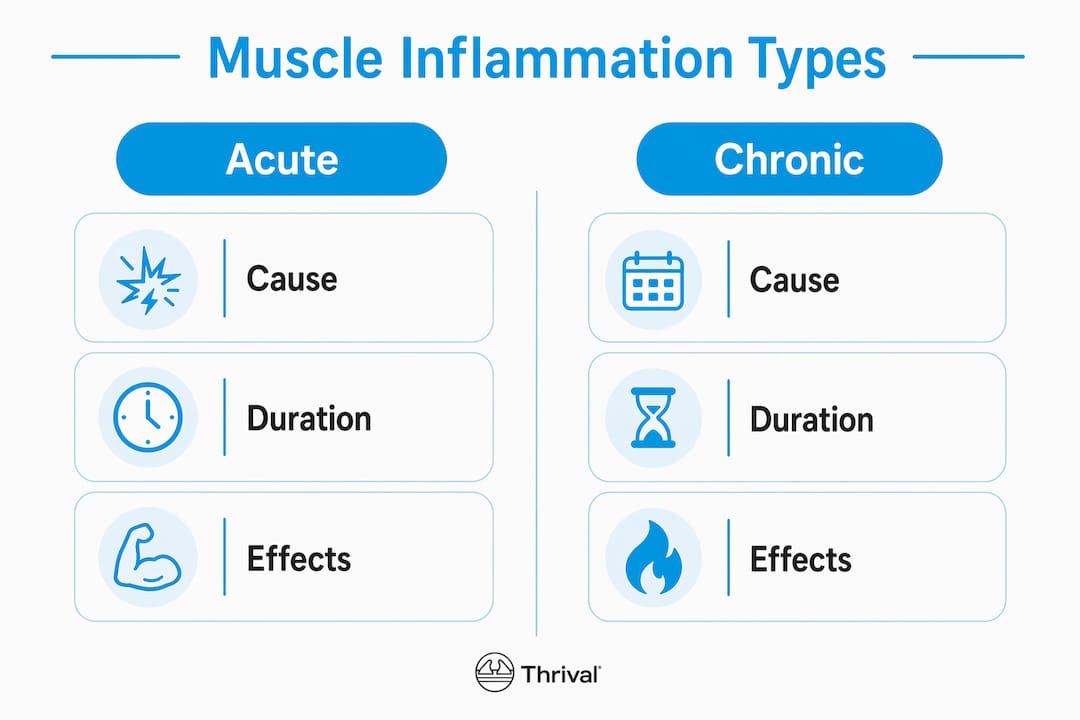
Chronic inflammation also involves symptoms that go beyond sore muscles. Fatigue, difficulty swallowing, shortness of breath, and irregular heartbeat can all accompany myositis. These systemic signs separate it clearly from the localized discomfort of a tough leg day.
What are the most effective ways to reduce muscle inflammation?
Managing muscle inflammation well means working with the healing process, not against it. The most effective strategies address timing, temperature, nutrition, and physical therapy in combination.
Cold therapy: useful but timing matters
Cold water immersion at 10–15°C for 10–15 minutes reduces soreness by approximately 15–25% compared to passive rest. That reduction is real and useful for athletes managing training load across multiple sessions. The tradeoff is that cold applied too soon after strength training can blunt muscle growth signals. Delaying cold immersion by at least 4 hours after a hypertrophy-focused session preserves the mTOR signaling pathway that drives muscle adaptation.
Heat therapy: the underrated option
Heat therapy does more than feel good. Hot water immersion upregulates heat shock proteins and anti-inflammatory cytokines, supporting muscle regeneration more effectively than cold immersion in many contexts. Heat increases circulation to deep tissue, accelerates metabolite clearance, and stimulates the repair proteins that rebuild damaged fibers. For most non-acute injuries, heat is the stronger recovery tool.
Nutrition: omega-3s and inflammation resolution
Diet for muscle inflammation is not about eliminating inflammation. It is about resolving it efficiently. Omega-3 fatty acids EPA and DHA produce specialized pro-resolving mediators that actively wind down the inflammatory response and support tissue repair without blocking muscle adaptation. Foods rich in EPA and DHA include salmon, mackerel, sardines, and high-quality fish oil supplements. This approach supports recovery without suppressing the healing signals your body needs.
Practical at-home steps
- Apply heat (not ice) to sore muscles 24 hours after training for 15–20 minutes
- Eat two to three servings of fatty fish per week or supplement with fish oil
- Stay hydrated; dehydration amplifies inflammatory cytokine activity
- Use targeted muscle release therapy tools to increase local blood flow and reduce tissue tension
- Prioritize sleep; growth hormone released during deep sleep accelerates the regeneration phase
Pro Tip: Avoid taking NSAIDs like ibuprofen routinely after every workout. They reduce inflammation, but they also blunt the satellite cell activity that makes your muscles stronger. Reserve them for genuine pain management, not routine soreness.
What symptoms should prompt you to see a doctor?
Normal post-exercise soreness is localized, peaks within 48 hours, and fades within a week. Symptoms that fall outside that pattern deserve medical evaluation. Localized muscle pain typically points to mechanical stress, while systemic muscle pain can indicate infection, autoimmune disease, or medication side effects.
Seek professional evaluation if you experience any of the following:
- Persistent weakness that does not improve after rest and is not tied to a specific workout
- Widespread muscle pain affecting multiple body regions simultaneously
- Fatigue disproportionate to your activity level
- Difficulty swallowing or breathing, which can indicate myositis affecting throat or chest muscles
- Muscle pain without any exercise trigger, which may point to infection, nutritional deficiency, or systemic illness
- Swelling, redness, or fever alongside muscle pain, which suggests possible infection or inflammatory disease
Autoimmune causes are confirmed through blood tests measuring creatine kinase (CK) levels, electromyography (EMG), and muscle biopsy. If you suspect chronic or autoimmune muscle inflammation, a rheumatologist or neurologist is the appropriate specialist. For back and hip pain with inflammatory patterns, a chiropractic evaluation can help identify whether the source is mechanical or systemic.
Infections like influenza and COVID-19 also cause systemic muscle pain by triggering widespread immune activation. This type of soreness resolves as the infection clears and does not require specific muscle treatment beyond rest and hydration.
Key takeaways
Muscle inflammation is a necessary healing process when acute, but a serious medical condition when chronic, and the difference between the two determines the right response.
| Point | Details |
|---|
| Acute inflammation heals muscle | Immune cells, satellite cells, and increased blood flow rebuild damaged fibers after exercise. |
| Chronic inflammation needs diagnosis | Myositis is an autoimmune condition requiring medical management, not rest alone. |
| Heat outperforms ice for recovery | Heat therapy upregulates repair proteins and anti-inflammatory cytokines more effectively than cold immersion. |
| Omega-3s resolve inflammation | EPA and DHA produce pro-resolving mediators that support repair without blocking muscle adaptation. |
| Systemic symptoms need evaluation | Persistent weakness, widespread pain, or difficulty swallowing requires professional medical assessment. |
The part most people get completely wrong
I have watched athletes ice every sore muscle for years, convinced they were speeding up recovery. The research tells a different story. Treating inflammation too aggressively with ice interferes with the regenerative signals that make muscles stronger. Inflammation is not a malfunction. It is the mechanism.
The shift I find most significant in current recovery science is the move away from suppression toward resolution. Rather than blocking the inflammatory response with ice or NSAIDs, the focus is now on giving the body what it needs to complete that response efficiently. Omega-3s, heat, sleep, and targeted physical therapy all work in that direction. They support the process rather than interrupt it.
The other misconception I see constantly is treating all muscle pain the same way. A sore quad after squats and progressive leg weakness that has been building for three months are not the same problem. One is a training signal. The other is a medical symptom. Knowing which one you are dealing with is the most important decision in the whole process. If your soreness does not follow the normal 48-hour arc, stop guessing and get evaluated.
The tools and strategies that work best are the ones timed correctly and matched to the actual cause. There is no single protocol that fits every situation. Individualized timing, the right temperature modality, and consistent nutritional support produce better outcomes than any one-size-fits-all approach.
— Cameron
How Thrival supports your muscle inflammation recovery
Targeted physical therapy is one of the most consistent methods for managing muscle inflammation and pain. Thrival’s non-motorized deep tissue recovery system is built specifically for this purpose.

The Thrival Deep Tissue Pro uses a single base board with interchangeable attachments, including the Thrival Wave, Bullseye, Arch, and Ballhead, to apply precise pressure to specific muscle groups. Each attachment targets a different area, from the spine and hips to the neck and shoulders. The system increases local blood flow, releases tissue tension, and supports the regeneration phase of muscle repair without any motorized components. It is FDA-registered, made in the US, and backed by a lifetime warranty. Explore the full muscle recovery system to find the right setup for your recovery needs.
FAQ
What is muscle inflammation in simple terms?
Muscle inflammation is the body’s immune response to damaged muscle fibers, involving increased blood flow, immune cell activity, and tissue swelling. It is a normal part of healing after exercise or injury.
How long does muscle inflammation typically last?
Acute muscle inflammation from exercise usually resolves within 3–7 days. Inflammation lasting longer than two weeks, or that worsens over time, may indicate a chronic condition requiring medical evaluation.
Does icing actually help with muscle inflammation?
Cold water immersion reduces soreness by approximately 15–25% compared to rest, but applied immediately after strength training it can blunt muscle growth signals. Heat therapy is often more effective for supporting full tissue repair.
What foods help reduce muscle inflammation?
Fatty fish like salmon, mackerel, and sardines are the strongest dietary tools for managing muscle inflammation. The omega-3 fatty acids EPA and DHA they contain produce pro-resolving mediators that help the body complete the inflammatory response efficiently.
When should muscle inflammation concern you?
Seek medical attention if you experience persistent muscle weakness, widespread pain without an exercise trigger, difficulty swallowing, or fatigue that does not improve with rest. These symptoms can indicate myositis or another systemic condition.
Recommended