Thursday, September 3, 2026
We’ve all seen a commercial for a pain relief product called Aspercreme. It shows a young woman climbing a totally vertical mountain wall with a river of water at the bottom. The message is, “Don’t feel your age; act your age.”
What’s wrong with that message? It places chronological age as the focus of how we should live. Telling anyone to “act your age” bows to culturally created standards tied to chronological age.
I’ve said it before, and I’ll say it again. Your chronological age can’t do ANYTHING except keep a record of events in your life. It doesn’t cause the downside of aging. It’s just a record keeper. That’s all it can do.
You can counter with, “But we get old, and it shows in our appearance and our abilities to think and do things we’ve always done.” That’s true, but the reality is that, over the first 50 years of life, we have eaten a lot of chemicals and other nutritionally useless junk that negatively affects appearance and physical and mental abilities. The nutritional value of what’s been eaten over time is about 20% of what a body needs to stay in healthy, youthful condition, mentally and physically. It is no wonder that we become at 60-70 incapacitated little old men and little old ladies when we could still be rockin’ and rollin’ into the nineties. (Yes, I said – nineties)
Here are two articles that should be a wake-up call for everyone:
Yale study finds nearly half of older adults improved with age
“Many people equate aging with an inevitable and continuous loss of physical and cognitive abilities,” said Becca R. Levy, lead author of the study and professor of social and behavioral sciences at the Yale School of Public Health (YSPH). “What we found is that improvement in later life is not rare; it’s common, and it should be included in our understanding of the aging process.” The study was published in the journal Geriatrics.” (Dr. Levy has been on the aging issue for a very long time. I corresponded with her years ago when aging first became an important issue.)
Here is the other article that I think is extremely important:
What you eat before age 2 may affect your health 70 years later
This is when we learn to love sugar! We celebrate baby Mary’s first birthday with a party and the traditional iced cake with candles. Mary gets a taste of the icing and can’t wait for more. Sugar is yummy! That’s when “sugar decline” takes root and grows! When Mary is a little older, she is given nutritionally worthless sugary Fruit Loops to munch on to when she is hungry or cranky. And so it goes.
As we continue to age, we eat increasing amounts of sugar.
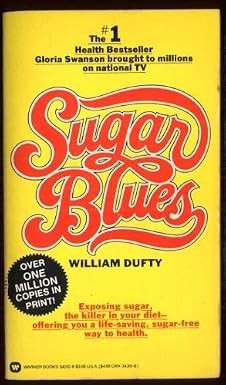
 From an Amazon description of sugar: It’s a prime ingredient in countless substances from cereal to soup, from cola to coffee. Consumed at the rate of one hundred pounds for every American every year, it’s as addictive as nicotine — and as poisonous. It’s sugar. And “Sugar Blues”, inspired by the crusade of Hollywood legend Gloria Swanson, is the classic, bestselling expose that unmasks our generation’s greatest medical killer and shows how a revitalizing, sugar-free diet can not only change lives, but quite possibly save them. This is the link to purchase the book: https://amzn.to/4qMXD4F
Fast Forward
It’s time for you to retire and guess what? You have diabetes, arthritis, and other “old age” ailments. You scratch your head and ask yourself, “Why is this happening to me?” It’s probably happening because in your youth you ate a socially approved diet and lived a socially approved lifestyle, and now you are paying the price.
Personally, I don’t use sugar in our home. I haven’t purchased a bag of sugar in years. I use a natural sugar substitute, Stevia, in my coffee. I still get too much sugar in the few packaged goods I buy.
I am sure you get the picture. Many things contribute to aging. Cutting out or at least cutting down on sugar intake is something everyone can do. I know you can do it if you want to.
Barbara Morris, R.Ph.
P.O. Box 8345
Surprise, AZ 85388
contactnewsdesk@gmail.com
760-520-5202