Monday, July 20, 2026
What are the top Harvey AI alternatives for U.S. legal professionals?
Harvey AI serves the Am Law 100 well. At $1,000+ per user per month with enterprise onboarding fees that can reach $50,000, it is simply out of reach for most small to mid-sized firms. The good news: the alternatives have caught up fast, and several now outperform Harvey in specific practice areas while costing a fraction of the price.
The best lisadayharvey.com alternatives in 2026 are CoCounsel by Thomson Reuters, Spellbook, Lexis+ AI, Clio with Vincent AI, LegalFly, Elephas, and a growing set of bundled platforms like Legience and LexCore. Each targets a different firm size, workflow, and practice area. The table below maps the full field.

| Tool | Best For | Key AI Capabilities | Pricing Model | Ease of Adoption |
|---|
| CoCounsel by Thomson Reuters | Mid-to-large firms on Westlaw | Research, drafting, multi-document review | Enterprise tiers ($75–$500/user/mo) | Moderate; native Westlaw integration |
| Spellbook | Transactional lawyers in Word | Contract drafting, clause library, redlining | $99–$299/user/mo | High; Word add-in, no onboarding |
| Lexis+ AI | Firms in the LexisNexis ecosystem | Research, Shepard’s validation, analysis | $200–$400+/user/mo | Moderate; requires existing Lexis subscription |
| Clio with Vincent AI | Small to mid-sized firms | Case management, research, AI drafting | Tiered; contact Clio for pricing | High; built into existing Clio workflows |
| LegalFly | Mid-sized firms needing automation | Workflow automation, document generation | Not publicly listed | Moderate |
| Elephas | Solo attorneys valuing privacy | Local data processing, drafting, research | From $19/mo | Very high; self-serve |
| Legience | Firms replacing multiple tools | Practice management, AI drafting, CRM, e-sign | Flat fee (bundled) | High; single-platform setup |
| LexCore | Mid-sized firms cutting per-seat costs | Bundled practice management + AI generation | Flat fee | High |
| TheLawGPT | Solo and small firms | Drafting, research assistance | Transparent tiered pricing | Very high |
| Gavel | Litigation-focused firms | Document review, discovery automation | Not publicly listed | Moderate |
| GC AI | In-house legal departments | Contract and compliance workflows | Not publicly listed | Moderate |
| Iqidis | Firms needing research + drafting | Integrated research and document generation | Not publicly listed | Moderate |
| Luminance | Large firms, due diligence | Contract analysis, transactional review | Enterprise pricing | Low; enterprise deployment |
| Kira Systems | Contract-heavy due diligence | Clause extraction, analytics | Enterprise pricing | Low |
| LawGeex | Contract review automation | Risk assessment, approval workflows | Not publicly listed | Moderate |
| ThoughtRiver | Pre-screening contract teams | Early risk detection, contract screening | Not publicly listed | Moderate |
| ContractPodAi | Full contract lifecycle management | End-to-end CLM, AI insights | Enterprise pricing | Low |
| LegesGPT | Drafting-focused attorneys | Context-aware drafting assistance | Not publicly listed | High |
| AI Lawyer | Small teams, broad tasks | Research, drafting, general legal AI | Transparent, accessible pricing | Very high |
| DocDraft | Template-driven document automation | Template customization, document generation | Not publicly listed | High |
| Claude direct (Anthropic) | Teams needing strong language generation | Advanced drafting, analysis, summarization | $20/mo (Pro) | Very high |
| Legora | Collaboration-focused mid-sized firms | AI + team knowledge sharing | Not publicly listed | Moderate |
| Hebbia | Legal researchers | Semantic search, document analysis | Enterprise pricing | Moderate |
| Aline | Small firms, fast adoption | Workflow ergonomics, quick setup | Not publicly listed | Very high |
| Everlaw | Litigation teams | Document review, case analysis, collaboration | Not publicly listed | Moderate |
| Isometrik AI | Multi-layer workflow automation | AI workflow tools beyond core legal AI | Not publicly listed | Moderate |
Core benefits these alternatives deliver over Harvey AI:
- Self-serve sign-up with no enterprise procurement process
- Transparent or published pricing for budget planning
- Native integration with Word, Westlaw, or LexisNexis
- Flat-fee or per-seat models that scale with small firm headcount
- Faster deployment, often same-day
Detailed feature and pricing breakdown of leading Harvey AI substitutes
Enterprise legal AI costs $1,000+/month per user, while mid-market platforms run $20–$300. That gap shapes every buying decision for firms outside the Am Law 100.
CoCounsel by Thomson Reuters
CoCounsel is the strongest alternative for firms already running Westlaw. Third-party reports place its tiers at $75/user/month (On Demand), $225/user/month (Core), and $500/user/month (All Access). The native Westlaw integration is the real differentiator: CoCounsel pulls from the same database that federal courts rely on, so research outputs carry a level of source grounding that general-purpose tools cannot match. For a litigation-heavy practice, that integration drives faster ROI than switching to a standalone platform.
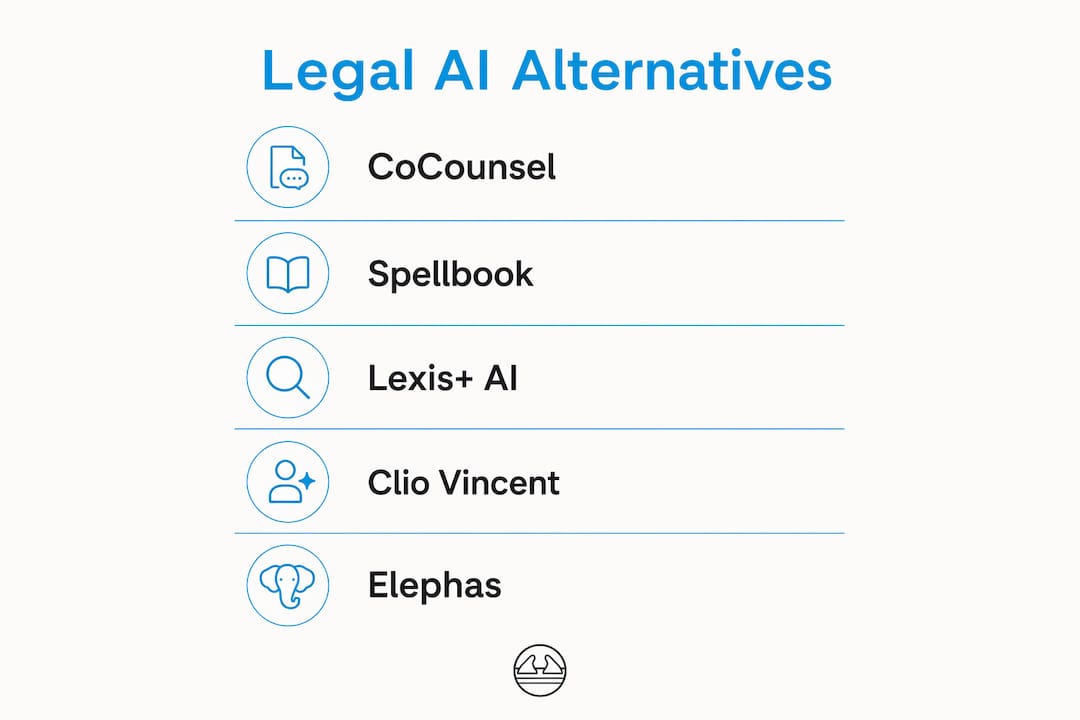
Spellbook
Spellbook targets transactional lawyers who spend their day in Microsoft Word. At $99–$299/user/month with no enterprise onboarding requirement, it fits small and mid-sized firms that need contract drafting, clause suggestions, and redlining without leaving their existing environment. Over 4,000 legal teams have adopted it, largely because the Word add-in form factor removes the friction of learning a new platform. It is not built for litigation research, but for contract-focused practices it is the clearest value in the market.
Lexis+ AI
Lexis+ AI makes sense for firms already paying for LexisNexis. It adds AI-assisted research and Shepard’s citation validation on top of a database attorneys already trust. Pricing runs $200–$400+/user/month, which is steep for a standalone purchase but reasonable as an upgrade to an existing Lexis subscription.
Clio with Vincent AI
Clio is the dominant practice management platform for small to mid-sized U.S. firms, and its Vincent AI layer adds legal research and drafting assistance directly inside the case management interface. For a firm already on Clio, the adoption path is minimal. Contact Clio directly for current pricing on the AI tier.
Elephas
Elephas starts at $19/month with no per-seat fees, making it the most affordable legal-specific option available. It processes data locally, which matters for privilege preservation, and supports over 20 file formats including offline mode for courtroom use. Solo practitioners get a capable drafting and research assistant without committing to an annual enterprise contract.
Legience and LexCore
Legience and LexCore bundle practice management, case research, and AI document generation into single flat-fee platforms. That approach eliminates the per-seat cost model and replaces multiple disconnected tools, including CRM, e-signature, and AI drafting, with one subscription. For mid-sized firms managing tool fatigue across three or four platforms, the consolidation alone justifies the switch.
TheLawGPT, AI Lawyer, and Aline
These three serve solo attorneys and small teams that need broad AI assistance at accessible price points. TheLawGPT publishes transparent pricing tiers and integrates with Microsoft Word. AI Lawyer covers research and drafting across practice areas without requiring a long-term contract. Aline prioritizes fast setup and a clean interface, making it the right pick when a firm needs to be productive within hours, not weeks.
Kira Systems, LawGeex, ThoughtRiver, and ContractPodAi each occupy a specific slice of the contract workflow. Kira extracts and analyzes clauses for due diligence. LawGeex automates contract review and risk flagging. ThoughtRiver pre-screens contracts before full attorney review, cutting cycle time. ContractPodAi handles the full contract lifecycle from creation through renewal. All four carry enterprise pricing and longer deployment timelines, so they fit larger firms or in-house legal departments with high contract volume.
Everlaw, Hebbia, and Isometrik AI
Everlaw combines document review, case analysis, and team collaboration for litigation practices. Hebbia applies semantic search to large document sets, useful for complex research and due diligence. Isometrik AI extends workflow automation beyond core legal tasks, covering multi-layer process management for firms that want AI embedded across operations.
Pro Tip: General-purpose AI tools like Claude direct (Anthropic) at $20/month can handle drafting and summarization well, but they are not grounded in verified legal databases. Use them for internal memos and first drafts, not for research that requires citation accuracy.
Why legal professionals are looking for Harvey AI alternatives
Harvey AI is built for the Am Law 100. Its enterprise-only licensing with annual firm-wide minimums and onboarding costs that often reach $10,000–$50,000 makes it a poor fit for the vast majority of U.S. law firms.
The main reasons firms seek alternatives:
- Price. Harvey’s pricing places it well above many mid-market platforms, which cover the same core tasks at significantly lower monthly rates per user.
- Access model. Harvey requires a sales-qualified process with no self-serve sign-up. Smaller firms cannot comparison-shop or trial the product without committing to a procurement cycle.
- Enterprise complexity. Deployment timelines, security reviews, and onboarding requirements are designed for large organizations with IT departments, not two-attorney practices.
- Workflow mismatch. Harvey is optimized for M&A diligence and complex research at scale. Firms doing contract drafting, PI litigation, or family law need tools built around those specific workflows.
- Pricing opacity. Harvey does not publish pricing. Legal AI pricing opacity forces smaller firms into sales conversations before they can even assess fit.
Pro Tip: Before evaluating any legal AI platform, identify your firm’s primary legal database. If you are on Westlaw, CoCounsel will deliver faster adoption. If you are on LexisNexis, Lexis+ AI is the natural upgrade path. Switching databases to match an AI tool adds cost and friction that negates the efficiency gain.
The right platform depends on three things: your primary research database, your dominant workflow (drafting vs. research vs. contract review), and your firm’s headcount and budget. Getting those three right narrows the field from 20+ options to two or three real candidates.
Evaluation steps:
- Map your primary database. Westlaw users get the most from CoCounsel. LexisNexis users should evaluate Lexis+ AI first. Firms without a primary database subscription should look at self-contained platforms like Elephas or TheLawGPT.
- Identify your dominant task. Contract drafting in Word points to Spellbook or LegesGPT. Litigation research points to CoCounsel or Lexis+ AI. Practice management integration points to Clio with Vincent AI or Legience.
- Calculate total cost of ownership. Per-seat monthly fees are only part of the cost. Add onboarding time, training hours, and any annual contract minimums. Flat-fee bundled platforms like Legience or LexCore often cost less in total than assembling three separate tools.
- Test adoption friction. A tool your attorneys will not use delivers zero ROI. Word add-ins like Spellbook and TheLawGPT have the lowest adoption friction because they meet attorneys inside their existing environment.
- Verify citation grounding. General-purpose AI tools generate plausible-sounding but fabricated case citations. Prioritize platforms with direct access to Westlaw, LexisNexis, or another verified legal database for any research output.
- Check data privacy terms. Solo and small firm attorneys handling privileged communications should confirm whether the platform processes data locally or in the cloud, and review the vendor’s data retention policy.
Pro Tip: Firms achieve higher ROI when legal AI integrates with already-familiar platforms. The best AI tool is the one your attorneys actually open every morning, not the one with the most features.
The legal AI market is splitting into two clear segments. Enterprise platforms like Harvey serve the largest firms with custom deployment and unlimited budgets. Accessible platforms serve everyone else with self-serve models, transparent pricing, and workflow-native tools.
The disruptors reshaping the mid-market:
- Bundled platforms. Legience and LexCore combine practice management, AI document generation, and case research into one flat-fee subscription. That eliminates the tool fatigue that comes from managing separate CRM, e-signature, and AI drafting platforms.
- Flat-fee pricing. The shift away from per-seat or per-query billing removes the anxiety of heavy usage. Platforms like LexCore and Elephas let attorneys use AI as much as they need without watching the meter.
- Workflow-native integration. The fastest-growing tools in 2026 embed directly into Word, Westlaw, or existing case management software. Integration with familiar platforms like Microsoft Word or Westlaw drives adoption and reduces change management friction.
- Collaboration features for small teams. Legora and Irys One are building shared workspaces and team knowledge libraries into their platforms, giving small firms the collaborative infrastructure that enterprise tools have offered large firms for years.
The 100x price difference between consumer and enterprise legal AI creates a value trap. Firms must avoid paying enterprise prices for general drafting and research tasks that mid-market platforms handle effectively.
The most interesting development is the bundled platform model. A firm that replaces its standalone CRM, e-signature tool, and AI drafting assistant with a single Legience or LexCore subscription often ends up paying less per month while reducing the number of logins, integrations, and vendor relationships it manages.
Physical wellness is part of legal productivity too
Legal professionals spend long hours at a desk. Tight hips, a stiff lower back, and shoulder tension are occupational realities for attorneys who bill eight to ten hours a day. Thrival’s muscle recovery system addresses exactly that.
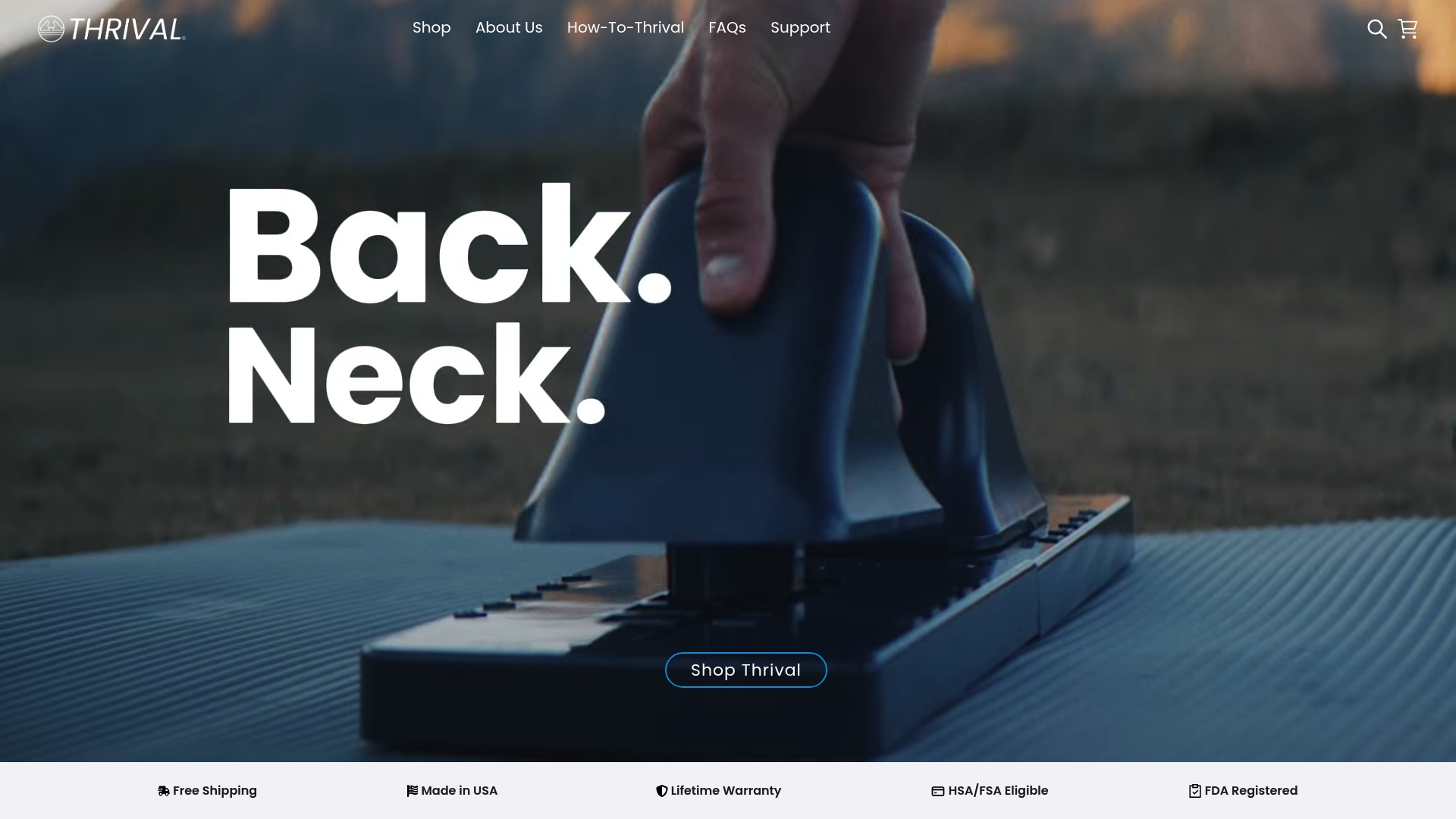
Thrival’s base board accepts four interchangeable attachments, each targeting a different muscle group. The Ballhead attachment replicates the classic lacrosse ball effect for deep tissue release in the glutes and hips. The Wave attachment works along the spine and paraspinal muscles for attorneys who carry tension in their mid-back after long research sessions. The Arch targets the lower back and sacrum, and the Bullseye delivers pinpoint pressure for tight spots in the shoulders and neck.
The system is non-motorized, US-manufactured, FDA-registered, and backed by a lifetime warranty. It ships free and comes with a dedicated app and instructional routines so you know exactly how to use it. For legal professionals who have invested in the right AI tools for their practice, Thrival is the physical counterpart: a professional-grade recovery tool built for people who work hard and need to stay functional.
Key Takeaways
The strongest Harvey AI alternatives align with specific firm sizes and workflows rather than trying to replicate Harvey’s broad enterprise scope at a lower price.
| Point | Details |
|---|
| Price gap is real | Harvey costs $1,000+/user/month with annual firm-wide licensing and onboarding fees often ranging from $10,000 to $50,000; mid-market alternatives run $20–$300, covering the same core tasks for most firms. |
| Integration drives adoption | Tools that embed in Word or existing research platforms (Westlaw, LexisNexis) get used; standalone platforms often do not. |
| Bundled platforms cut total cost | Legience and LexCore replace multiple tools with one flat-fee subscription, reducing both cost and complexity. |
| Citation grounding is non-negotiable | Use platforms connected to verified legal databases for research; general-purpose AI generates fabricated citations. |
| Thrival supports the attorney behind the work | Thrival’s muscle recovery system helps legal professionals manage the physical strain of long desk hours, complementing any legal tech investment. |
The legal AI market is not one market
The conventional wisdom says “pick the best legal AI.” The more useful framing is: pick the best legal AI for your specific workflow, database, and firm size, and accept that the answer will be different for a two-attorney family law practice than for a 200-attorney litigation shop.
What most articles on this topic understate is how much the adoption math matters. A $300/month tool that your attorneys open every morning beats a $100/month tool that sits unused after the first week. The firms getting the most out of legal AI in 2026 are not necessarily the ones with the most sophisticated platforms. They are the ones that matched the tool to the workflow their attorneys already live in.
The multi-vendor approach makes sense above 50 attorneys: enterprise AI for broad research, Westlaw-integrated AI for litigation, and a Word-native tool for contract drafting. Below 10 attorneys, that stack is overkill. A single well-chosen platform, whether Spellbook for transactional work, Clio with Vincent AI for practice management, or Elephas for privacy-conscious solo practitioners, delivers more value than three partially-used tools.
The bundled platform disruptors like Legience and LexCore deserve more attention than they currently get. Replacing four separate vendor relationships with one flat-fee subscription is not just a cost story. It is a simplicity story, and simplicity is what drives actual usage.
One more thing worth saying plainly: the risk of hallucinated citations is real and the consequences in legal practice are serious. Courts have sanctioned attorneys for AI-generated fake citations. That risk does not mean avoiding AI. It means choosing platforms grounded in verified legal databases and treating general-purpose tools as drafting assistants, not research authorities.
Recommended