Monday, May 4, 2026
Muscle knots are not just a minor inconvenience you can ignore until they fade on their own. They are localized areas of tight, contracted muscle tissue that can generate aching pain, restrict your movement, and quietly erode your quality of life over weeks or even months. Research confirms that relieving muscle knots reduces chronic pain, improves mobility and range of motion, enhances sleep quality, lowers stress, and supports better circulation and posture. If you have been living with that familiar stiffness in your neck, shoulders, or back, understanding what is actually happening inside your muscles and what you can do about it is the first step toward real, lasting relief.
Table of Contents
Key Takeaways
| Point | Details |
|---|
| Knots impact daily life | Ignoring muscle knots can worsen pain, reduce mobility, and affect sleep and stress. |
| Evidence-backed benefits | Relieving knots improves circulation, posture, pain, and range of motion according to research. |
| Choose safe relief methods | Gentle self-massage and tools work best for most, while avoiding aggressive techniques is key. |
| Prevention matters long-term | Addressing posture, stress, and daily habits helps prevent the recurrence of muscle knots. |
| Know when to seek help | Professional intervention is needed if self-treatment fails or symptoms worsen. |
What are muscle knots and why do they matter?
Most people assume muscle knots are something you just live with, like soreness after a hard workout or stiffness after a long day at a desk. That assumption is where the problem starts. Muscle knots, formally called myofascial trigger points, are specific tight spots within the muscle and surrounding connective tissue called fascia. They are not random. They form, they persist, and they can spread discomfort well beyond the spot where they originate.
Muscle knots form from tight fascial tissue due to stress, tension, or repetitive activity, causing radiating pain and restricted movement. That radiating quality is what makes trigger points particularly tricky. The pain you feel in your shoulder blade may actually be originating from a knot in your upper trapezius. The tension headache spreading across your forehead could be referred pain from a knot in your neck. If you are not paying attention to understanding body signals, you may keep treating the symptom while the actual source goes unaddressed.
Common causes of muscle knot formation include:
- Poor posture sustained over hours, especially during desk work or driving
- Repetitive motion in sports, physical labor, or daily tasks like typing
- Acute muscle overload, such as lifting something too heavy or moving awkwardly
- Chronic psychological stress, which keeps muscles in a state of low-grade tension
- Dehydration and poor sleep, both of which impair muscle recovery and tissue repair
- Sedentary behavior, which reduces circulation to muscle tissue and limits natural movement
“Left unaddressed, trigger points can cause muscles to shorten, alter how you move, place extra stress on nearby joints, and create a cycle where one knot contributes to the formation of others.”
Ignoring knots is not a neutral choice. Over time, untreated trigger points lead to decreased range of motion, altered movement patterns, and increased injury risk. Understanding the importance of recovery is not optional if you want to stay active and pain-free.
The science: How relieving muscle knots benefits your body
Understanding what muscle knots are sets the stage for exploring why relief makes such a difference for your body. When a trigger point forms, it creates a small zone of hyperactivity within the muscle. Blood flow is restricted in that localized area. Oxygen and nutrients have trouble reaching the tissue. Metabolic waste products, including compounds that sensitize pain receptors, accumulate. The result is a self-reinforcing cycle of pain, tension, and reduced circulation.
When you successfully release a trigger point through targeted pressure, massage, or other methods, that cycle breaks. Circulation normalizes. Nerve activity around the area calms down. The muscle can return to its resting length, which directly improves how it functions during movement.
Massage enhances blood flow, oxygenation, and removal of metabolic byproducts, while reducing soreness, swelling, and stiffness after exercise. This is not a minor benefit. For athletes and desk workers alike, clearing those metabolic byproducts is what allows muscles to recover and perform at full capacity again.
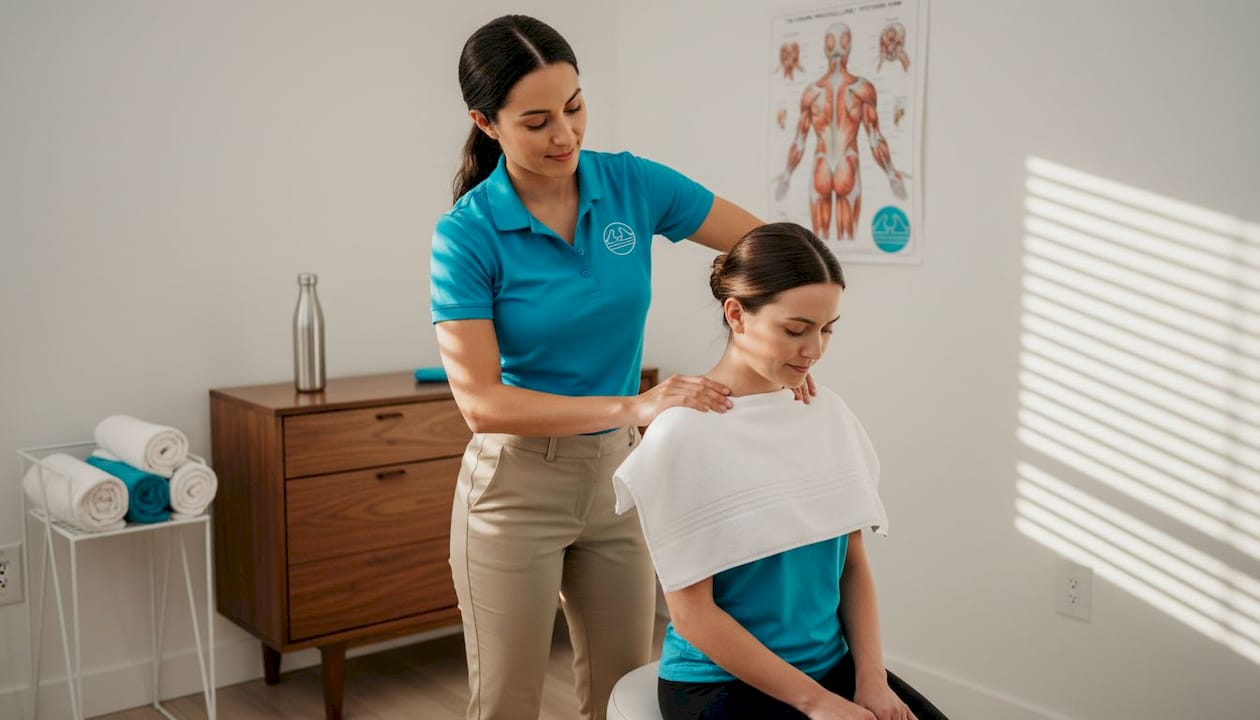
The physiological benefits of effective muscle knot relief include improvements across several body systems:
| Benefit area | What changes after relief |
|---|
| Pain levels | Reduced local and referred pain signals |
| Muscle function | Restored length and contraction efficiency |
| Range of motion | Improved joint mobility and flexibility |
| Circulation | Increased blood and lymph flow to affected tissue |
| Sleep quality | Lower muscle tension leads to better rest |
| Stress response | Calmer nervous system activity, reduced cortisol |
| Posture | Muscle balance restored, reducing compensatory strain |
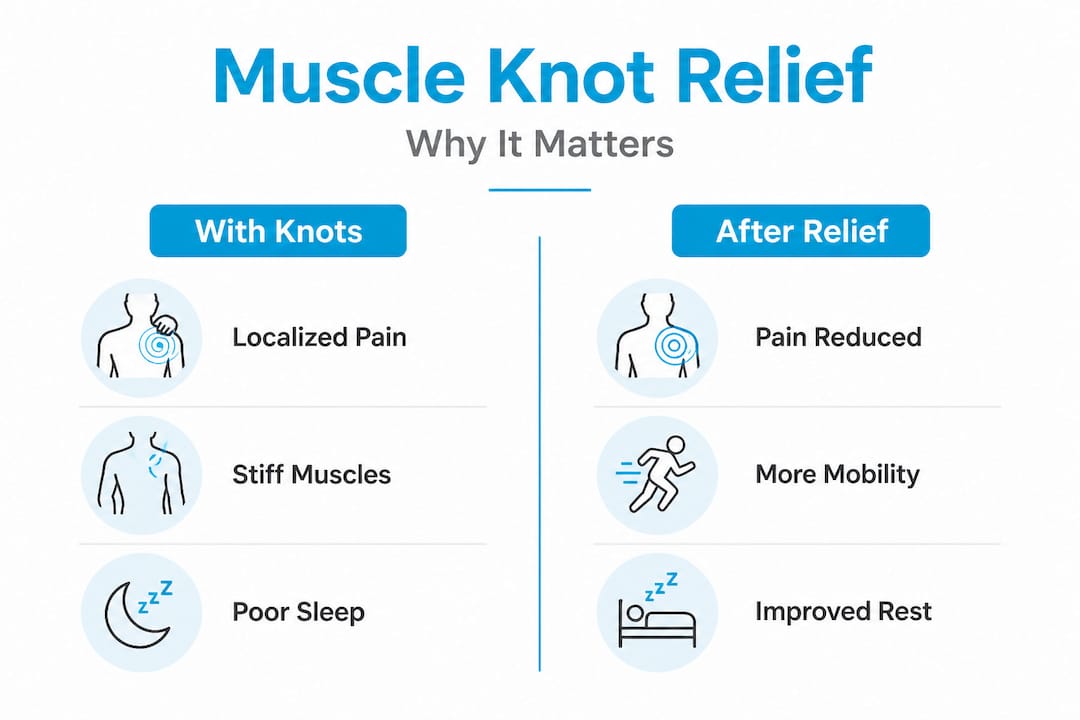
The sleep and stress connection is one most people overlook. Chronic muscle tension keeps your nervous system in a mild state of alert, which interferes with deep sleep and elevates baseline stress. Releasing that tension through trigger point therapy has a measurable downstream effect on how your whole body feels and functions throughout the day. The science behind this is also well-documented in the broader massage science literature, which consistently shows that manual therapy normalizes neuromuscular activity far beyond the immediate site of treatment.
It is also worth noting the posture connection. Muscle knots often develop in response to poor alignment, but they also actively worsen posture by pulling muscles into shortened, contracted positions. Once those knots are released, the muscles regain their normal length, reducing the pull on your spine and joints and making good posture far easier to maintain without conscious effort.
Relief methods: What works (and what doesn’t)?
Now that you know relief is possible, what actually works, and what should you avoid? Not all approaches are created equal, and the right choice often depends on how long the knot has been there, how severe your symptoms are, and your overall health status.
Trigger point massage applies direct pressure to release tight fibrous muscle, effectively loosening knots through sustained compression; applying pressure for around 90 seconds and repeating up to 5 to 6 times daily produces reliable results for most people. This is the approach most supported by both research and practical experience.
Here is a clear comparison of the most common methods:
| Method | Effectiveness | Accessibility | Risk of harm | Best for |
|---|
| Self-massage / trigger point tool | High for mild to moderate knots | High, at-home | Low if done correctly | Daily maintenance and acute relief |
| Foam rolling | Moderate, less precise | High, at-home | Low | General muscle tension and larger areas |
| Professional massage | High | Moderate, requires appointment | Very low | Chronic or multiple trigger points |
| Dry needling | High for persistent knots | Low, needs a trained provider | Low to moderate | Knots that resist manual therapy |
| Trigger point injections | High for severe or chronic cases | Low, medical provider required | Moderate | Medically diagnosed chronic trigger points |
| Stretching alone | Low to moderate | Very high | Very low | Prevention more than acute relief |
Friction massage improves pain intensity, pressure pain threshold, and range of motion within groups, but shows no significant superiority over other approaches like ischemic compression or dry needling. That finding matters because it means no single method is universally best. What works is consistent application of appropriate pressure, regardless of the specific tool or technique.
The four steps that produce the most reliable at-home results:
- Locate the knot accurately. Press slowly into the muscle until you feel a tender spot that reproduces your familiar pain pattern. That is your target.
- Apply sustained, tolerable pressure. Hold for 60 to 90 seconds. Discomfort should be present but never sharp or severe.
- Release slowly and repeat. Allow the muscle a moment to respond, then reapply. Repeat 3 to 6 times per session.
- Follow with gentle movement. Light stretching or range of motion exercises after pressure work help the muscle reset to its normal length.
Pro Tip: Avoid pressing so hard that you tense up around the area. If your surrounding muscles are bracing against the pressure, you are working against yourself. Ease back to a level where you can breathe comfortably and let the tissue respond.
The biggest mistake most people make is going too aggressive too fast. Bruising muscle tissue does not release knots. It creates new injury and inflammation. Explore muscle recovery tools that are specifically designed to apply controlled, targeted pressure rather than blunt force. Tools designed for hip flexor pain relief and other targeted areas help you reach spots that are nearly impossible to address with a generic foam roller. You can also review massage therapy benefits to better understand how professional approaches compare to at-home routines.
When to seek help and how to prevent future knots
Having reviewed what is effective and what to avoid, it is important to know when you need more help and how to break the cycle of recurring knots. Self-treatment is effective for most people in most situations. But there are clear warning signs that indicate you need a professional evaluation rather than another foam rolling session.
Watch for these red flags:
- Pain that worsens despite consistent self-care over one to two weeks
- Swelling, redness, or warmth around a painful area, which suggests possible infection or injury
- Numbness or tingling that travels down an arm or leg, which could indicate nerve involvement
- Pain that limits basic daily activities, such as reaching overhead, turning your head, or walking without discomfort
- A lump or nodule that is hard, irregular, or growing, which requires medical evaluation
- Fever accompanying muscle pain, which is never normal and always warrants attention
For persistent knots, professional options like physical therapy, trigger point injections, dry needling, or acupuncture may be necessary if self-treatment fails. These are not signs of failure. They are signs that the problem has a deeper root that needs expert attention.
Prevention is where most people fall short. They get relief, feel better, and go right back to the habits that caused the problem. Breaking that cycle requires intentional daily habits:
- Take movement breaks every 45 to 60 minutes if you sit for work. Stand, walk, and do gentle neck or shoulder rolls.
- Check your workstation setup. Monitor height, chair support, and keyboard position all influence how your muscles load throughout the day.
- Manage stress actively. Breathing exercises, short walks, and regular sleep all reduce baseline muscle tension.
- Stay hydrated. Muscle tissue that is well-hydrated is more pliable and less prone to forming trigger points.
- Build a consistent recovery routine. Committing to even 10 minutes of targeted self-massage several times a week dramatically reduces how often knots develop.
Pro Tip: Address knots when they are mild, not after they have been building for weeks. Catching a tight spot early means faster relief and less overall discomfort.
Supporting mobility and active living through consistent habits is what separates people who recover well from those stuck in recurring pain cycles. If you need more guidance on when self-treatment is not enough, persistent muscle pain guidance and chiropractic care for recovery are both practical starting points.
Muscle knot myths: What most guides get wrong
Here is the uncomfortable truth most articles on muscle knots will not tell you: aggressive treatment does not equal better results. The widespread idea that you need to “break up” a knot with maximum pressure is not only wrong, it is potentially harmful. Applying too much force causes local tissue damage, spikes inflammation, and can leave you in more pain than before you started.
The second myth is that one session fixes everything. Trigger points that have been present for weeks or months involve layers of neuromuscular adaptation. The muscle has essentially learned a new resting position. Undoing that takes repetition, not intensity. Consistency across days and weeks produces far better results than any single aggressive session.
Avoid aggressive self-massage to prevent injury, and recognize that underlying issues like posture and chronic stress must be addressed to prevent recurrence. That last part is the most overlooked piece of the entire conversation. If the cause of your knots is still present, the knots will return. It is not a failure of the technique. It is a failure to address the root problem.
Your body’s feedback during treatment is the most accurate guide you have. If pressure causes sharp pain, if you flinch, if you hold your breath, you are working too hard. True release feels like a deep, tolerable ache that gradually softens under sustained pressure. Learning to listen to your body during self-treatment is what separates productive sessions from counterproductive ones. Lasting relief comes from understanding not only how to apply pressure, but when and why to hold back.
Once you are ready to take action, the right recovery tools make all the difference between guessing and getting results.

Thrival’s purpose-built recovery devices are designed specifically to target muscle knots with precision, replicating the controlled pressure of professional trigger point work without requiring a clinic visit. Whether you are addressing tight spots in your back, hips, neck, or shoulders, the right tool lets you apply the exact pressure needed at the exact location, consistently. Explore the deep tissue release tool built for targeted, professional-grade relief you can use daily. For a complete look at recovery options and guides to building your own routine, visit muscle recovery solutions and find the right fit for your body and goals.
Frequently asked questions
Muscle knots typically develop from stress, poor posture, overuse, or repetitive movements that strain muscle and fascia, causing the tissue to contract and stay contracted. Tight fascial tissue from stress or repetitive activity generates the radiating pain and restricted movement most people associate with knots.
How quickly can you relieve a muscle knot?
Many knots respond to direct pressure within a few sessions, but relief often requires repeated applications over several days. Applying pressure for 90 seconds and repeating up to 5 to 6 times daily gives most people measurable improvement within a week.
Is it safe to massage out muscle knots at home?
Gentle self-massage is generally safe for most people when pressure is kept at a tolerable level. Avoid aggressive self-massage to prevent injury, and seek professional care if pain persists, worsens, or is accompanied by swelling or redness.
What are the signs that a muscle knot needs professional care?
Seek medical evaluation if a knot lasts several weeks without improvement, causes severe pain, or is accompanied by swelling or limited movement. Professional options including physical therapy, dry needling, or trigger point injections are effective when self-treatment is not enough.
Can muscle knots come back even after relief?
Yes, knots frequently recur if the underlying causes are not corrected. Tight fascial tissue re-forms from stress or repetitive activity when posture, movement habits, and stress levels are not addressed alongside treatment.
Recommended