Thursday, May 7, 2026
You finish a tough workout or long run, and instead of feeling accomplished, you’re dealing with a nagging knot in your upper trap or a tight spot deep in your hip. That’s a trigger point at work, and it’s one of the most common reasons athletes and active people struggle with lingering soreness, restricted movement, and slower recovery. This guide delivers proven, step-by-step techniques for releasing those stubborn knots so you can move better, recover faster, and stay consistent in your training. Expect reduced soreness, improved range of motion, and a practical routine you can start today.
Table of Contents
Key Takeaways
| Point | Details |
|---|
| Targeted release works | Foam rolling, pin-and-stretch, and friction massage are proven methods to relieve trigger points. |
| Consistency brings results | Regular sessions over weeks boost flexibility, reduce pain, and improve mobility. |
| Use the right tools | Choosing appropriate recovery tools makes release routines safer and more effective. |
| Listen to your body | Adjust technique and pressure for safety and better long-term gains. |
Understanding trigger points and their effects
Trigger points are tight, contracted bands within muscle tissue that cause localized pain and restrict normal movement. They form when muscle fibers fail to fully relax after contraction, creating a persistent mini-spasm in a small region of the muscle. Learning the basics of trigger point therapy basics helps you target these spots with real precision.
Common causes include:
- Overuse from repetitive athletic movements like running, rowing, or lifting
- Poor posture during training or prolonged desk work
- Muscle imbalances that force certain fibers to compensate
- Dehydration and insufficient recovery between sessions
- Acute trauma or sudden loading of an unprepared muscle
One of the most frustrating aspects of trigger points is referred pain, where pressure on one spot produces discomfort in a completely different area. A knot in your upper trapezius, for example, can send pain into the back of your skull or behind your eye. This makes muscle tension recovery more complex than simply rubbing the spot that hurts.
Trigger points directly disrupt muscle performance. A contracted knot reduces the effective length of the muscle fiber, limiting force output and range of motion. Over time, untreated trigger points alter movement patterns, increasing the risk of compensatory injuries in neighboring joints and muscles.
Clinical evidence confirms that SMR improves ROM and reduces soreness and delayed onset muscle soreness (DOMS) in athletes, making targeted self-release a legitimate and effective recovery strategy.
Now that you understand why trigger points matter, let’s look at what you need to start releasing them safely and effectively.
You don’t need an elaborate setup to start releasing trigger points. The right tool, a bit of floor space, and proper preparation are all it takes to get results from day one.
Essential tools for trigger point release:
- Foam rollers: Best for large muscle groups like quads, hamstrings, and thoracic spine
- Massage balls (lacrosse or rubber): Ideal for smaller, harder to reach areas like glutes, pecs, and calves
- Deep tissue massage devices: Designed to pinpoint specific knots with sustained, adjustable pressure
- Handheld rollers: Useful for arms and lower legs where floor rolling is awkward
Choosing the right tool depends on the muscle group and your current mobility. A foam roller works well for broad coverage, but it can’t isolate a single trigger point the way a firm ball can. For areas like the hip rotators or the space between the shoulder blades, a best muscle recovery tools guide can help you match the tool to the target.
Setup essentials:
- Use a yoga mat or firm, padded surface for floor work
- Wear comfortable, form-fitting clothing so you can feel what’s happening
- Have water nearby, since hydration supports tissue pliability
- Avoid working directly on inflamed, bruised, or recently injured tissue
| Tool | Best muscle groups | Pressure level | Portability |
|---|
| Foam roller | Quads, hamstrings, thoracic spine | Low to medium | Moderate |
| Lacrosse ball | Glutes, pecs, calves | Medium to high | High |
| Deep tissue device | Back, shoulders, hips, neck | Adjustable | High |
| Handheld roller | Arms, lower legs | Low to medium | High |
Pro Tip: SMR effects improve with consistency, so schedule 2 to 3 dedicated sessions per week rather than sporadic long sessions. Brief, regular work outperforms occasional marathon rolling every time.
With the right tools in hand, you’re ready to tackle the main techniques for releasing trigger points.
Step-by-step: Top techniques for trigger point release
There are three core techniques that cover the majority of trigger point situations you’ll encounter as an active person. Each has a specific application, and using all three strategically will produce the best results.
1. Foam rolling
- Position the target muscle on top of the foam roller.
- Use your arms or opposite leg to control how much body weight you apply.
- Roll slowly, about one inch per second, along the length of the muscle.
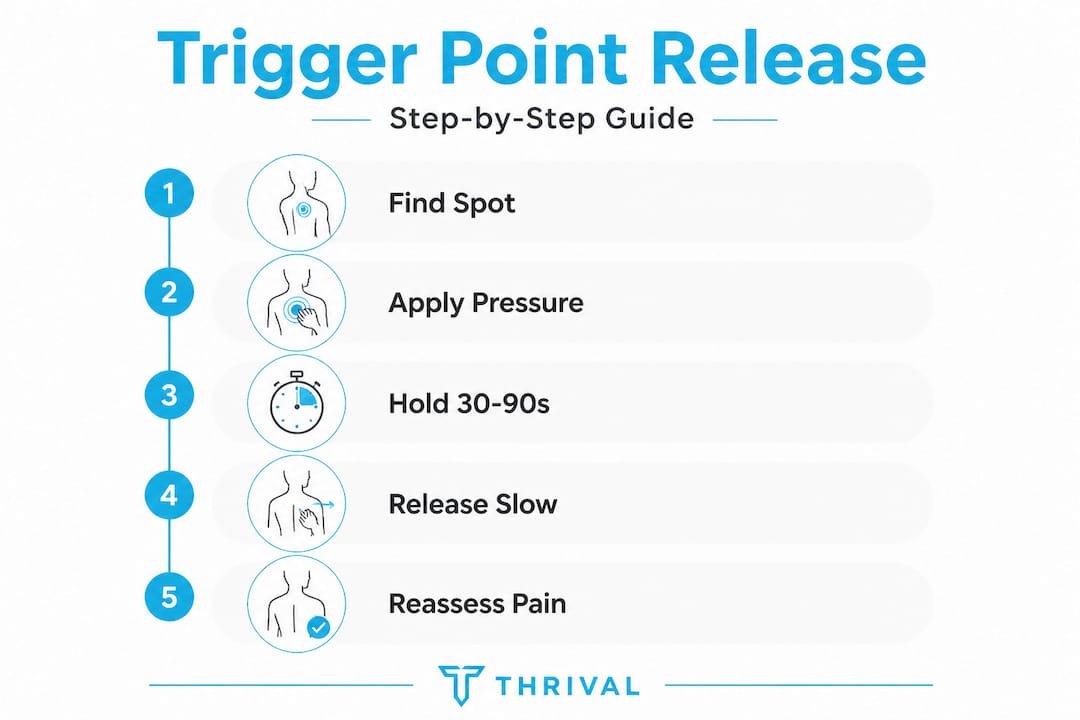
- When you find a tender spot, pause and hold firm pressure for 30 to 90 seconds.
- Allow the tissue to soften before continuing to roll.
- Repeat 2 to 3 passes per muscle group per session.
Foam rolling is your first line of attack for broad areas like the IT band, thoracic spine, and hamstrings. The key is slow movement and sustained pressure, not rapid back-and-forth rolling, which activates the tissue rather than releasing it.
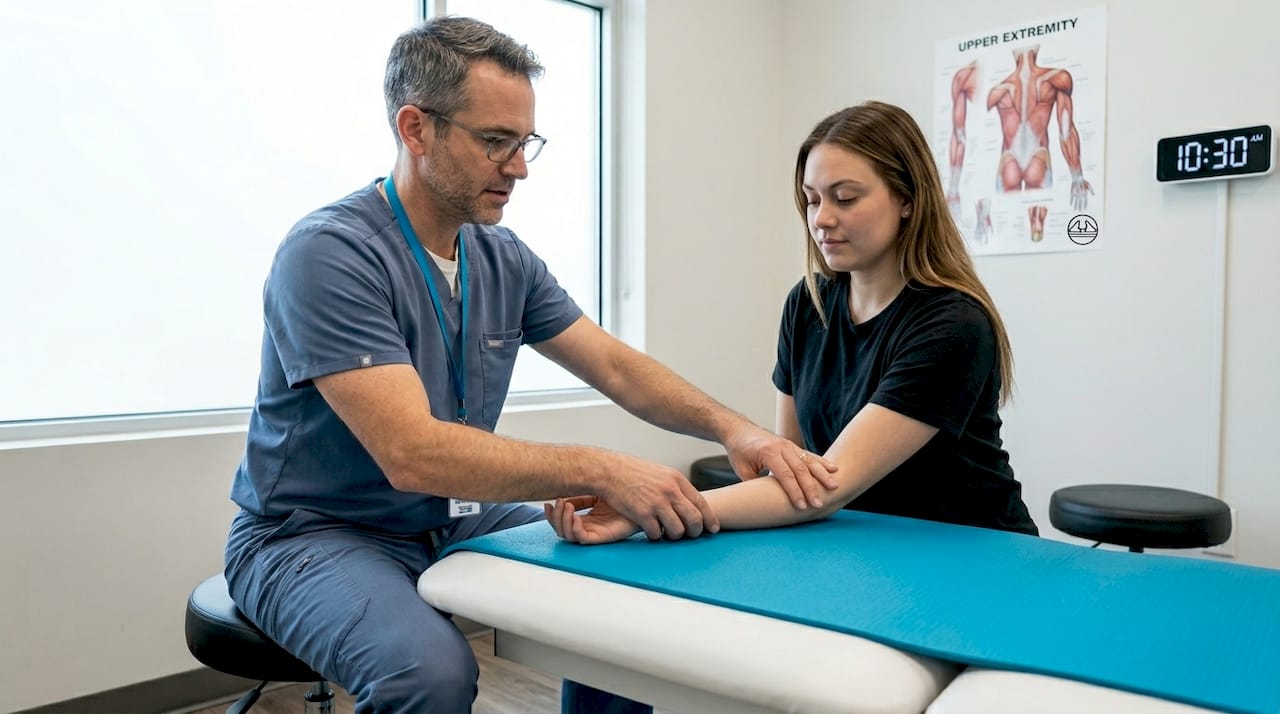
2. Pin-and-stretch technique
Pin-and-stretch is particularly effective for the neck, pectoral muscles, and hip flexors. Here’s how it works:
- Use a ball or your fingers to locate and firmly pin the trigger point.
- While maintaining pressure on that point, slowly move the muscle through its pain-free range of motion.
- Perform 5 to 10 controlled repetitions per trigger point.
- Release pressure, rest 10 seconds, then repeat one more set if needed.
This technique works because it combines compression with active tissue lengthening. The muscle fiber is simultaneously loaded at the point of the knot and stretched across its full range, which helps reset the contracted tissue more effectively than compression alone.
3. Friction massage
Friction massage involves applying direct, cross-fiber pressure perpendicular to the muscle fibers at the trigger point. Research shows that friction massage improves pain, pressure pain threshold, and ROM within treatment groups, making it a valid short-term tool for targeted relief.
- Place two or three fingers directly on the trigger point.
- Apply firm pressure and move your fingers perpendicular to the muscle fiber direction (not along it).
- Work the area for 60 to 90 seconds using short, deliberate strokes.
- Reduce pressure if you feel sharp pain. Discomfort is expected; sharp or radiating pain is not.
| Technique | Best use case | Session duration | Skill level |
|---|
| Foam rolling | Large muscle groups, broad areas | 5-10 min | Beginner |
| Pin-and-stretch | Neck, pecs, hip flexors | 5-8 min | Intermediate |
| Friction massage | Localized stubborn knots | 2-5 min | Intermediate |
For a deeper look at the science behind these approaches, evidence-based soft tissue release explains why these techniques actually work at the tissue level. You can also explore deep tissue massage techniques to extend your toolkit further.
Pro Tip: Start every session at a lower pressure than you think you need. Trigger points are already sensitized tissue. Aggressive pressure from the start often causes the surrounding muscle to guard, which works directly against your goal. Build intensity gradually over the first minute, and let the tissue invite deeper pressure rather than forcing it.
Even when following the right techniques, mistakes can hinder progress. Here’s how to avoid common pitfalls and track your results.
Common mistakes and how to tell it’s working
Most people who struggle with trigger point release aren’t using the wrong technique. They’re making execution errors that reduce effectiveness or, worse, create new problems.
Mistakes to avoid:
- Applying maximum pressure immediately without warming up the tissue
- Working on visibly swollen, red, or acutely inflamed areas
- Skipping the cooldown stretch after release work
- Holding your breath during sustained pressure (breathe steadily to promote tissue relaxation)
- Doing one aggressive session and expecting permanent results
- Treating the referred pain zone instead of the actual trigger point source
Knowing when it’s working is just as important as knowing what to do. After a properly executed session, you should notice a reduction in that specific ache or tightness within minutes. Movement in the targeted joint should feel freer and less guarded. Post-exercise soreness in treated areas typically decreases noticeably over the following 24 to 48 hours.
Research validates these outcomes. Myofascial release outperforms stretching and ultrasound for pain relief and range of motion improvements in overhead athletes dealing with trapezius trigger points, which confirms that targeted release produces measurably better results than general stretching alone. Additionally, chronic SMR over four or more weeks significantly enhances flexibility and balance, while massage specifically reduces inflammatory markers like IL-6 and alleviates DOMS more effectively than vibration therapy or cold water immersion.
Safe progress signals:
- Reduced localized tenderness at the trigger point within 24 hours
- Noticeably improved range of motion in the nearby joint
- Less post-workout soreness in the treated muscle
- Feeling of muscle warmth and relaxation immediately after release
Stop and reassess if you experience:
- Sharp, shooting, or neurological pain during pressure
- Significant swelling or bruising after a session
- Increased pain or reduced mobility the day after treatment
Listening to these signals is a skill. The more sessions you complete, the better you’ll read what your body signals after release are telling you. For a broader context on what recovery from soft tissue work looks like clinically, therapeutic massage benefits provides solid supporting evidence.
After mastering technique and safety, consider how to personalize and progress your trigger point release routine.
Progress and maintenance: Making trigger point release a routine
The difference between people who get lasting relief and those who stay stuck in a cycle of soreness is almost always consistency. A single session gives you temporary relief. A weekly routine changes how your muscles function over time.
Building a sustainable trigger point release routine:
- Aim for 2 to 4 sessions per week based on your activity level and muscle tension patterns
- Pair release work with your warm-up by spending 5 minutes on SMR before training to increase tissue pliability
- Add targeted release to your cooldown for areas worked hardest during that session
- Track changes in soreness levels, joint range of motion, and training performance week over week
- Revisit your tool selection every 4 to 6 weeks to see if you’ve progressed to needing more targeted equipment
Chronic SMR over four or more weeks improves both flexibility and balance in active individuals, and massage specifically produces the best outcomes for reducing inflammatory markers and DOMS compared to vibration and cold water immersion. These aren’t small gains. They’re measurable shifts in how your body responds to training.
If you notice that certain areas, especially the hips and hip flexors, consistently accumulate tension, hip flexibility and SMR covers targeted approaches for that specific challenge. Tight hips affect nearly every athletic movement pattern, from running stride to squat depth, so keeping them released has an outsized impact on overall performance.
When to consider advancing your approach:
- You’ve been consistent for 4 to 8 weeks and want more targeted pressure than a foam roller provides
- Certain trigger points don’t respond adequately to ball or roller work alone
- A licensed massage therapist or physical therapist identifies stubborn areas that need professional treatment
With the core framework set, let’s explore what most guides miss about trigger point release and long-term results.
What most guides miss: The long-game of trigger point release
Here’s something most trigger point articles won’t tell you directly: the first two weeks feel like they’re working brilliantly, and then people stop.
Pain drops, range of motion improves, and the motivation to keep up the routine disappears right along with the discomfort. This is the exact moment when most of the actual gains are just starting to accumulate. Stopping at the two-week mark is like leaving the gym after the warm-up.
The real structural changes in muscle tissue, the kind that show up as consistently better mobility and genuinely less frequent pain, require at least four weeks of regular practice. That’s what the research shows, and it’s what experienced athletes confirm. The early sessions address acute tension. The later sessions address the underlying patterns that created those trigger points in the first place.
Another thing often skipped: your technique needs to evolve. What works in week one may not be adequate by week six. As tissue quality improves, you’ll need more precise tools, greater pressure tolerance, or different techniques to keep making progress. Staying static with your approach means your results plateau faster than they should.
We also see a lot of athletes treat trigger point release as something you do after things go wrong. The real advantage comes from using it as a proactive maintenance tool, just like mobility work or progressive training load management. Reviewing practical trigger point insights regularly keeps your understanding current and your technique sharp.
Adjust your tools, adjust your frequency, and pay close attention to feedback from your body over weeks, not just sessions. That is the approach that delivers lasting, meaningful results.
Hands-on technique forms the foundation of effective trigger point release, but the right equipment makes the process significantly more consistent, precise, and effective. Manual approaches have real limits when it comes to deep, stubborn knots in areas like the lower back, hips, or between the shoulder blades.
At Thrival, we build advanced muscle recovery tools specifically for active individuals and athletes who need professional-grade results without a clinic visit. Every product is US-manufactured, FDA registered, and backed by a lifetime warranty. Whether you’re addressing a recurring trap trigger point or working through hip tension after heavy training, the deep tissue pro tool delivers targeted, adjustable pressure precisely where you need it. Explore the full lineup and find the tool that fits your recovery routine and training demands.
Frequently asked questions
How long should I hold pressure on a trigger point?
Hold gentle pressure for 30 to 90 seconds or until you feel the muscle soften, then release. SMR with balls and rollers improves ROM and reduces soreness when pressure is applied with appropriate duration and consistency.
Can I release trigger points every day?
Two to four sessions per week is generally safe and effective, but daily release using light techniques is fine when no significant soreness is present. Chronic SMR over four or more weeks produces the most measurable improvements in flexibility and balance.
What if a trigger point is too painful to press?
Reduce your pressure significantly and try a gentler approach first. If the area remains too sensitive, a licensed massage therapist or physical therapist is better equipped to address deeply stubborn knots safely.
Should I use heat or ice with trigger point release?
Applying heat for 5 to 10 minutes before a session relaxes the tissue and improves tool penetration. Ice applied after release can reduce any residual soreness, particularly in areas that were significantly tender during treatment.
How soon will I feel results after trigger point release?
Most people notice some relief within the same session. However, lasting improvements in flexibility, reduced soreness, and better movement patterns typically emerge after 2 to 4 weeks of consistent work, as long-term SMR consistently builds flexibility and balance over time.
Recommended